

Brackets and Mounting
What Are Brackets and Mounting Hardware?
Brackets and mounting hardware are the fastening components that attach warning lights, beacons, and lightbars to vehicles, machinery, and fixed structures. Also called beacon mounting brackets, these accessories determine how securely a light stays positioned under vibration, at speed, and in adverse field conditions. Mounting hardware ranges from permanent mount plates bolted to a roof to drill-free magnetic bases designed for temporary deployment.
All Safety supplies beacon and warning-light mounting hardware to industrial and commercial buyers across Canada.
Key Takeaways
- Select a mounting method — magnetic, permanent, or flange — based on how frequently the light relocates between vehicles.
- Permanent mount plates provide the highest retention for beacons on heavy equipment operating at sustained highway speeds.
- Magnetic mounts allow fast transfer between vehicles without drilling, suitable for intermittent or multi-vehicle deployments.
- Hardware kits consolidate the bolts, gaskets, and fasteners needed for a specific beacon or lightbar model.
- Flange mounts and bracket kits accommodate larger lightbars and traffic directors that require a wider footprint.
- Verify bracket compatibility with the specific beacon model before ordering; mounting hole patterns vary by manufacturer.
- Drill-free zero-drill mounts reduce vehicle modification while still anchoring a beacon through clamping or suction mechanisms.
Magnetic, Permanent, and Flange Mounts: Choosing the Right Type
Mounting method determines installation permanence, removal speed, and retention under load. Magnetic mounts suit frequent repositioning; permanent plates suit fixed installations on dedicated safety vehicles; flange mounts suit larger lightbars and traffic directors requiring a rigid base.
Beacon and Warning Light Mounting Methods Compared
| Mount Type | Installation | Typical Application | Retention Level |
|---|---|---|---|
| Magnetic Mount | No drilling; attaches to steel surface | Multi-vehicle fleet, temporary deployment | Moderate — rated pull strength varies by magnet size |
| Permanent Mount Plate | Bolted through roof or surface | Dedicated emergency or utility vehicles | High — mechanically fixed |
| Flange / Bracket Kit | Bolted to flat or curved surface; wider footprint | Lightbars, traffic directors, large beacons | High — distributes load across multiple fastening points |
| Zero-Drill / Clamp Mount | Clamps to existing rail, bar, or frame | Equipment without flat steel roof; rental units | Moderate to high — depends on clamp torque and surface |
Permanent mount plates and flange bracket kits offer the most reliable retention for vehicles that carry warning lights continuously. Magnetic and zero-drill mounts trade some retention for installation flexibility, making them practical for shared or leased equipment.
Mounting Hardware Terminology
- Permanent Mount Plate
- A steel plate bolted directly through a vehicle surface, providing a fixed base for a beacon or lightbar that does not require repositioning.
- Magnetic Mount
- A base containing one or more magnets that hold a beacon to a steel vehicle roof without fasteners; removable by lifting.
- Flange Mount
- A bracket with a wide flange base that distributes clamping or bolting force across a larger surface area, suited to heavier lightbars.
- Zero-Drill Mount
- A mounting system that attaches to an existing vehicle feature — such as a roof rail or door frame — eliminating the need to cut holes in sheet metal.
- Hardware Kit
- A packaged set of bolts, nuts, gaskets, and sealing components specific to one beacon or lightbar model, sold as a unit to simplify installation.
- Vacuum Magnet
- A high-pull magnetic base that uses surface-contact area to generate retention force; pull strength is specified in kilograms and varies by magnet diameter.
How to Select Beacon Mounting Hardware for Your Vehicle or Equipment
Choosing the right light brackets starts with confirming the beacon model, the vehicle surface material, and whether the light transfers between units. Mismatched mounting hardware is the most common cause of beacon dislodgement in service.
Buying Process
- Identify the beacon or lightbar model and confirm its base mounting hole pattern.
- Determine surface material — magnetic mounts require a ferrous steel roof; aluminum or fibreglass surfaces need a clamp or bolted solution.
- Decide permanence — dedicated vehicle requires a permanent plate; shared fleet may prefer magnetic or zero-drill.
- Check vehicle roof profile — curved roofs may need a rubber gasket or contoured base to maintain flush contact.
- Select a compatible lightbar mounting bracket kit if installing a bar rather than a single beacon.
- Confirm hardware kit contents match the fastener count and bolt diameter specified in the beacon manufacturer's installation guide.
- Order a replacement vacuum magnet or rubber base if the existing mount shows wear, cracking, or reduced pull force.
Quick Selection Checklist
- Verify the beacon base hole pattern matches the bracket or mount plate before ordering.
- Check that the mount type suits the vehicle surface material — steel for magnetics, any surface for bolted solutions.
- Assess how often the beacon relocates between vehicles to choose permanent versus temporary mounting.
- Confirm pull-force or torque rating is appropriate for the vehicle's operating speed and terrain.
- Review whether a hardware kit is included with the beacon or must be ordered separately.
- Assess total installed cost — zero-drill mounts avoid bodywork costs but may carry a higher unit price.
- Check manufacturer warranty conditions; some void coverage if a non-approved bracket is used.
- Maintain brackets annually — inspect for corrosion, loosening fasteners, and degraded rubber gaskets.
Where Beacon Mounting Hardware Is Used Across Canadian Industries
Light mounting brackets are required wherever a warning light must stay fixed to a moving or stationary platform. The correct bracket prevents beacon loss, reduces liability, and keeps warning signals visible to other workers and road users.
Industry Applications
- Oil and Gas: Lease roads and well sites require beacons on service trucks and forklifts; permanent mount plates withstand constant vibration on unpaved surfaces.
- Construction: Equipment operators fit beacon light brackets to excavators and loaders where magnetic mounting is impractical on non-steel surfaces, requiring bolted bracket kits.
- Municipal Road Maintenance: Snow plows and graders use permanent mounting beacons on reinforced roof brackets to handle plowing loads without dislodgement.
- Utilities: Line crews deploy warning light brackets on bucket trucks and cable layers, often using zero-drill mounts to preserve vehicle lease conditions.
- Forestry: Skidders and delimbers operate on extreme terrain; heavy-duty flange bracket kits prevent beacon separation under shock loads.
- Transportation and Logistics: Fleet operators fit magnetic mounting beacons using removable bases to share warning lights across multiple delivery vehicles.
- Traffic Control: Flagging crews mount traffic directors on vehicle-mounted bracket kits to keep arrow boards stable at highway work zones.
Frequently Asked Questions: Warning Light Brackets and Mounts
Can I mount a beacon without drilling into my vehicle?
Yes. Zero-drill mounts and magnetic mounts both attach without cutting holes in sheet metal. Zero-drill systems clamp to existing vehicle rails or frames. Magnetic bases grip ferrous steel roofs directly. Neither option is appropriate for aluminium or fibreglass-roofed vehicles, which require a bolted bracket solution.
What is included in a beacon mounting hardware kit?
A hardware kit typically contains the bolts, lock nuts, rubber gaskets, and any sealing washers required to install one specific beacon or lightbar model. Kits are model-matched, so confirm the kit part number corresponds to your exact beacon before ordering. Some kits also include a rubber base to protect painted surfaces.
Do traffic directors need a dedicated warning light bracket?
Traffic directors generally require a bracket kit sized for their length and weight, rather than a single-beacon mount. Bracket kits for traffic directors distribute load across multiple fastening points and account for the torque a large arrow board generates at speed. Check the director's installation manual for the specified bracket type.
Selecting the correct beacon mounting hardware requires matching the mount type to the vehicle surface, the operating environment, and the beacon model's base pattern. Permanent mount plates and flange bracket kits provide the most reliable retention for dedicated safety vehicles. Magnetic and zero-drill mounts offer practical flexibility for shared fleets or lease vehicles where drilling is not permitted. Review hardware kit specifications against the beacon manufacturer's installation guide, inspect mounts regularly for wear, and replace degraded gaskets or magnets before retention is compromised. All Safety carries bracket kits, mount plates, and hardware accessories from Driver Industrial Safety and SWS Warning Lights for buyers across Canada.
Browse related categories: lighting accessories, warning light bars.
- Product
- Qty in Cart
- Quantity
- Price
- Subtotal
-
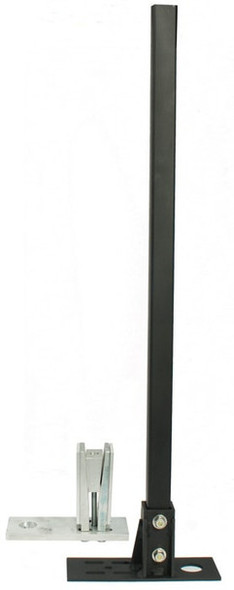
Bracket Kit 24'' Stake Pocket Mount for 1/2'' NPT Beacons
SWS Warning Lights
$370.31Bracket Kit 24? Stake Pocket Mount for 1/2? NPT Beacons | SWSAnodized aluminum construction. Mounts a 1/2? NPT base beacon to the upper pole. Uses the stake pocket on the vehicle to secure the light...$370.31 -

Low Profile Linear White Light 40.5'' with Bracket - Lens: Clear
SWS Warning Lights
$312.41Low Profile Linear White Light 40.5? with Bracket - Lens: Clear | SWSSlimline, low profile design allows for many application and avoids obstruction. Rugged IP66 all polycarbonate construction for...$312.41