

Horizontal Lifelines
What Are Horizontal Lifelines?
Horizontal lifelines are tensioned cable or synthetic rope fall protection systems stretched between two or more engineered anchor points at height, providing workers with continuous anchorage as they move laterally across an elevated work area. Also called horizontal lifeline systems, these fall protection lifelines allow workers to remain attached to a certified fall arrest system throughout an entire work run without disconnecting. Safety managers in construction, roofing, maintenance, and industrial facilities rely on horizontal lifelines wherever workers must traverse an elevated surface.
All Safety supplies horizontal lifelines to industrial and commercial buyers across Canada.
Key Takeaways About Horizontal Lifelines
- Horizontal lifelines provide continuous anchorage along a tensioned cable or rope, letting workers move laterally without disconnecting from fall protection.
- CSA Z259 series standards govern horizontal lifeline design, installation, and inspection requirements for Canadian worksites.
- Energy absorbers integrated into horizontal lifeline systems reduce peak arrest forces transmitted to the worker and the anchor structure during a fall event.
- Systems are available as temporary portable configurations or permanent engineered installations, each suited to different work durations and site conditions.
- A qualified engineer must design permanent horizontal lifeline systems and verify that anchor structures can withstand the loads generated during fall arrest.
- Bump testing and visual inspection before each shift, combined with documented periodic inspections, keep horizontal lifeline systems compliant and reliable.
- Workers connecting to a horizontal lifeline must use a compatible harness and connecting subsystem rated for the system's user capacity.
Horizontal Lifelines vs Other Fall Protection Systems
Horizontal lifelines, sometimes called safety lifelines, suit applications where workers move laterally across a roof, bridge, tank top, or loading dock and need uninterrupted protection throughout that movement. Guardrails deliver passive perimeter protection without harnesses but cannot follow a worker across an open roof surface. Self-retracting lifelines and lanyards protect vertical movement and short-radius horizontal movement but require re-anchoring when a worker crosses a long horizontal span. A fall protection lifeline system eliminates that re-anchoring step.
Temporary vs Permanent Horizontal Lifeline Systems
| Feature | Temporary Portable System | Permanent Engineered System |
|---|---|---|
| Anchor type | Portable weighted or strap-mounted anchors | Structurally bolted engineered anchors |
| Typical use | Short-term projects, construction, plant turnarounds | Ongoing rooftop access, maintenance catwalks, bridges |
| Engineering requirement | Manufacturer-designed; verify structure capacity | Site-specific engineer stamp required |
| Relocation | Can be moved between job sites | Fixed in place; not relocatable |
| Inspection trigger | Before each deployment | Pre-use visual + scheduled periodic inspection |
Temporary systems give contractors flexibility across multiple sites, while permanent systems reduce per-access setup time and suit facilities with recurring rooftop maintenance schedules. Pair either configuration with self-retracting lifelines for vertical descent protection or shock-absorbing lanyards for short connecting subsystems to complete the fall arrest system.
CSA Standards and Anchor Requirements for Horizontal Lifeline Systems
The CSA Z259 series governs horizontal lifeline systems sold and used in Canada, establishing design, performance, and inspection requirements that purchasers and installers must meet. CSA Z259.16 specifically addresses design of active fall protection systems, including horizontal lifelines, and requires that anchor structures be assessed by a qualified person for their ability to withstand arrest forces. US buyers and cross-border operations reference ANSI/ASSP Z359 as the equivalent performance framework and OSHA 1926.502 for regulatory compliance.
Key Terms for Horizontal Lifeline Systems
- Energy Absorber
- A component integrated into the lifeline or connecting subsystem that extends during a fall to reduce peak arrest force transmitted to the worker and the anchor structure.
- Anchor Point
- A secure attachment location on a structure, certified to withstand the loads generated during fall arrest, to which the lifeline terminations are connected.
- Sag
- The downward deflection of the cable or rope between anchor points that increases during a fall arrest event; sag affects fall clearance calculations and must be accounted for at system design.
- Span
- The horizontal distance between two anchor points along a lifeline run; longer spans increase sag and may require intermediate supports.
- Competent Person
- An individual with training and knowledge to identify fall hazards, select appropriate lifeline configurations, and authorize use of a horizontal lifeline system.
- CSA Z259.16
- The Canadian standard specifying design requirements for active fall protection systems, including horizontal lifelines, anchor selection, and energy management.
Industry Applications for Horizontal Lifeline Systems
- Construction: Rooftop framing and membrane installation crews traverse long horizontal spans where re-anchoring would interrupt work; horizontal lifelines provide continuous protection across the entire roof deck.
- Oil and Gas: Tank top and vessel inspection workers move across curved or sloped surfaces where guardrails are impractical; tensioned cable systems follow the work path and allow connection at any point along the run.
- Utilities and Telecommunications: Tower and transmission line workers performing linear maintenance tasks along elevated structures use horizontal lifelines to maintain attachment while moving between work positions.
- Transportation and Bridge Maintenance: Bridge inspection and painting crews working along the underside or deck of a span rely on horizontal lifeline systems to protect lateral movement across the full structure length.
- Manufacturing and Facilities: Maintenance technicians accessing rooftop HVAC units, skylights, and exhaust systems at scheduled intervals benefit from permanent horizontal lifeline installations that eliminate per-visit rigging setup.
- Aviation and Aerospace: Aircraft maintenance personnel moving across fuselage tops and wing surfaces use horizontal lifelines suited to non-penetrating anchor configurations where structural integrity must be preserved.
- Warehousing and Logistics: Loading dock supervisors and inspectors accessing trailer rooftops across multiple bays use portable horizontal lifeline systems deployable without structural modifications.
Inspection, Maintenance, and Recertification Requirements
Horizontal lifeline systems require layered inspection protocols: a pre-use visual check by the user before every shift, documented periodic inspections by a competent person, and formal recertification by a qualified inspector on a schedule the system manufacturer and applicable CSA Z259 requirements specify. Skipping any layer creates compliance gaps and risks undetected component degradation that may not be visible during a brief visual check alone.
Environmental Factors That Accelerate Inspection Intervals
Coastal environments expose cable and hardware to chloride-driven corrosion that shortens component service life. Chemical processing facilities expose lifelines to solvents and acids that degrade synthetic rope and coatings. Both environments justify more frequent documented inspections than a standard indoor maintenance application. All Safety's fall protection service team performs on-site inspections and professional fall protection recertification and inspection services for horizontal lifeline systems across Canadian industrial facilities.
Horizontal Lifeline System Implementation Steps
- Complete a site hazard assessment identifying all lateral fall exposure areas and movement patterns.
- Determine system type: temporary portable or permanent engineered, based on access frequency.
- Engage a qualified engineer to assess anchor structures and specify system design for permanent installations.
- Select components — cable or rope, energy absorbers, tensioners — from one certified system or confirmed compatible set.
- Install per manufacturer specifications; document anchor locations, torque values, and initial cable tension.
- Conduct pre-use inspection and load verification before authorizing first worker access.
- Train all users: system capacity limits, connection procedures, fall clearance awareness, and inspection responsibilities.
Frequently Asked Questions About Horizontal Lifelines
What anchor strength do horizontal lifeline systems require?
CSA Z259.16 requires that anchor structures for active fall protection systems, including horizontal lifelines, be assessed by a qualified person and shown capable of withstanding the arrest forces generated during a fall event. The specific load values depend on system configuration, number of users, span length, and energy absorber design. Buyers should obtain a system-specific engineering assessment rather than applying a single generic anchor strength figure.
How much fall clearance does a horizontal lifeline require?
Fall clearance for horizontal lifelines must account for lanyard or connecting subsystem length, energy absorber extension, worker height, cable sag under arrest load, and a safety margin above the lower obstruction. The total clearance required is almost always greater than the free-fall distance alone. Site-specific clearance calculations must be completed before deploying any horizontal lifeline system, particularly on low-slope roofs or above mezzanine levels with limited clearance below.
Can I rent horizontal lifelines instead of purchasing a system?
Rental horizontal lifeline systems suit short-term construction projects, plant turnarounds, and contract work where capital purchase is not warranted. All Safety's fall protection rental program provides temporary horizontal lifeline systems with inspection documentation, reducing setup time for project-based safety managers. Pair rental lifelines with full-body harness and connection hardware to build a complete confined space or rooftop fall arrest system.
How often do horizontal lifelines need formal recertification?
Recertification frequency depends on the system manufacturer's specification, the applicable CSA Z259 edition in effect at time of installation, and the environmental conditions the system is exposed to. Annual recertification by a qualified inspector is common practice for permanently installed safety lifelines in Canadian industrial facilities. High-exposure environments may warrant more frequent formal inspections, and any fall event automatically triggers a full system inspection before the lifeline returns to service.
Quick Selection Checklist for Horizontal Lifelines
- Verify the system carries CSA Z259 series certification applicable to your installation type and user count.
- Confirm anchor structures have been assessed by a qualified engineer for the arrest loads your system generates.
- Check that total fall clearance below the work surface exceeds the system's maximum arrest distance including cable sag.
- Assess whether a temporary portable system or a permanent engineered installation fits your access frequency and site conditions.
- Confirm all components belong to one certified system or have documented cross-compatibility from the manufacturer.
- Review total lifecycle cost including installation, inspection, recertification, and component replacement before comparing purchase price alone.
- Verify a bump test and pre-use inspection procedure is established and documented for every deployment.
- Confirm replacement components and manufacturer service support are available for the system selected.
Horizontal lifelines protect workers moving laterally at height by providing continuous fall arrest anchorage from one end of a work run to the other. Selecting the right system requires matching temporary or permanent configuration to site conditions, confirming anchor structure adequacy through qualified engineering assessment, and establishing pre-use inspection and recertification routines that align with CSA Z259 series requirements. Pair horizontal lifelines with compatible harnesses, connecting subsystems, and certified fall protection anchor points to build a complete and compliant fall arrest program.
- Product
- Qty in Cart
- Quantity
- Price
- Subtotal
-

HTL Rope Horizontal Temporary Lifeline with Tensioner | Guardian Fall Protection
Guardian Fall Protection
$888.23 - $1,495.27Description A complete rope HLL system The HTL excels in applications that require fast HLL setup and take down. A fully complete system, including anchorage connectors, the HTL is ideal for workers...$888.23 - $1,495.27 -

Metal Energy Absorber System for Applications Over 60' - 15214 | Guardian Fall Protection
Guardian Fall Protection
$1,932.23A permanent cable HLL system The Guardian-exclusive Metal Energy Absorber is designed for cable HLL systems utilizing dual 5000 lbs. anchorage connectors. The unique spiral design quickly sheds...$1,932.23 -

Metal Energy Absorber System For Applications Over 60' - 15213 | Guardian Fall Protection
Guardian Fall Protection
$2,013.04A permanent cable HLL system The Guardian-exclusive Metal Energy Absorber is designed for cable HLL systems utilizing dual 5000 lbs. anchorage connectors. The unique spiral design quickly sheds...$2,013.04 -

Metal Energy Absorber System for Applications Over 60' - 15212 | Guardian Fall Protection
Guardian Fall Protection
$1,914.64A permanent cable HLL system The Guardian-exclusive Metal Energy Absorber is designed for cable HLL systems utilizing dual 5000 lbs. anchorage connectors. The unique spiral design quickly sheds...$1,914.64 -
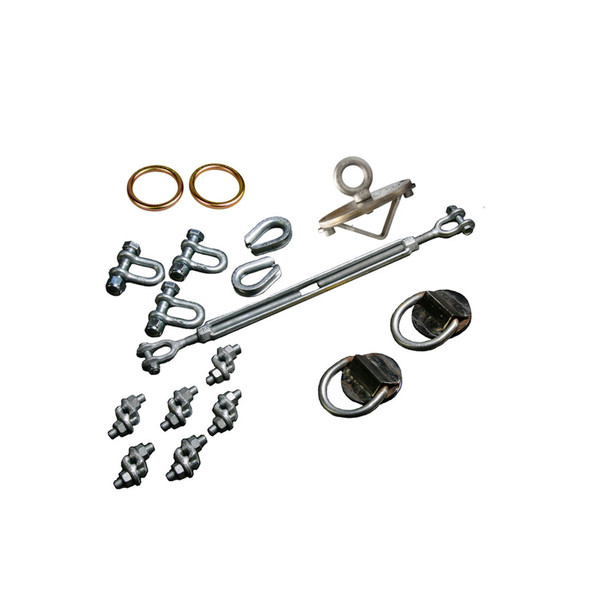
Metal Energy Absorber System For Applications Over 60' - 15211 | Guardian Fall Protection
Guardian Fall Protection
$1,216.94A permanent cable HLL system The Guardian-exclusive Metal Energy Absorber is designed for cable HLL systems utilizing dual 5000 lbs. anchorage connectors. The unique spiral design quickly sheds...$1,216.94 -

Metal Energy Absorber System for Applications Under 60' - 15210 | Guardian Fall Protection
Guardian Fall Protection
$1,367.01A permanent cable HLL system The Guardian-exclusive Metal Energy Absorber is designed for cable HLL systems utilizing dual 5000 lbs. anchorage connectors. The unique spiral design quickly sheds...$1,367.01 -

Metal Energy Absorber System for Applications Over - 60' | Guardian Fall Protection
Guardian Fall Protection
$1,201.04A permanent cable HLL system The Guardian-exclusive Metal Energy Absorber is designed for cable HLL systems utilizing dual 5000 lbs. anchorage connectors. The unique spiral design quickly sheds...$1,201.04 -

Metal Energy Absorber System For Applications Over | Guardian Fall Protection
Guardian Fall Protection
$1,781.01A permanent cable HLL system The Guardian-exclusive Metal Energy Absorber is designed for cable HLL systems utilizing dual 5000 lbs. anchorage connectors. The unique spiral design quickly sheds...$1,781.01 -

Metal Energy Absorber - HLL Attachment | Guardian Fall Protection
Guardian Fall Protection
$1,067.41A permanent cable HLL system The Guardian-exclusive Metal Energy Absorber is designed for cable HLL systems utilizing dual 5000 lbs. anchorage connectors. The unique spiral design quickly sheds...$1,067.41 -

Metal Energy Absorber Replacement With 2 Shackles | Guardian Fall Protection
Guardian Fall Protection
$793.04Replacement Metal Energy Absorber The Guardian-exclusive Metal Energy Absorber is designed for cable HLL systems utilizing dual 5000 lbs. anchorage connectors. The unique spiral design quickly sheds...$793.04 -

4-Person Fiber Rope HLL Kit: Tensioner / 2 Carabiners / Storage Bag (82') | Guardian Fall Protection
Guardian Fall Protection
$3,255.63A rope HLL designed for use by a maximum of four workers The majority of HLL systems available on the market are configured to allow for up to two workers in Fall Arrest. With the Quadro HLL however,...$3,255.63