

Rope | Lifelines
Understanding the Basics: What Are Rope Lifelines?
Rope lifelines are specialized fall protection systems that prevent workers from falling during elevated tasks by creating a secure connection between the worker and a fixed anchor point. These lifelines work by distributing fall forces through high-strength synthetic ropes, typically made from nylon or polyester fibers, which can withstand forces up to 5,000 pounds. The system includes essential components such as the lifeline rope, connectors like carabiners or snap hooks, and often shock-absorbing elements that reduce impact forces during a fall. All Safety provides comprehensive rope lifeline solutions for industries requiring reliable fall protection systems. Professional-grade rope lifelines serve construction workers, telecommunications technicians, and maintenance crews who operate at heights ranging from 6 feet to several hundred feet above ground level.
How Rope Lifelines Work: The Fall Arrest Mechanism
Rope lifelines function through a fall arrest mechanism that activates when a worker begins to fall, typically within the first few feet of descent. The system works by utilizing a rope grab device that slides freely along the lifeline during normal movement but locks instantly when subjected to sudden downward force. This locking mechanism, combined with shock absorbers, limits fall forces to under 1,800 pounds as required by OSHA standards. The energy absorption process involves the controlled deformation of shock-absorbing elements, which extends the deceleration time and reduces impact on the worker's body. Modern rope lifelines incorporate automatic locking systems that require no manual activation, ensuring protection even during unexpected falls.
Key Benefits of Using Rope Lifelines
The primary benefits of rope lifelines include comprehensive fall protection that significantly reduces workplace fatalities and injuries among workers at height. These systems provide mobility advantages, allowing workers to move horizontally along elevated surfaces while maintaining continuous protection, unlike fixed anchor systems that restrict movement. Rope lifelines offer cost-effective safety solutions, typically ranging from $150 for basic models to $800 for professional-grade systems with advanced features. The versatility benefits enable use across multiple industries, from construction scaffolding to telecommunications tower work. Compliance benefits ensure adherence to OSHA 1926.502 and ANSI Z359 standards, protecting employers from liability while meeting regulatory requirements. All Safety stocks rope lifelines that deliver these essential safety benefits for various industrial applications.
Understanding Rope Lifeline Limitations and Considerations
Key limitations of rope lifelines include environmental restrictions, as UV exposure can degrade synthetic rope fibers over time, typically requiring replacement every 5-7 years depending on usage intensity. Weight capacity limitations restrict most standard rope lifelines to workers weighing up to 310 pounds including tools and equipment. Installation limitations require proper anchor points capable of supporting at least 5,000 pounds, which may not be available on all structures. Weather limitations affect performance, as wet or icy conditions can reduce rope grip and increase slip potential. Maintenance limitations demand regular inspections before each use and detailed annual inspections by qualified personnel. Cost limitations for premium systems with specialized features like chemical resistance or extreme temperature ratings can range from $500 to $1,500 per unit.
Who Should Use Rope Lifelines: Target Users and Applications
Construction workers operating on roofs, scaffolds, or building facades represent the primary users of rope lifelines, particularly those working at heights exceeding 6 feet where OSHA requires fall protection. Telecommunications technicians installing or maintaining cell towers, radio equipment, and communication infrastructure rely on rope lifelines for safety during climbs up to 400 feet or higher. Window cleaning professionals and building maintenance crews use rope lifelines for facade access and cleaning operations on multi-story structures. Industrial maintenance workers performing equipment inspections, repairs, or installations in elevated areas require rope lifelines for regulatory compliance. Arborists and tree care professionals utilize specialized rope lifelines designed for dynamic loading conditions during tree climbing and pruning operations. All Safety serves these diverse professional groups with appropriate rope lifeline solutions for their specific working conditions.
When to Use Rope Lifelines: Timing and Situational Guidelines
Rope lifelines should be used whenever workers operate at heights of 6 feet or greater, as mandated by OSHA fall protection standards in construction and general industry applications. The timing for implementation occurs during the planning phase of elevated work, before workers access the elevated area. Situational use includes scenarios where workers need mobility along elevated surfaces, such as roofing installation, where fixed anchor points would limit necessary movement. Temporary work situations lasting from several hours to multiple months benefit from rope lifeline systems that can be easily installed and removed. Emergency rescue situations require rope lifelines when accessing injured workers in elevated or confined spaces. Weather-dependent timing considerations include avoiding rope lifeline use during electrical storms or when wind speeds exceed 40 mph, which can compromise stability and safety.
Cost Considerations: Rope Lifeline Pricing and Value
Basic rope lifeline systems typically cost between $150-$300 and include standard synthetic rope, basic connectors, and minimal shock absorption suitable for occasional use. Professional-grade systems range from $400-$800 and feature enhanced materials, advanced shock absorbers, and compliance certifications required for commercial applications. Premium rope lifelines with specialized features like chemical resistance, extreme temperature ratings, or extended lengths can cost $800-$1,500 per complete system. Installation costs vary from $200-$500 depending on anchor point requirements and structural modifications needed. Annual inspection and maintenance costs typically range from $50-$150 per system, including rope condition assessment and hardware inspection. The total cost of ownership over a typical 5-7 year lifespan averages $150-$300 annually for professional applications, making rope lifelines a cost-effective safety investment compared to potential accident costs.
Essential Features That Make Rope Lifelines Effective
High tensile strength represents the most critical feature, with professional rope lifelines rated for minimum breaking strengths of 5,000 pounds to meet OSHA requirements. Shock absorption capabilities reduce fall arrest forces to under 1,800 pounds through energy-absorbing webbing or mechanical devices that extend during impact. Corrosion-resistant hardware including stainless steel or aluminum connectors ensures long-term reliability in outdoor environments with moisture or chemical exposure. Abrasion resistance in rope construction prevents premature wear when the lifeline contacts sharp edges or rough surfaces during normal use. Visual inspection indicators such as colored core fibers become visible when outer rope sheath experiences damage, alerting users to potential safety compromises. Connector compatibility ensures proper integration with standard fall protection harnesses and anchor systems used across different industries.
How to Choose the Right Rope Lifeline System
Selecting the appropriate rope lifeline begins with assessing the working environment, including height requirements, anchor point availability, and potential hazards such as chemicals or extreme temperatures. Material selection depends on environmental conditions, with polyester ropes offering better UV resistance for outdoor use, while nylon provides superior shock absorption for high-impact applications. Length determination requires measuring the maximum working distance plus additional rope for proper anchor connections, typically adding 10-20 feet to the measured working distance. Load capacity evaluation must account for worker weight plus tools and equipment, ensuring the system rating exceeds total weight by appropriate safety margins. Certification verification confirms compliance with applicable standards such as OSHA 1926.502, ANSI Z359.1, or CSA Z259.2.2 depending on regional requirements. All Safety provides expert guidance to help customers select rope lifeline systems that match their specific operational requirements and safety standards.
Professional Applications and Industry Standards
Construction industry applications require rope lifelines meeting OSHA 1926.502 standards for fall protection, with specific requirements for roof work, scaffold operations, and steel erection activities. Telecommunications sector usage follows additional industry-specific guidelines for tower climbing and maintenance work, often requiring rope lifelines rated for dynamic loading conditions. Industrial maintenance applications must comply with OSHA 1910.140 general industry fall protection standards, particularly for equipment access and confined space entry operations. Fall protection inspection services ensure ongoing compliance with these professional standards through regular equipment certification and recertification processes. Professional certifications such as ANSI Z359.1 and CSA Z259.2.2 provide standardized performance criteria that employers rely on for regulatory compliance and worker safety assurance.
Installation and Setup Guidelines
Proper installation begins with anchor point evaluation, confirming that structural attachment points can support the required 5,000-pound load capacity specified in fall protection standards. Rope lifeline positioning should maintain clearance distances of at least 18.5 feet below the working surface to prevent ground contact during a fall arrest scenario. Hardware connection procedures require proper torquing of bolted connections and verification that all snap hooks and carabiners lock securely. System testing involves applying controlled loads to verify proper installation and component function before allowing worker access to the protected area. Daily pre-use inspections check rope condition, hardware integrity, and anchor point security as part of standard safety protocols. Professional installation by qualified technicians ensures compliance with manufacturer specifications and applicable safety standards.
Key Takeaways About Rope Lifelines
- Rope lifelines provide essential fall protection through automatic locking mechanisms that activate during falls.
- High-strength synthetic materials withstand forces up to 5,000 pounds while maintaining flexibility for worker mobility.
- Professional applications require compliance with OSHA 1926.502 and ANSI Z359.1 safety standards.
- Cost ranges from $150 for basic systems to $1,500 for specialized professional applications.
- Proper installation requires anchor points capable of supporting minimum 5,000-pound loads.
- Regular inspections and maintenance ensure continued safety performance and regulatory compliance.
- Environmental limitations include UV degradation and reduced performance in extreme weather conditions.
Common Mistakes and How to Avoid Them
The most common mistake involves using rope lifelines without proper anchor point evaluation, leading to potential system failure during fall arrest situations. Inadequate clearance calculations represent another frequent error, where workers install systems without ensuring sufficient fall clearance distance to prevent ground contact. Improper connector selection occurs when users mix incompatible hardware components from different manufacturers, potentially compromising system integrity. Neglecting regular inspections leads to continued use of damaged or degraded equipment that may fail during emergency situations. Incorrect sizing for worker weight and equipment load can result in system overload and potential failure. All Safety provides training resources and technical support to help users avoid these common rope lifeline mistakes and maintain proper safety protocols.
Quick Selection Checklist
- Verify rope lifeline compliance with OSHA 1926.502 and ANSI Z359.1 standards for your application.
- Confirm material specifications match environmental conditions including UV, chemical, and temperature exposure.
- Calculate proper length requirements including working distance plus anchor connection allowances.
- Ensure connector compatibility with existing fall protection harnesses and anchor systems.
- Evaluate system load capacity against total worker and equipment weight requirements.
- Verify manufacturer certification and warranty coverage for professional applications.
- Schedule regular inspection intervals as required by safety standards and manufacturer recommendations.
- Confirm proper storage conditions to prevent UV damage and material degradation when not in use.
- Product
- Qty in Cart
- Quantity
- Price
- Subtotal
-

Co-Polymer Pro Steel Rope w/ Thimble End | UV Resistant | Guardian Fall Protection
Guardian Fall Protection
$54.87 - $174.61Norguard’s Prosteel Rope is some of the toughest, most durable, and most versatile ropes on the market. Available in a variety of lengths and connector configurations, this 5/8” diameter rope is...$54.87 - $174.61 -

Hold-Me Lifeline Anchor Device (Blue) | Guardian Fall Protection
Guardian Fall Protection
$105.19A specialized anchor point that attaches to a rope vertical lifeline Guardian's Rope Anchor functions to integrate an anchorage connector with a vertical lifeline system. To use, install rope through...$105.19 -

Polysteel VLA Vertical Lifeline - Double-Lock Snaphook End | Guardian Fall Protection
Guardian Fall Protection
$83.56 - $197.90Polysteel VLA Vertical Lifeline - Double-Lock Snaphook End | Guardian Fall Protection PolySteel material limits water absorption making rope ideal for high-moisture environments Heavy duty,...$83.56 - $197.90 -


Vertical Lifeline - Snap Hooks - 100' (30.4 m), VL-1122-100 | Peakworks
Peakworks
$314.08Description Certified to CSA Z259.2.5-2012 and meets ANSI Z359 standards Specially designed from rope made using high-strength polysteel Polysteel is an extruded co-polymer fibre that yields an...$314.08 -


Vertical Lifeline - Snap Hooks - 50' (15.2 m), VL-1122-50 | Peakworks
Peakworks
$208.42Description Certified to CSA Z259.2.5-2012 and meets ANSI Z359 standards Specially designed from rope made using high-strength polysteel Polysteel is an extruded co-polymer fibre that yields an...$208.42 -


Vertical Lifeline - Snap Hook & Back Splice VL-1125 | Peakworks
Peakworks
$132.88 - $501.88Description Heavy duty: Falls are one of the top sources of injuries in the workplace; Our heavy duty 5/8 inch thick super strong braided polyester rope resists cuts and abrasions and specially...$132.88 - $501.88 -

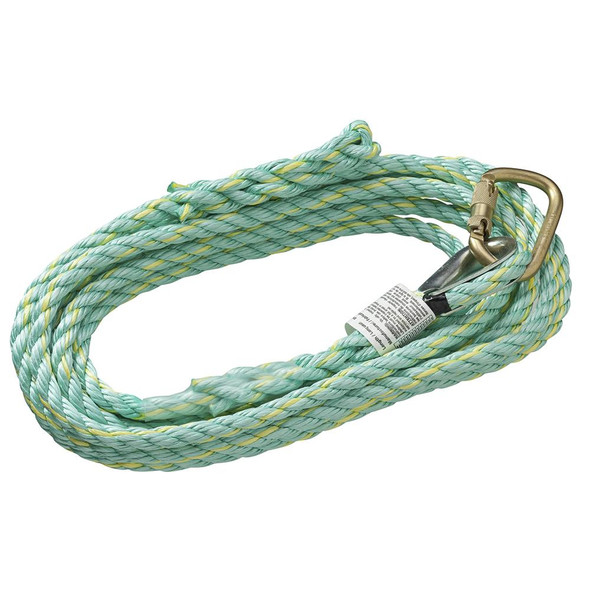
Vertical Lifeline - Carabiner & Back Splice VL-1115 | Peakworks
Peakworks
$144.86 - $509.80Description Safety Applications: Includes a carabiner and back splice at the trailing end to prevent the rope grab from coming off the end of lifeline; Polysteel rope does not absorb water and will...$144.86 - $509.80