

Anchor Points
What Are Anchor Points?
Anchor points, also called roof anchors, are fixed or portable devices that connect a worker's harness and lifeline to a structure during work at height. They give a fall arrest system a load-rated attachment point separate from the structure itself.
All Safety supplies anchor points and roof anchor systems to industrial and commercial buyers across Canada.
Key Takeaways
- Connect harnesses to structures using load-rated hardware certified under CSA Z259
- Distribute fall-arrest forces across a structural element instead of one weak point
- Come in permanent, temporary, and portable configurations for different job sites
- Require a connecting device, such as a lanyard or self-retracting lifeline, between worker and anchor
- Function as safety anchors for roofing, steel erection, and confined space entry work
- Need periodic inspection to confirm the anchor and mounting surface remain sound
How Anchor Points Work in a Fall Arrest System
An anchor point sits at one end of a three-part chain: the anchor itself, a connecting device, and the worker's full-body harness. This chain provides fall protection anchorage that arrests a fall before the worker strikes a lower level.
The Connection Sequence
The worker first clips a harness-mounted lanyard or self-retracting lifeline to the anchor. The anchor transfers any arrest force into the structure it's mounted to, whether that's a roof truss, beam, or concrete slab. Under CSA Z259, an anchor used for fall arrest must hold a minimum of 5,400 lb, and the system must limit free fall to 6 ft or less.
Workers should check full-body harness fit and self-retracting lifeline condition before connecting to any anchor, since the anchor is only one part of the system.
Permanent Roof Anchors vs. Temporary and Portable Systems
Permanent roof anchors for fall protection bolt or weld directly into a structure and stay in place indefinitely. A roof anchor system built this way suits buildings with recurring rooftop work, like HVAC servicing or repeat roof maintenance.
Anchor Type Comparison
| Type | Mounting | Reusability | Typical Use |
|---|---|---|---|
| Permanent | Bolted or welded into structure | Reusable, fixed location | Repeat roof or facility work |
| Temporary | Toggle, nail, or clamp-mounted | Single-use or limited reuse | Short-duration project work |
| Portable | Beam clamp, door/window frame | Reusable, relocatable | Variable or multi-site work |
Permanent anchors suit ongoing rooftop access while temporary and portable anchors fit short-term or shifting work locations. The right choice depends on how often the same access point gets used.
Anchor Point Terminology and Specifications
Buyers searching for roofing anchors and fall protection concrete anchors often encounter overlapping terms. The list below separates the most commonly confused ones.
Anchor Point Terms
- Anchor point
- The physical device a connecting device attaches to, rated for fall-arrest loads.
- Anchorage connector
- A component, such as a strap or bracket, that links an anchor point to a structural member.
- Concrete anchor
- An anchor point designed for installation into poured concrete using mechanical or epoxy fasteners.
- D-ring
- The connection loop on an anchor point where a lanyard or lifeline clips in.
- Swivel anchor
- An anchor point with a rotating D-ring that reduces lanyard twist during movement.
- Standing seam clamp
- A non-penetrating anchor that grips a metal roof's seam without drilling.
Confirm which term matches the mounting surface before ordering. A rope grab or lifeline rated for one anchor type may not suit another.
Who Uses Anchor Points and Where They're Required
Roof anchor points serve any trade where a fall hazard exists at an elevated or recessed work area. Coverage spans several industries with different anchor needs.
Industry Applications
- Roofing contractors: repeat rooftop access requires permanent anchors rated for ongoing reuse
- General construction: structural steel and framing work relies on portable beam-mounted anchors
- Oil and gas: tank and tower maintenance uses concrete and steel anchor points rated for industrial loads
- Facilities maintenance: HVAC and rooftop equipment service depends on fixed anchor locations
- Telecommunications: tower climbers use portable anchors that relocate between sites
- Utilities: substation and pole work uses anchors compatible with confined and irregular structures
Buying Process for Anchor Point Systems
Selection Steps
- Identify the mounting surface: roof, concrete, steel beam, or window frame
- Determine if the application needs permanent or temporary mounting
- Confirm load capacity meets the 5,400 lb CSA Z259 minimum
- Match the anchor's D-ring or connector type to existing lanyards and SRLs
- Check whether installation requires professional or engineered support
- Schedule inspection before first use and at regular intervals after
Anchor points installed on permanent structures should be checked through fall protection inspection services to confirm ongoing compliance.
Common Anchor Point Questions
How often do anchor points need to be inspected?
Anchor points need a visual check before each use and a more thorough periodic inspection by a competent person. Permanent installations also warrant inspection after any event that could affect structural integrity, such as a fall arrest or severe weather.
Can anchor points be installed on metal roofs?
Yes. Standing seam clamps and other non-penetrating anchors attach to metal roofing without drilling, while penetrating anchors can be installed with proper flashing and sealing for waterproofing.
How many workers can one anchor point support?
Most anchor points are rated for a single worker per attachment point. Some systems allow multiple users with engineered load distribution, but this requires confirming the manufacturer's rated capacity for multi-person use.
Do anchor points need professional installation?
Permanent anchors generally need installation by a qualified person who can confirm the mounting structure meets load requirements. Portable tie-off points, like beam clamps, are designed for worker installation without engineering review.
Quick Selection Checklist
- Verify the anchor meets CSA Z259 load and fall-distance requirements
- Confirm the mounting surface can support the rated load
- Assess whether permanent or temporary mounting fits the job duration
- Check D-ring and connector compatibility with existing harnesses and lifelines
- Review installation requirements, including whether engineering input is needed
- Confirm supplier availability across the regions where work occurs
- Verify inspection intervals match the anchor type and usage frequency
- Maintain a replacement schedule based on wear and environmental exposure
Anchor points give workers a certified attachment point for fall arrest, with CSA Z259 setting the load and fall-distance baseline for any system sold in Canada. Choosing between permanent, temporary, and portable anchors comes down to mounting surface, frequency of use, and compatibility with existing harnesses and lifelines. Fall protection programs that pair the right anchor with proper inspection intervals reduce the risk of a failed connection during a fall. Buyers working across multiple sites often keep a mix of permanent and portable anchors on hand to match changing job requirements.
- Product
- Qty in Cart
- Quantity
- Price
- Subtotal
-


Pitch Pro | Guardian Fall Protection
Guardian Fall Protection
$21.78 - $544.38Popular anchor excels in residential applications The Guardian Pitch Pro Roof Anchor (black) provides a reliable, OSHA-compliant and ANSI- compliant tie-off solution for sloped asphalt shingle roofs...$21.78 - $544.38 -


Cb-12 Anchor Post | Guardian Fall Protection
Guardian Fall Protection
$529.40 - $978.66Versatile post-style anchor fits a variety of applications A robust anchor point suitable for installation on concrete, wood, I-beams, or steel decking. Its durable galvanized steel construction...$529.40 - $978.66 -


Stainless Steel Reusable Roof Anchor Bracket
Peakworks
$35.35Description Peakworks® offers a wide range of anchor systems including: single-use/reusable roof anchors sliding beam anchors concrete hole anchors and permanent anchors. These anchors can be...$35.35 -


Temper Anchor | Guardian Fall Protection
Guardian Fall Protection
$48.00Rock-solid anchor for multiple applications and substrates The Temper Anchor is one of the most popular fall protection anchors on the market. Designed for wood, metals, or concrete substrates, the...$48.00 -

Install Screws For CB Anchor Point | Guardian Fall Protection
Guardian Fall Protection
$47.46 - $52.38Install Screws for CB Anchor Point Used to install CB12 and CB18 anchorage connectors. Features Bag of 40 screws Wood and metal deck screws available #14-10 x 2" galvanized screws for wood Style:...$47.46 - $52.38 -

Standing Seam Roof Clamp | Guardian Fall Protection
Guardian Fall Protection
$525.00Standing Seam Anchor for Self-Retracting Lifelines A versatile anchor designed to permit the use of self-retracting lifelines on standing seam roofs. Swivel top keeps self-retracting lifeline off...$525.00 -

Permanent Adjustable Standing Seam Roof Anchor | Guardian Fall Protection
Guardian Fall Protection
$795.00Non-penetrating, adjustable anchor for standing seam roofs The Adjustable Standing Seam Roof Anchor is designed for fall protection systems on new or existing standing seam roofs. It features twin...$795.00 -

D-Ring 2 Hole Anchor Plate | Guardian Fall Protection
Guardian Fall Protection
$49.95Full-size D-ring anchor plate for steel or concrete D-Ring 2-Hole Anchor Plates feature a stainless-steel baseplate that can be bolted or welded to steel substrates, or attached to concrete...$49.95 -


Window Gap Anchor | Guardian Fall Protection
Guardian Fall Protection
$975.00Anchor spans window, door, or other openings The Guardian Gap Anchor is an ideal anchorage connector for tie-offs in the interior of a building or a window opening. The Gap Anchor is composed of...$975.00 -


Ridge-It Anchor | Guardian Fall Protection
Guardian Fall Protection
$29.95 - $54.68Discreet anchor for residential applications The Ridge-It anchor is designed especially for new construction in residential markets. Lightweight design allows workers to easily carry multiple anchors...$29.95 - $54.68 -

Door/Window Anchor | Dynamic Safety
Dynamic Safety
$640.37Provides a non-intrusive anchor point and can be easily installed inside the interior of a building or window opening enabling the most difficult job to get done safely. Features Rated for 5,000...$640.37 -
Reusable Roof Anchor With Screws | Dynamic Safety
Dynamic Safety
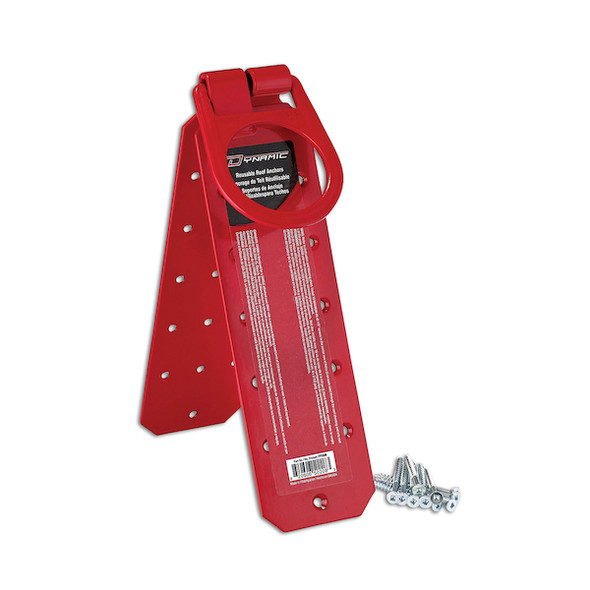
$33.17Reusable Roof Anchor for residential roofing. Features Reusable Temporary includes 10 screws$33.17 -

Disposable Roof Anchor With Nails | Dynamic Safety
Dynamic Safety
$19.53Disposable roof anchor for residential construction Features Temporary roof anchor Disposable one time use Includes 10 nails$19.53 -

5K Zinc Plated Swivel D-ring with Concrete Hardware - 5/8" Diameter | Dynamic Safety
Dynamic Safety
$163.13Zinc platted steel swivel anchorage with hybrid and semi-permanent and permanent D-ring. The D-ring is reusable. It can be installed on concrete structure, it is offered with a variety of fastening...$163.13 -

10K Zinc Plated Swivel D-ring with Concrete Hardware - 5/8" Diameter | Dynamic Safety
Dynamic Safety
$564.25Features Rated for 10,000 lbs$564.25 -

Temporary Removable Toggle Anchor for Steel or Concrete - 3/4" Diameter | Dynamic Safety
Dynamic Safety
$355.79Temporary removable Toggle anchor that can be used on steel or concrete. 3/4" diameter rated for 22kN (5000lbs). Features Rated for 5,000 lbs OSHA 29 CFR 1910.140 and 1926.502 certified ANSI/ASSP...$355.79