

Gas Monitors
What Are Gas Monitors?
Gas monitors are electronic safety instruments that detect hazardous gas concentrations in workplace air, alerting workers before levels become dangerous. Also called gas detectors, portable and fixed gas monitors protect workers in confined spaces, oil and gas operations, construction sites, and any environment where toxic or combustible gases may accumulate.
All Safety supplies gas monitors and gas detection equipment to industrial and commercial buyers across Canada.
Key Takeaways About Gas Monitors and Atmospheric Detection
- Gas monitors use electrochemical, catalytic bead, and infrared sensor technologies, each suited to specific gas types and concentration ranges.
- Single-gas monitors track one target gas continuously; multi-gas monitors simultaneously measure four or more gases, which is essential for confined space entry where multiple hazards coexist.
- Alarm setpoints follow OSHA PEL and ACGIH TLV thresholds for the target gas and application.
- CSA C22.2 No. 152 is the primary certification standard for gas detection instruments sold in Canada, establishing performance and hazardous-location requirements.
- Bump testing — exposing the sensor to a known gas concentration before each use — confirms that sensors and alarms respond correctly; bump testing is distinct from full calibration.
- Sensor lifespan varies by gas type and exposure level, so replacement schedules should follow manufacturer specification rather than a single fixed interval.
- Rental gas monitors are a cost-effective option for short-term projects, plant turnarounds, and contract work where purchasing a full fleet is not practical.
Gas Monitor Terminology and Key Specifications
- Gas detector
- Alternate name for a gas monitor; the same instrument and function, used interchangeably by buyers and manufacturers.
- Gas detection system
- A configuration of one or more gas monitors, sensors, and supporting hardware deployed to cover a defined work area or process.
- Gas detection equipment
- The broader product category covering monitors, sensors, calibration stations, and sampling accessories.
- Personal gas monitor
- A portable unit worn or clipped to a worker to sample the immediate breathing zone continuously.
- Bump test
- A quick functional check confirming sensors and alarms respond to gas; it does not adjust sensor accuracy.
- Full calibration
- Adjustment of sensor output against a certified reference gas to correct measurement drift over time.
- Intrinsically safe
- A certification confirming an instrument cannot produce ignition-capable sparks or heat in a flammable atmosphere.
Single-Gas vs Multi-Gas Detectors: Which Do You Need?
Single-gas detectors monitor one specific hazard continuously and suit worksites with a single known risk, such as a hydrogen sulfide monitor for a sewer maintenance crew. Multi-gas detectors monitor four or more gases simultaneously — typically oxygen, LEL combustibles, carbon monoxide, and hydrogen sulfide — and are required for confined space entry where multiple atmospheric hazards can exist at the same time.
Area Monitors vs Personal Clip-On Detectors
A personal gas monitor attaches to a worker's lapel and samples the breathing zone directly. Area monitors mount at fixed points or are placed on the ground to provide continuous atmospheric surveillance for a work zone. Construction crews and confined space attendants often deploy both types together — clip-on monitors protect individual workers while an area monitor tracks the broader atmosphere.
Gas Monitor Type Comparison
| Feature | Single-Gas Monitor | Multi-Gas Monitor (4-gas) | Fixed Area Monitor |
|---|---|---|---|
| Gases detected | 1 target gas | O2, LEL, CO, H2S (configurable) | 1–6 gases depending on sensor fit |
| Typical use | Single known hazard, continuous wear | Confined space entry, general industrial | Facility perimeter, pump stations, tank farms |
| Sensor replacement | Single sensor, lower cost | Multiple sensors, staggered replacement cycles | Field-replaceable sensors, often modular |
| Data logging | Basic or none on entry models | Standard on most current models | Continuous logging, often network-connected |
The comparison shows that gas count, replacement cost, and logging capability scale together: fixed and multi-gas systems carry more sensors and richer data, while single-gas units stay simple and inexpensive.
Buyers evaluating automated calibration systems should confirm that the docking station supports their specific monitor model before purchase — not all calibration stations are cross-compatible.
Gases Gas Monitors Detect and Their Alarm Thresholds
Modern gas monitors detect toxic gases, oxygen deficiency or enrichment, and combustible gas concentrations expressed as a percentage of LEL (Lower Explosive Limit). Common target gases include hydrogen sulfide (H2S), carbon monoxide (CO), oxygen (O2), methane and other combustible hydrocarbons, ammonia, chlorine, and sulfur dioxide. Alarm setpoints align with OSHA PEL and ACGIH TLV thresholds for each gas.
Sensor Technology and the Gases Each Type Detects Best
Electrochemical sensors excel at detecting toxic gases such as H2S, CO, SO2, and chlorine in the low ppm range. Catalytic bead sensors detect combustible gases by measuring oxidation heat and read in %LEL. Infrared sensors detect carbon dioxide and hydrocarbon combustibles without consuming the sensor in the process, giving infrared-based LEL sensors longer service life in high-concentration environments. Photoionization detectors (PIDs) identify volatile organic compounds (VOCs) that electrochemical sensors cannot detect.
Why Oxygen Monitoring Is Mandatory in Confined Spaces
Oxygen-deficient atmospheres impair judgment and can cause loss of consciousness without warning odor or irritation. Oxygen-enriched atmospheres dramatically increase combustion risk. Confined space entry regulations require continuous oxygen monitoring because displacement by inert gases such as nitrogen or carbon dioxide can lower O2 levels rapidly.
Pair gas monitors with respiratory protection equipment when oxygen levels fall or toxic gas concentrations require supplied-air protection.
How to Choose a Gas Monitor for Your Worksite
Selecting the right gas monitor starts with identifying every atmospheric hazard present, then matching sensor configuration, certification, and physical durability to the work environment. A monitor that lacks a sensor for the specific gas present on your site provides no protection against that hazard, regardless of its other features.
Intrinsic Safety Ratings and Hazardous Location Requirements
Worksites classified as hazardous locations — such as oil and gas facilities, fuel storage areas, and grain handling operations — require intrinsically safe monitors. CSA C22.2 No. 152 governs Canadian certification for gas detection equipment used in these environments. Monitors lacking intrinsically safe certification cannot be used legally in classified hazardous areas.
Gas Monitor Buying Process: Step-by-Step
- Complete a workplace hazard assessment identifying all gases present and their expected concentration ranges.
- Determine whether you need a personal gas monitor, a confined space multi-gas unit, or a fixed area system.
- Confirm the monitor carries CSA C22.2 No. 152 certification and intrinsic safety rating if the work area is a classified hazardous location.
- Verify sensor configuration covers every target gas identified in step 1 — do not assume a 4-gas monitor covers your specific combination.
- Evaluate battery life against your shift length, including cold-weather performance where battery capacity drops.
- Assess data logging and connectivity needs — incident investigation and compliance documentation require stored event records.
- Confirm local calibration and repair service availability, or factor in rental with maintenance included.
Bump Testing, Calibration, and Sensor Replacement Schedules
Bump testing, full calibration, and sensor replacement each serve a different maintenance function. A bump test verifies that sensors and alarms respond to gas — it does not adjust readings. Full calibration adjusts sensor output against a certified reference gas cylinder to correct measurement drift.
How Often Each Maintenance Task Should Occur
Bump testing should occur before each use, per manufacturer guidance and industry best practice. Full calibration frequency depends on use intensity and manufacturer specification — frequent calibration is common for continuously worn portable monitors. Replace sensors when calibration drift exceeds the manufacturer's acceptable threshold, or at the end of the rated sensor lifespan.
In-house calibration and repair services handle calibrations, sensor replacements, and rental units, typically completing service within a short turnaround of receipt.
Calibration Gas Cylinders and Sampling Accessories
Full calibration requires certified calibration gas cylinders with concentrations traceable to a national standard. Cylinders expire and must be replaced — using an expired cylinder produces invalid calibration results. Sampling tubes and accessories extend the monitor's reach into spaces where the instrument itself cannot be inserted.
Industry-Specific Gas Monitor Applications
- Oil and Gas: Workers face H2S releases and combustible hydrocarbon concentrations simultaneously; 4-gas monitors with LEL and H2S sensors are the minimum standard for field crews.
- Construction — Confined Space: Excavations and utility vaults accumulate oxygen-deficient or CO-rich air; confined space entry teams require continuous 4-gas monitoring throughout the entry.
- Utilities and Wastewater: Sewers and wet wells produce H2S, methane, and CO from decomposing organics; workers need monitors rated for wet, corrosive environments.
- Manufacturing and Chemical Processing: Facilities handling chlorine, ammonia, or SO2 require monitors with electrochemical sensors specific to those gases, separate from a standard 4-gas configuration.
- Mining: Methane accumulation in enclosed mine workings demands intrinsically safe monitors with catalytic bead LEL sensors rated for continuous underground operation.
- Food and Beverage Processing: CO2 from fermentation and dry ice creates oxygen-deficient zones in storage rooms; CO2-specific sensors or O2 monitors protect workers in cold storage areas.
- Fire and Emergency Response: Responders entering post-fire structures need monitors tracking CO, O2, and combustibles to assess structural re-entry safety before removing respiratory protection.
Gas Monitor Certifications, Rental Options, and Final Selection
Gas monitors sold in Canada require CSA C22.2 No. 152 certification for use in hazardous-location classifications. US buyers and cross-border operations reference ISA 12.13.01 for performance benchmarks and OSHA PEL thresholds for alarm setpoint compliance.
When Renting a Gas Monitor Makes More Sense Than Buying
Rental gas monitors suit short-term project needs, equipment gaps during maintenance cycles, and contract work where the job duration does not justify capital purchase. The in-house rental fleet covers daily, weekly, and monthly rental rates, with units shipped or available for drop-off. SCBA rental is available separately for worksites requiring supplied-air protection alongside gas detection — see SCBA rental options for confined space and emergency response applications.
Pairing Gas Monitors With Supporting Safety Equipment
Gas monitors identify the hazard; they do not eliminate it. Sites where monitors detect elevated toxic gas or oxygen deficiency require workers to immediately don supplied-air or half-mask respirators as the next line of defense.
Fall protection and gas detection are frequently required together for confined space entry — harnesses and self-retracting lifelines allow retrieval without entry attendants entering a hazardous atmosphere. Review fall protection harnesses when planning a complete confined space program.
Common Questions About Gas Monitors
Do I need a personal gas monitor or an area monitor?
Choose a personal gas monitor if a single worker needs continuous breathing-zone protection while moving through a site. Choose an area monitor for fixed-location surveillance of a perimeter, pump station, or work zone. Many confined space programs deploy both together.
How many gases can a gas detection system monitor at once?
A typical multi-gas detection system tracks four gases at once: oxygen, combustibles, carbon monoxide, and hydrogen sulfide. Fixed systems can support additional sensor channels depending on the model and configuration.
Can I rent a gas monitor instead of buying one?
Yes. Rental gas monitors suit short-term projects, plant turnarounds, and equipment gaps, with calibration and maintenance typically included as part of the rental service.
What sensor type do I need for H2S versus a combustible gas?
Electrochemical sensors detect toxic gases such as H2S in the low ppm range. Catalytic bead or infrared sensors detect combustible gas concentrations expressed as %LEL.
Gas monitors protect workers from toxic gas exposure, oxygen-deficient atmospheres, and combustible gas accumulation across every major industrial sector. Selecting the right instrument requires matching sensor technology to the specific gases present, confirming CSA C22.2 No. 152 certification, and establishing consistent bump test and calibration routines before each use. The category spans portable single-gas detectors, 4-gas multi-gas monitors, and calibration systems from leading manufacturers, with in-house service and rental support for operations that need fast turnaround.
- Product
- Qty in Cart
- Quantity
- Price
- Subtotal
-
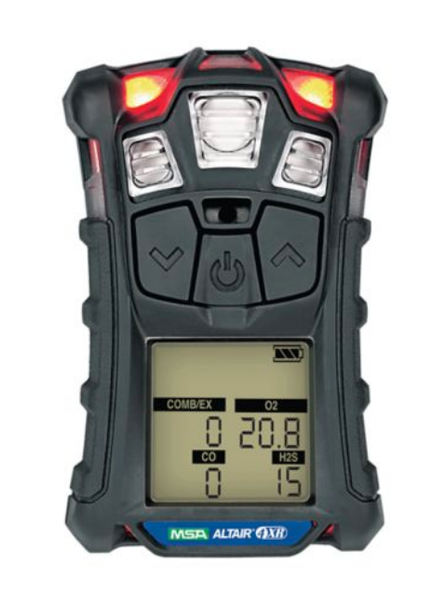
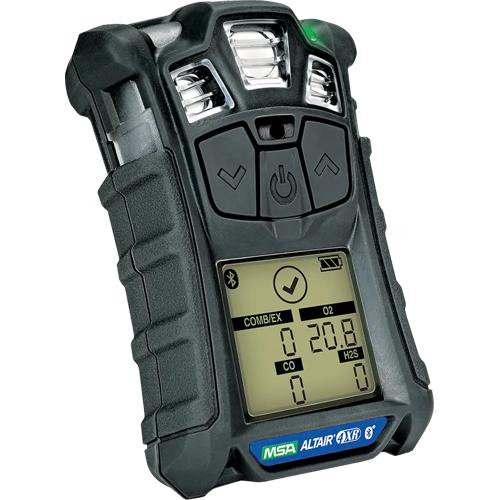
Altair 4XR Multi-Gas Detector, 4 Gas, LEL - O2 - CO - H2S | MSA
MSA
$1,275.32A rugged and reliable gas detector Outfitted with rapid-response MSA XCell® sensors, the ALTAIR 4XR Gas Detector is the toughest 4-gas monitor on the market and is backed by a 4-year warranty...$1,275.32 -


Gasclip MGC-IR 4head Monitor | RECHARGABLE
GasClip
$1,170.81Battery life for months instead of hours! Day in, day out, your workers have to charge their portable multi gas detectors so they can keep testing for the presence of hydrogen sulfide (H2S), carbon...$1,170.81 -

BWC4-Y-N Clip4 4-Gas Detector (O2, LEL, H2S, CO), Yellow | BW | Honeywell
Honeywell
$795.99The latest in wearable 4-gas detection. Just clip it on and get the job done. Because for 2 years, you know – IT'S ON. Product Overview: When you’ve got your hands full in the field, you need no...$795.99 -

BWCLIP 2 year CO 35-200 | BW | Honeywell
Honeywell
$192.00Maintenance-free: no sensor or battery changes necessary Offers extended longevity with a 2-year field-replaceable battery and sensor Compact, lightweight design with one-button operation Designed...$192.00 -


Pac 8000 | Draeger
Draeger
$1,430.02The Dräger PAC 8000 is a portable gas detection device designed to monitor a wide range of gases, including carbon dioxide (CO₂) and chlorine (Cl₂), among others. It is widely used in industrial,...$1,430.02 -


Gasclip Simple 4 Gas Monitor | 2 Year Disposable
GasClip
$950.40Gas Detection Made Simple No charging ever! No calibration necessary! (Can be calibrated if required) Reliably test for hydrogen sulfide (H2S), carbon monoxide (CO), oxygen (O2) and combustible gases...$950.40 -

GasAlert MicroClip XL H2S, LEL, O2, CO Yellow | BW | Honeywell
Honeywell
$907.97The industrial Honeywell BW™ MicroClip Series is the world’s most popular multi-gas portable detector, delivering long runtime and reliability — plus small size, low cost and the easiest user...$907.97 -
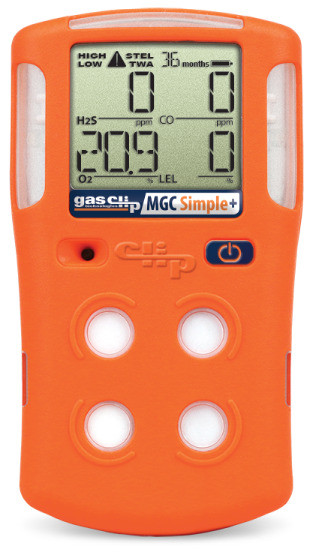

GasClip Simple Plus, Multi-Gas Portable Gas Detector, 3-year Disposable (O2,LEL,H2S,CO)
GasClip
$1,096.91Gas Detection Made Simple Plus No charging ever! No calibration necessary! (Can be calibrated if required) Reliably test for hydrogen sulfide (H2S), carbon monoxide (CO), oxygen (O2) and combustible...$1,096.91 -

BWCLIP 2 YEAR H2S 10-15 | BW | Honeywell
Honeywell
$192.00Maintenance-free: no sensor or battery changes necessary Offers extended longevity with a 2-year field-replaceable battery and sensor Compact, lightweight design with one-button operation Designed...$192.00 -

BWCLIP 2 year O2 19.5-23.5 | BW | Honeywell
Honeywell
$192.00Maintenance-free: no sensor or battery changes necessary Offers extended longevity with a 2-year field-replaceable battery and sensor Compact, lightweight design with one-button operation Designed...$192.00 -

BWCLIP 2 year SO2 5-10 | BW | Honeywell
Honeywell
$315.72Maintenance-free: no sensor or battery changes necessary Offers extended longevity with a 2-year field-replaceable battery and sensor Compact, lightweight design with one-button operation Designed...$315.72 -


MGT-IR 4 Gas Monitor (O2,CO,H2S,LEL) | Senko
Senko
$961.39The Senko MGT-IR / MGT-N 4-Gas Monitor is a compact, lightweight, and rugged portable gas detector designed for industrial safety and confined-space entry. It continuously monitors four critical...$961.39 -


FLEX %LEL(IR) O2 H2S CO, Yellow | BW
$839.93The Honeywell BW™ Flex4 is a rugged, portable, wearable 4-gas detector designed to keep workers safe in hazardous environments. This model — with infrared (IR) LEL, oxygen (O?), hydrogen sulfide...$839.93 -

Gas Alert MicroClip X3 H2S, LEL, O2, CO Yellow | BW | Honeywell
Honeywell
$1,131.21The industrial Honeywell BW™ MicroClip Series is the world’s most popular multi-gas portable detector, delivering long runtime and reliability — plus small size, low cost and the easiest user...$1,131.21 -

X-am 2800 EX | Draeger
Draeger
$1,896.96 - $2,453.89The Draeger X-am 2800 EX with PPCS (Personal Protective Calibration Station) is an advanced, multi-gas detector designed to monitor hazardous gases in industrial environments, including confined...$1,896.96 - $2,453.89 -

Pac 8000 H2 w/Bluetooth | Draeger
Draeger
$1,539.46The Dräger Pac 8000 H2 is a high-performance handheld gas detector designed for continuous monitoring of hydrogen (H2) in a variety of industrial applications. This portable device is part of the Pac...$1,539.46