
Honeywell
2.5% (50%LEL) CH4, 18%O2, 25ppm H2S, 100ppm CO, 34L | BW

- SKU:
- 34L-421

Description
This is a 34-litre (34 L) disposable (or non-refillable) calibration gas cylinder, containing a quad-gas mixture tailored for bump testing and calibration of four-gas portable gas detectors. The blend includes methane (CH?), oxygen (O?), hydrogen sulfide (H?S), and carbon monoxide (CO), with nitrogen (N?) as the balance gas.
- Methane (CH?) is present at 2.5% by volume, which corresponds to about 50% of the Lower Explosive Limit (LEL) for methane. This means the gas mixture can test the combustible or LEL sensor on a gas detector.
- Oxygen (O?) is at 18%, which is lower than ambient “normal air” (~20.9%) — this helps simulate oxygen-depleted environments while still being safe to handle.
- Hydrogen Sulfide (H?S) is at 25 ppm, a low but hazardous concentration often used in calibration, especially for detectors measuring very toxic gases.
- Carbon Monoxide (CO) is present at 100 ppm, enabling calibration of CO sensors as well.
- The rest of the gas volume is typically nitrogen (N?), which acts as a diluent / balance gas.
These cylinders are used to bump-test (perform a functional test) or span-calibrate multi-gas detectors. During a bump test, the detector’s sensors are exposed to this known concentration, and the instrument must respond within expected limits — verifying correct sensor operation. For calibration, the device is adjusted (if necessary) to read accurately for that gas mixture.
The 34 L size gives a good balance: enough gas for many calibration or bump-test cycles, while remaining compact and portable. These cylinders typically have a C-10 (5/8″-18 UNF) valve (or equivalent), compatible with standard demand-flow or fixed-flow regulators used in field calibration.
Because the gas mix includes flammable CH?, plus toxic CO and H?S, these cylinders are handled under hazardous-gas (HAZMAT) precautions, and come with a Certificate of Analysis (CoA) for quality assurance. The cylinders may also have a limited shelf life (often 12–24 months, depending on supplier) to ensure gas stability
Cylinder Material
Usually aluminium (for lightweight, portable use)
Valve Type / Connection
Commonly C-10 (5/8″-18 UNF)
Pressure
Depending on the manufacturer, but common for similar 34 L gas cylinders is ~500 psi / 35 bar for non-refillable
Shelf Life
Often 12–24 months, depending on the supplier and storage conditions. Example: Calgaz 34L 2.5% CH? / 25 ppm H?S cylinder has 24 months shelf life
Accuracy / Certification
Supplied with a Certificate of Analysis (CoA), often NIST- or ISO-traceable, depending on manufacturer. (For example, Calgaz version provides NIST-traceable CoA.)
Use Case / Application
- Bump-testing portable gas detectors (especially 4-gas detectors)
- Span-calibration of multi-gas sensors
- Verifying sensor response for LEL, O?, H?S, CO
- Safety / maintenance / calibration labs in industrial, petrochemical, confined-space environments
Safety Considerations
- Gas is flammable due to CH? component.
- Toxic components (CO, H?S) require proper ventilation, safety handling.
- Use with proper regulator and flow control device.
- Storage and transport may need to follow hazardous-gas cylinder norms.
Advantages & Benefits
- Multi-gas calibration: Because it has four gases (combustible, toxic, oxygen), it’s very efficient for calibrating 4-gas detectors in one go.
- Compact & portable: 34 L size provides a good number of tests while staying manageable to carry to field locations.
- Reliable response: The concentrations are chosen to give a meaningful test for both flammable and toxic sensors.
- Traceable quality: With a CoA, you can be confident in the accuracy of the gas mix for calibration/audit purposes.
Limitations / Drawbacks
- Limited life: Shelf life means you need to use or replace before expiration.
- Gas consumption: If performing many calibrations, the 34 L volume may run out; higher-volume cylinders may be needed.
- Safety risk: Toxic and flammable gases mean stricter handling procedures.
- Regulator compatibility: You need compatible regulators (demand-flow or fixed-flow) that can deliver the correct flow rate for your detectors.
More Info
Quad-Gas Calibration Gas for Portable Detector Verification
The 34 L quad-gas calibration gas cylinder is designed for bump testing and span calibration of portable gas detectors used in industrial work. Safety coordinators, maintenance technicians, and gas detector technicians typically use this calibration gas to verify sensor response for combustible gas, oxygen, hydrogen sulfide, and carbon monoxide channels. This non-refillable cylinder contains 2.5% methane at 50 LEL, 18% oxygen, 25 ppm hydrogen sulfide, and 100 ppm carbon monoxide.
Industry Applications and Professional Use
Oil & Gas Work Environments
Field crews and safety personnel commonly use quad-gas calibration gas when they verify portable gas detectors before confined space entry or hot work. Oil and gas sites often require routine detector checks because workers may encounter oxygen depletion, flammable gas mix conditions, hydrogen sulfide, and carbon monoxide. This calibration gas supports functional test workflows for gas detection equipment in remote and high-risk environments.
Manufacturing Facilities
Maintenance teams and instrumentation technicians typically use this gas cylinder during pre-shift calibration and scheduled equipment checks. Manufacturing environments often rely on multi-gas detector performance to support work near process equipment, utilities, and enclosed areas. The certified gas blend provides a practical way to confirm detector response without interrupting production longer than necessary.
Utilities Operations
Utility crews commonly use portable gas detectors in vaults, trenches, and other restricted-access work zones. This calibration gas helps teams perform detector verification before entry and during routine maintenance planning. It gives supervisors a consistent option for field calibration and documentation.
Mining Sites
Mining personnel often work in areas where oxygen depletion and toxic gas sensors require regular functional checks. This non-refillable cylinder supports detector verification for combustible gas, hydrogen sulfide, and carbon monoxide channels. It works well for crews that need compact calibration gas cylinder support during field calibration tasks.
Emergency Services
Emergency response teams typically need a reliable gas detector test gas for rapid instrument checks in the field. This 34 L cylinder suits mobile operations where responders may need to confirm multi-gas detector readiness before entering unknown atmospheres. It supports fast, repeatable bump testing during incident response.
Transportation Operations
Transportation maintenance teams commonly use portable gas detectors around loading areas, service bays, and enclosed compartments. This quad-gas calibration gas helps verify detector response before work begins in spaces where combustible gas or toxic gas sensors matter. It supports practical, routine instrumentation calibration in day-to-day operations.
Technical Specifications and Product Features
Understanding Product Standards
Calibration gas cylinder specifications matter because they define how the detector responds during a functional test and span calibration. The gas concentrations help users confirm lower explosive limit response, oxygen reading behavior, and toxic gas sensor performance. A known gas blend supports repeatable detector verification and cleaner documentation.
| Specification | What It Means | Practical Benefit |
|---|---|---|
| 2.5% CH4 (50 LEL) | Methane level used to test combustible gas response | Supports lower explosive limit channel verification |
| 18% O2 | Reduced oxygen concentration for detector checking | Helps simulate oxygen depletion conditions |
| 25 ppm H2S / 100 ppm CO | Toxic gas concentrations for sensor calibration | Allows testing of hydrogen sulfide and carbon monoxide sensors |
| 34 L non-refillable cylinder | Disposable cylinder with nitrogen balance gas | Offers a compact, field-ready supply for repeated checks |
Use Case Scenarios and Applications
Confined Space Entry Checks
Crews commonly use this quad-gas calibration gas before confined space entry programs. The mix helps confirm detector response for combustible gas, oxygen, hydrogen sulfide, and carbon monoxide channels. That supports consistent bump testing before workers enter tanks, pits, vaults, or process spaces.
Industrial Maintenance Shifts
Technicians often perform span calibration before maintenance work begins. This cylinder gives teams a known gas mix for portable gas detectors used around process lines, utilities, and mechanical rooms. It helps crews verify instrument readiness per manufacturer instructions.
Field Operations
Oil and gas teams frequently carry a compact calibration gas cylinder into remote locations. The 34 L size works well for repeated checks without adding unnecessary bulk. Workers can use it for on-site detector verification when they need practical instrumentation calibration.
Safety and Calibration Labs
Labs and safety departments commonly use this certified gas blend for routine documentation and detector checks. The known concentrations support audit-friendly records and repeatable functional test procedures. Teams can use it on portable gas detectors across a variety of gas detection equipment programs.
Ideal Applications and Work Environments
Where This Quad-Gas Calibration Gas Excels
- Confined space entry programs: Supports multi-gas detector test routines for entry teams that need reliable sensor verification.
- Oil and gas field operations: Compact design and flammable gas mix support on-site field calibration.
- Industrial maintenance sites: Works well for pre-shift bump testing and detector verification before work begins.
- Safety and calibration labs: Known gas concentrations help with documentation and routine instrument checks.
Professional Applications
Workers Who Rely on This Equipment
- Safety coordinators: Oversee detector readiness and keep calibration records current.
- Maintenance technicians: Use it for routine pre-job checks on portable gas detectors.
- Instrumentation technicians: Perform span calibration and detector adjustments.
- Gas detector technicians: Verify sensor performance and functional test results.
- Site supervisors: Confirm equipment readiness before crews enter work areas.
- Industrial hygienists: Support monitoring programs and documentation workflows.
Complete Safety Equipment Solutions
Complementary Safety Gear
This calibration gas works alongside other equipment for a more complete gas detection program. Workers commonly pair it with portable gas detectors, calibration regulators, respirators, and safety glasses to support controlled handling and verification tasks. All Safety customers often use layered equipment choices to support confined space safety and field calibration workflows.
Recommended Equipment Combinations
- Confined space entry: quad-gas calibration gas + portable gas detector + calibration regulator + respirator
- Field maintenance checks: quad-gas calibration gas + gas detectors + safety glasses
- Calibration bench use: quad-gas calibration gas + calibration regulators + portable gas detectors
Selection Guide and Product Suitability
When to Choose This Product
Choose this cylinder when you need a known gas blend for routine bump testing of portable gas detectors. It works well when your program checks combustible gas, oxygen, hydrogen sulfide, and carbon monoxide sensors together. It also fits field teams that need a compact non-refillable cylinder for repeated detector verification.
Key Evaluation Factors
- Compatibility with your calibration regulator and flow setup
- Required gas concentrations for your detector model
- Number of tests your program performs each cycle
- Storage and handling controls for hazardous gas cylinders
Limitations and Alternative Considerations
This product is not suitable for applications that require refillable cylinders or different gas concentrations. Some programs may need a larger-volume calibration gas cylinder if they perform frequent checks. Available from All Safety with standard, expedited, or overnight shipping to suit project timelines.
Daily Use and Maintenance
Workplace Integration
Use this cylinder when your program calls for routine bump tests or span calibration, typically before shifts or before confined space entry. Connect it to a compatible regulator and follow manufacturer instructions for flow rate and setup. Crews commonly keep it at a calibration bench or in a field kit for convenient access.
Care and Replacement Guidelines
Inspect the valve condition, label readability, and expiration date before each use. Keep the cylinder exterior clean and dry per manufacturer instructions, and store it in a cool, ventilated location away from heat and ignition sources. Replace the cylinder when it reaches expiration or the gas volume is depleted, per manufacturer instructions.
Related Products
Related Products

2.5% (50%LEL) CH4, 18%O2, 25ppm H2S, 100ppm CO, 58L | BW
Honeywell
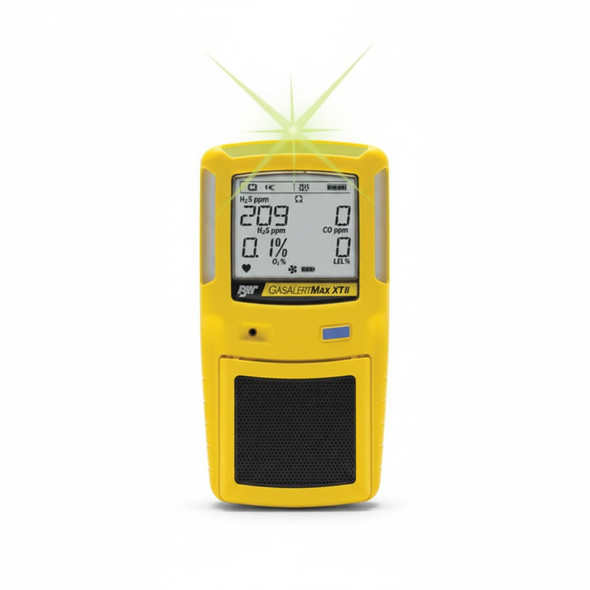

GasAlertMax XT II with H2S, LEL, O2, CO | Honeywell
Honeywell

Bump Gas 50%CH4, 10% O2, 200ppm CO, 40ppm H2S | BW
Honeywell


FLEX %LEL(IR) O2 H2S CO, Yellow | BW

Gas Alert MicroClip X3 H2S, LEL, O2, CO Yellow | BW | Honeywell
Honeywell