

Back Up Alarms
What Are Back Up Alarms?
A back up alarm is an audible warning device mounted on a vehicle that sounds automatically when the vehicle shifts into reverse. The device, also called a backup alarm or backup beeper, alerts pedestrians and ground workers standing in a driver's blind spot. Back up alarms reduce the risk of back-over accidents on sites where reversing vehicles operate near foot traffic.
All Safety supplies back up alarms to industrial and commercial buyers across Canada.
Key Takeaways About Back Up Alarms
- Back up alarms emit an audible tone automatically when a vehicle's reverse gear engages.
- Sound output is rated in decibels, with higher ratings suited to louder job sites.
- Self-adjusting alarms raise or lower volume in response to ambient noise levels.
- Voltage compatibility must match the vehicle's electrical system before installation.
- Housing material affects how well the alarm withstands vibration, dust, and moisture.
- Single-tone, dual-tone, and multi-frequency alarms differ in how directional the sound is.
- Mounting position at the rear of the vehicle affects how far the warning carries.
Where Are Vehicle Back-Up Alarms Used?
Vehicle back-up alarms are standard equipment wherever heavy equipment shares space with ground crews. Construction sites mount them on excavators and dump trucks to warn workers near blind spots. Warehouses and distribution centers rely on them for forklifts operating in tight aisles.
Industry Applications for Reversing Alarms
- Construction: heavy equipment with obstructed rear views uses high-output alarms to warn ground crews near excavators and dump trucks.
- Warehousing: forklifts operating in confined aisles use directional alarms to prevent collisions at blind intersections.
- Municipal services: waste collection and street maintenance vehicles use self-adjusting alarms to limit noise in residential areas.
- Mining: heavy machinery in low-visibility conditions uses ruggedized alarms rated for dust and vibration exposure.
- Agriculture: tractors and harvesters use weather-resistant alarms to warn seasonal workers unfamiliar with the equipment.
- Distribution and logistics: loading docks with constant vehicle movement pair reversing sounders with broader traffic safety measures.
How Do You Choose the Right Backup Alarm?
Choosing a backup alarm starts with matching sound output to the work environment. A reverse alarm rated for a quiet warehouse will get drowned out on a loud construction site, while an oversized alarm can draw noise complaints in residential zones. Tone type and voltage compatibility narrow the field further.
| Tone Type | Sound Character | Typical Setting | Notes |
|---|---|---|---|
| Single-tone | Fixed beep, non-directional | General industrial use | Lowest cost, simplest design |
| Dual-tone | Alternating pitch | Mixed noise environments | Easier to distinguish from ambient sound |
| Multi-frequency | Broadband, directional | Construction, mining | Helps workers locate the vehicle by ear |
Single-tone alarms suit straightforward applications, while multi-frequency alarms help workers pinpoint a vehicle's location in loud or chaotic settings.
Back Up Alarm Terminology and Specifications
- Backup beeper
- Common colloquial term for a back up alarm, used interchangeably in everyday job-site language.
- Back-over alarm
- Alternate name emphasizing the alarm's role in preventing back-over incidents involving pedestrians.
- Self-adjusting alarm
- An alarm that automatically raises or lowers output based on surrounding ambient noise.
- Dual-tone
- An alarm pattern that alternates between two pitches to stand out from steady background noise.
- Die-cast housing
- A metal enclosure designed to resist impact, vibration, and moisture in outdoor environments.
- Multi-frequency alarm
- A broadband alarm type that helps listeners judge the direction a sound is coming from.
Daily Use and Maintenance for Back Up Alarms
Mounting position affects how well a back up alarm performs in daily use. Placing the alarm at the rear of the vehicle, clear of mud flaps and debris paths, helps sound carry without obstruction. Reversing sounders exposed to road grime need periodic cleaning to keep output consistent.
Regular testing during pre-operation checks catches failures before they become a safety gap. Operators should also confirm the alarm's wiring and connected lighting accessories remain secure after rough terrain use.
Buying Process for Back Up Alarms
- Identify the vehicle's voltage system before selecting a compatible alarm.
- Estimate typical ambient noise at the worksite to set a target decibel range.
- Decide between fixed-volume and self-adjusting alarm types.
- Choose a tone type suited to the work environment.
- Confirm housing material matches expected weather and impact exposure.
- Review mounting hardware compatibility with the vehicle's rear frame.
Common Questions About Back Up Alarms
Are back up alarms required on commercial vehicles?
Requirements vary by jurisdiction and vehicle type, and often depend on whether a vehicle has an obstructed rear view. Fleet operators should confirm specific obligations with their relevant workplace safety regulator rather than assuming a blanket rule applies.
What's the difference between a backup alarm and a backup beeper?
The terms describe the same device. "Backup beeper" is informal job-site language, while "back up alarm" is the more common technical and commercial term used by manufacturers.
Will a back up alarm be too loud for a residential area?
A fixed high-output alarm can draw noise complaints in residential or quiet settings. Self-adjusting models reduce this risk by lowering volume automatically when ambient noise is low.
Do self-adjusting alarms work better than fixed-volume alarms?
Self-adjusting alarms generally perform better in environments where noise levels change throughout the day. Fixed-volume alarms remain simpler and can suit consistently loud or consistently quiet sites.
What's the best mounting position for a backup alarm?
Most installers mount the alarm at the rear of the vehicle, positioned to project sound away from the body and clear of mud flaps or debris. Exact placement should follow the manufacturer's installation guidance for that specific model.
Quick Selection Checklist for Back Up Alarms
- Verify sound output suits the worksite's typical ambient noise level.
- Check the alarm's tone type against the need for directional sound.
- Confirm voltage compatibility with the vehicle's electrical system.
- Review housing material for durability in the operating environment.
- Assess whether self-adjusting volume reduces noise complaint risk.
- Calculate total cost including any required mounting hardware.
- Test alarm audibility from multiple approach angles after installation.
- Schedule routine checks to confirm the alarm stays functional over time.
Selecting a back up alarm comes down to matching sound output, tone type, and voltage to the vehicle and the worksite. Self-adjusting models suit environments with shifting noise levels, while fixed-volume alarms remain a simpler option for consistent settings. Housing material and mounting position determine how well the alarm holds up to daily wear. Reviewing these factors against the buying process above helps narrow the options to a model that performs reliably and keeps ground workers aware of reversing vehicles.
- Product
- Qty in Cart
- Quantity
- Price
- Subtotal
-
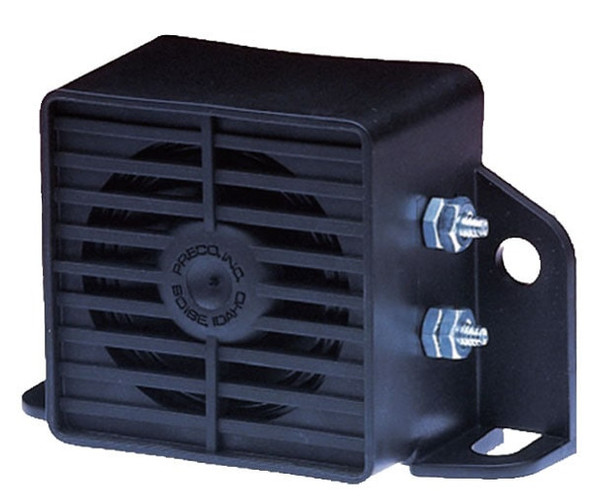
Backup Alarm 102db Single Tone
SWS Warning Lights
$54.09Backup Alarm 102db Single Tone | SWSWater resistent speaker cone. ABS plastic housing. Encapsulated circuitry. Stud mount wiring . SAE J994 Class F compliant.Mount Style: PermanentInput Voltage:...$54.09 -

Backup Alarm 12Vdc 97dB
SWS Warning Lights
$68.18Backup Alarm 12Vdc 97dB | SWSWater-resistant speaker cone. Mount Style: PermanentWarranty: 2.00 Years$68.18 -

Backup Alarm 107db Single Tone
SWS Warning Lights
$66.19Backup Alarm 107db Single Tone | SWSWater resistent speaker cone. ABS plastic housing. Encapsulated circuitry. SAE J994 Class B compliant.Mount Style: PermanentInput Voltage: 12-24VdcWarranty: 2.00...$66.19 -

Backup Alarm 97db Single Tone - 12-24Vdc
SWS Warning Lights
$38.43Backup Alarm 97db Single Tone - 12-24Vdc | SWSWater resistent speaker cone. ABS plastic housing. Encapsulated circuitry. Stud mount wiring. SAE J994 Class C compliant.Mount Style: PermanentInput...$38.43 -

Switch Kit for Backup Alarm NO or NC Spring Type
SWS Warning Lights
$86.27Switch Kit for Backup Alarm NO or NC Spring Type | SWS$86.27