

Vests
What Are Safety Vests?
A safety vest is a fluorescent garment with retroreflective strips that keeps workers visible around moving vehicles and equipment, day or night. Buyers also call it a high visibility vest, since its core purpose is making the wearer stand out against any worksite background.
All Safety supplies safety vests to industrial and commercial buyers across Canada.
How Do Safety Vests Provide High Visibility?
Safety vests combine two visibility systems that work in different light. Fluorescent background fabric absorbs ultraviolet light and re-emits it as visible light, making the vest look brighter than ordinary fabric during the day. Retroreflective tape then bounces headlights and equipment lights directly back toward the source at night.
A reflective vest depends on this combination to stay visible in fog, rain, or low dawn and dusk light. Workers can compare vest material grades against reflective tapes for other gear to match retroreflective performance.
Safety Vest Classes: CSA Z96 Class 1, 2 and 3 Requirements
CSA Z96 sets three vest classes based on traffic speed and worker attention level. Class 1 fits controlled low-speed areas, Class 2 covers moderate-risk environments, and Class 3 applies to high-speed roadway exposure. ANSI/ISEA 107 mirrors this structure and serves as a secondary reference across Canada and the United States.
Safety Vest Class Comparison
| Class | Traffic Exposure | Background Material Level | Typical Role |
|---|---|---|---|
| Class 1 | Low-speed, controlled | Minimum | Warehouse, parking attendants |
| Class 2 | Moderate-speed | Moderate | Road construction, utility crews |
| Class 3 | High-speed roadway | Maximum | Highway construction, emergency response |
The comparison shows vest class scales directly with traffic speed. A class 1 safety vest suits low-risk indoor work, while Class 3 protection is reserved for workers exposed to highway-speed traffic, matching CSA Z96 minimums to traffic safety equipment used alongside it.
Safety Vest Terminology
- Class 1
- Vest rated for low-speed, controlled-traffic environments under CSA Z96.
- Class 2
- Vest rated for moderate-risk environments with faster-moving traffic.
- Class 3
- Vest rated for maximum visibility in high-speed roadway environments.
- Background material
- Fluorescent fabric portion of the vest providing daytime visibility.
- Retroreflective material
- Tape or strip that reflects light back toward its source at night.
Key Takeaways for Choosing a Safety Vest
Key Takeaways
- Match vest class to traffic speed and worksite risk before purchasing safety vests.
- Combine fluorescent fabric with retroreflective tape to maintain visibility in day and night conditions.
- Choose mesh fabric for warm environments to reduce heat buildup during extended wear.
- Select breakaway closures near moving machinery to reduce entanglement risk.
- Confirm CSA Z96 compliance documentation before adding vests to a crew's PPE program.
- Replace vests once reflective tape shows cracking, peeling, or noticeable dimming.
Who Needs a Safety Vest? Industry Applications
Industry Applications
- Road Construction: Crews face fast-moving traffic and typically need a construction vest rated Class 2 or Class 3.
- Warehousing: Forklift traffic requires Class 2 vests with breakaway designs to prevent machinery entanglement.
- Emergency Services: Responders wear vests with role markings and communication equipment attachments.
- Utilities: Field crews near roadways rely on mesh and traffic vest options with contrasting trim for role identification.
- Railways: Track workers need vests meeting CSA Z96 alongside rail-specific reflective patterns.
- Manufacturing: Facilities with automated equipment use safety vests to keep personnel visible to operators.
How to Buy the Right Safety Vest
Buying Process
- Assess worksite traffic speed and risk level.
- Determine required CSA Z96 vest class.
- Choose mesh or solid fabric based on climate.
- Confirm sizing range for the full crew.
- Verify certification documentation from the supplier.
- Order visitor and contractor vest quantities.
- Schedule replacement based on usage frequency.
Crews facing flash-fire risk should review fire retardant vest options alongside standard vests, and site supervisors often need supervisor and surveyor vests for role identification.
Common Safety Vest Questions
How often should a safety vest be replaced?
Replace a safety vest once retroreflective tape shows cracking, peeling, or visible dimming, since these signs reduce nighttime visibility. Fluorescent fabric that looks faded also needs replacement. Daily-use vests generally wear out faster than vests used only occasionally, so usage frequency should guide replacement timing.
Are mesh safety vests as effective as solid fabric vests?
Mesh and solid fabric vests meet the same CSA Z96 visibility requirements when built to the same class. Mesh offers better airflow for warm environments, while solid fabric holds up better under heavy daily use. The right choice depends on climate and wear frequency.
Can safety vests be worn over winter jackets?
Yes, but sizing matters. A safety vest must fit over bulky winter layers without restricting movement or bunching the reflective strips. Some suppliers offer insulated vests built for cold weather that maintain visibility standards while adding warmth directly into the garment.
Do safety vests need special washing care?
Yes. Cool water and mild detergent preserve both fluorescent and retroreflective materials, while high heat machine drying can permanently damage reflective tape. Following manufacturer washing instructions keeps a safety vest compliant and visible for its full service life.
Selecting and Maintaining Your Safety Vest
Quick Selection Checklist
- Check the vest class matches worksite traffic speed and risk level.
- Verify CSA Z96 or ANSI/ISEA 107 certification documentation.
- Assess mesh versus solid fabric based on climate and wear duration.
- Confirm sizing accommodates work clothes without restricting movement.
- Review total cost including replacements, cleaning, and storage needs.
- Confirm the supplier can document current standard compliance.
- Establish a washing protocol using cool water and mild detergent.
- Assess reflective tape condition before every shift.
Choosing the right safety vest starts with matching class to worksite traffic risk, then confirming fit, fabric, and certification before purchase. Crews handling first aid or supervisory duties may also need first aid vest options that combine visibility with role identification. Return and exchange details apply if a vest does not fit properly once received. Proper washing and timely replacement keep reflective performance consistent throughout the vest's service life, protecting workers in low-light and high-traffic conditions across every shift.
-
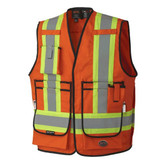 Fire Retardant Vests
-
 First Aid Vest
-
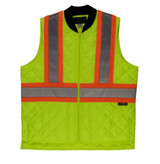 Insulated Vests
-
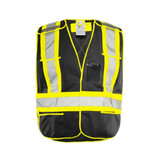 Mesh & Traffic Vests
-
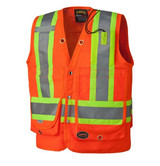 Supervisor and Surveyor Vests
There are no products listed under this category.