

Metatarsal Guard Footwear
Metatarsal Boots: Metatarsal Guard Footwear for Crush and Impact Protection
What Are Metatarsal Guard Boots?
Metatarsal guard footwear adds a protective shield over the instep, the area between the ankle and toes that standard steel toe boots leave exposed. Workers often call these metatarsal boots or met guard boots. The guard, built from steel, aluminum, or composite material, absorbs impact from falling objects and crushing forces before they reach the foot.
All Safety supplies metatarsal guard footwear to industrial and commercial buyers across Canada.
Key Takeaways About Metatarsal Guards
- Metatarsal guards cover the instep, an area standard steel toe boots leave unprotected.
- Boots meet ASTM F2413 in the US and CSA Z195 in Canada for impact resistance.
- Internal met guard designs sit hidden inside the boot; external guards mount over the laces.
- Quality metatarsal boots pair the guard with ankle support, slip resistance, and puncture protection.
- Workers in mining, construction, and foundry work face the heaviest falling-object hazards.
- Proper fit matters: a loose metatarsal guard can shift and leave gaps under impact.
Internal vs External Met Guard Boots: Which Fits Your Job?
Internal met guard boots build the shield into the boot's inner structure, keeping a sleeker profile. External metatarsal guards mount visibly over the laces and tongue. The right choice depends on inspection needs and the risk of debris catching on an exposed guard.
Internal vs External Metatarsal Guard Comparison
| Guard Type | Profile | Inspection | Best Fit |
|---|---|---|---|
| Internal | Low, boot-like appearance | Requires disassembly to check | General industrial, manufacturing |
| External | Visible shield over laces | Easy visual inspection | Mining, foundry, heavy impact zones |
Internal metatarsal boots suit workers who want a standard boot look, while external guards suit sites where quick visual safety checks matter more than appearance.
Where Is Metatarsal Protection Footwear Used?
Metatarsal work boots show up wherever falling or rolling objects threaten the foot's upper surface. Mining crews face falling rock and heavy equipment. Foundry workers need guards resistant to hot metal splash alongside impact protection.
- Construction: falling framing materials and tools drop from height, requiring metatarsal guards on-site.
- Mining: falling ore and machinery components make metatarsal protection standard footwear equipment.
- Foundries: molten metal splash and heavy ingots call for heat-tolerant metatarsal guards.
- Manufacturing: moving machinery components create crush risk that metatarsal guards address directly.
- Oil and gas: pipe handling on rig floors puts the instep at frequent risk.
- Forestry: falling timber and branches make metatarsal work boots a common requirement.
Standards and Certifications for Met Guard Safety Boots
Metatarsal guard boots sold in Canada reference CSA Z195 as the primary footwear standard, with ASTM F2412 and ASTM F2413 as secondary US cross-border reference. CSA Z195 assigns Grade 1 (125 joules) or Grade 2 (90 joules) impact ratings, along with electric shock resistant (ESR) and static dissipative (SD/SD+) classifications. Employers should confirm the specific grade required for their site before purchasing.
Metatarsal Guard Terminology
- Internal metatarsal guard
- A protective shield built into the boot's inner lining, concealed beneath the upper material.
- External metatarsal guard
- A shield mounted over the laces and tongue, visible from outside the boot.
- Grade 1 impact rating
- CSA Z195 classification indicating a boot withstands 125 joules of impact force.
- Grade 2 impact rating
- CSA Z195 classification indicating a boot withstands 90 joules of impact force.
- Composite guard
- A non-metallic metatarsal shield material, often lighter than steel and non-conductive.
Common Questions About Metatarsal Guard Footwear
Is metatarsal protection required by CSA or ASTM standards?
CSA Z195 and ASTM F2413 both define impact resistance grades for footwear generally, and many workplaces mandate compliant metatarsal guards specifically where falling-object hazards exist. Employers typically set the required grade based on a workplace hazard assessment rather than a single national rule.
Can metatarsal guards be added to boots I already own?
External metatarsal guards can sometimes attach to existing boots as an add-on accessory, though fit and coverage vary by brand. Internal guards cannot be retrofitted since they are built into the boot structure during manufacturing.
Do metatarsal guards fit under regular work pants?
Most internal met guard boots fit under standard work pants without issue, since the guard sits inside the boot profile. External guards add bulk over the tongue and may require a slightly looser pant leg.
Do metatarsal guards reduce boot flexibility?
Rigid steel guards restrict forefoot flex more than composite alternatives. Workers who need to crouch or kneel frequently often prefer composite metatarsal guards for their added flexibility during long shifts.
How to Select the Right Metatarsal Boots
Start by identifying the workplace hazard: crushing risk from falling objects calls for a higher CSA grade, while chemical exposure calls for resistant materials alongside the guard. Weigh internal versus external guard design against inspection requirements. Composite guards reduce weight and fatigue over a full shift compared with steel.
Buying Process for Metatarsal Guard Boots
- Identify the specific falling-object or crush hazard at the worksite.
- Confirm the required CSA Z195 or ASTM F2413 impact grade.
- Choose internal or external guard design based on inspection needs.
- Select guard material: steel, aluminum, or composite.
- Try boots later in the day when feet are naturally swollen.
- Check for complementary features like puncture resistance and slip resistance.
Maintaining Metatarsal Guard Boots
Regular cleaning removes corrosive substances that can degrade both the guard and boot upper. Inspect the guard periodically for cracks, deformation, or separation from the boot structure. Rotating between two pairs extends the working life of each boot and allows full drying between shifts.
Weighing Cost Against Protection
Metatarsal guard boots generally cost more than standard steel toe boots because of the added guard material and construction. Composite guards often carry a premium over steel despite weighing less. Buyers should weigh total ownership against durability and comfort rather than upfront price alone, since a boot that gets replaced early due to poor fit or discomfort can cost more over time.
Quick Selection Checklist for Metatarsal Guard Footwear
- Verify ASTM F2413 or CSA Z195 compliance markings on the boot.
- Check that the metatarsal guard fully covers the instep without gaps.
- Confirm internal or external guard design matches inspection requirements on-site.
- Assess weight against shift length to avoid excess fatigue.
- Review total ownership cost against expected durability, not just price.
- Confirm availability of replacement parts or resoling services.
- Check guard attachment points and stitching for signs of wear.
- Establish a replacement schedule based on manufacturer guidance.
Metatarsal guard footwear closes a real gap that standard steel toe boots leave open across the instep. Buyers should match guard type and CSA or ASTM grade to the specific falling-object hazard on-site, then weigh internal versus external design against inspection routines. Fit and material choice affect both comfort and how consistently workers wear the protection through a full shift.
- Product
- Qty in Cart
- Quantity
- Price
- Subtotal
-


Foundry | Foundry 9'' Work Boots with External Metguard | Cofra
Cofra Boots
$539.99DESCRIPTION This Cofra work boot for foundries with metatarsal protection is super heat resistant thanks to its leather-covered insole that insulates against high temperatures and its non-slip...$539.99 -
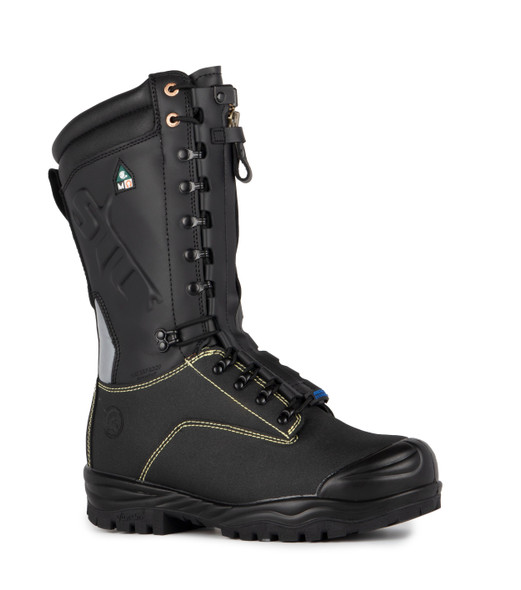

Granite | 14'' Mining Boots | Flexible Metguard Protection | STC
STC
$519.99DESCRIPTION The Granite is a mining boot featuring a unique Metatech System Flex internal metatarsal protection, composed of a lightweight PU foam cushion that absorbs impact and a super-flexible,...$519.99