

Electronic Earmuffs & Plugs
What Are Electronic Earmuffs and Plugs?
Electronic earmuffs and electronic ear plugs are hearing protection devices that use sound-level-dependent compression circuits to block harmful noise while amplifying safe-level sounds, such as speech and environmental warnings. Also called electronic hearing protection or ear defenders, these instruments let workers stay aware of their surroundings without removing protection. Safety managers in construction, oil and gas, mining, and manufacturing use them where both noise control and team communication are required.
All Safety supplies electronic earmuffs and plugs to industrial and commercial buyers across Canada.
Key Takeaways About Electronic Earmuffs and Plugs
- Sound-level-dependent compression circuits block impulse noise above a set threshold while passing speech frequencies through at safe levels.
- Electronic earmuffs and electronic ear plugs both carry NRR ratings; over-ear models typically achieve higher NRR values than in-ear electronic options.
- CSA Z94.2 governs hearing protection sold in Canada, classifying devices as Class AL, BL, or CL based on attenuation performance.
- Bluetooth-enabled models integrate with two-way radios and smartphones, allowing workers to receive calls or radio traffic without removing the device.
- Hard-hat-compatible low-profile models attach to suspension brackets, keeping protection in place on sites that mandate head protection simultaneously.
- IP-rated housings protect electronic components against dust ingress and moisture in outdoor or wet industrial environments.
- Bump testing and calibration requirements do not apply to electronic earmuffs; instead, buyers should check cushion seal integrity and battery charge before each shift.
Electronic vs Passive Hearing Protection: Key Differences
Electronic ear protection uses active compression circuits to differentiate between harmful noise and useful sound, then passes or blocks each accordingly. Passive earmuffs and passive ear plugs use only physical attenuation, blocking all frequencies equally regardless of level. Electronic hearing protection costs more than passive options but reduces the need to remove the device for communication, which is the primary cause of noise exposure on worksites where passive PPE is worn incorrectly.
Electronic vs Passive Hearing Protection Terminology
- Sound-Level-Dependent Compression
- A circuit that monitors incoming decibel level and compresses sounds above a set threshold, typically 82 dB, while passing lower-level sounds through at or near their original volume.
- Ambient Sound Amplification
- Built-in microphones capture environmental sound and replay it through internal speakers at a safe level, allowing the wearer to hear conversation and site warnings while protected.
- NRR (Noise Reduction Rating)
- A single-number dB rating assigned by standardized testing that indicates how much a device attenuates noise at the ear; used to calculate whether a device provides adequate protection for a given exposure level.
- CSA Class AL / BL / CL
- CSA Z94.2 attenuation classes for hearing protectors sold in Canada: Class AL covers low attenuation devices, Class BL medium attenuation, and Class CL high attenuation, with CL providing the greatest noise reduction.
- IP Rating (Ingress Protection)
- An IEC standard two-digit code indicating resistance to solid particle ingress (first digit) and liquid ingress (second digit); higher numbers denote greater protection against dust and moisture.
- Push-to-Talk (PTT)
- A control that activates the device's microphone for radio transmission when pressed, allowing one-way voice communication to a radio network without removing electronic ear protection.
Electronic Earmuffs vs Electronic Ear Plugs vs Passive Earmuffs
| Feature | Electronic Earmuffs | Electronic Ear Plugs (smart earplugs) | Passive Earmuffs |
|---|---|---|---|
| Noise reduction method | Sound-level-dependent compression + physical cup seal | Sound-level-dependent compression + foam/silicone seal | Physical attenuation only |
| Typical NRR range | 22–29 dB | 24–27 dB | 25–33 dB |
| Communication capability | Bluetooth, PTT, ambient audio | Bluetooth, ambient audio | None |
| Hard-hat compatibility | Bracket-mount and low-profile models available | Compatible (no cup interference) | Bracket-mount models available |
| Battery required | Yes (AAA or rechargeable) | Yes (rechargeable) | No |
| Best use case | Team-based operations, intermittent high noise | Workers needing low profile under helmets or respirators | Consistent high-noise environments, no communication needed |
Over-ear electronic earmuffs suit most industrial applications where team communication is frequent. Electronic ear plugs work better when workers simultaneously wear full-face respirators or other headgear that a cup-style device would interfere with.
How to Select Electronic Hearing Protection for Your Worksite
Selecting electronic ear protection starts with a noise exposure assessment that identifies peak dB levels, exposure duration, and whether impulse noise sources such as nail guns or pneumatic tools are present. The device's NRR must reduce the worker's effective exposure below the occupational exposure limit defined by the applicable provincial regulation. Buyers should then confirm the device's CSA Z94.2 class, communication requirements, and physical compatibility with other PPE already in use on site.
Hard-Hat Compatibility for Electronic Earmuffs
Workers who wear CSA Z94.1-certified hard hats on site need electronic earmuffs with bracket-mount or low-profile cup designs. Standard over-ear cup housings can break the hard hat's suspension seal if forced underneath. Bracket-mount models clip directly to the hard hat's accessory slots, maintaining both head protection and hearing protection without compromise.
Pairing with Respiratory Protection
Workers wearing full-face respirators for chemical or particulate hazards cannot use over-ear earmuffs without breaking the respirator's face seal. Electronic ear plugs resolve this interference by fitting entirely in the ear canal, leaving the face seal undisturbed. Buyers deploying both device types should verify the combination in fit testing before approving it for site use.
Gas Monitor Buying Process: Step-by-Step
- Complete a noise exposure assessment identifying peak dB levels and impulse sources.
- Calculate required NRR to bring effective exposure below the provincial OEL.
- Confirm CSA Z94.2 class and verify the device meets the required attenuation class.
- Assess communication requirements: Bluetooth, PTT, ambient audio, or basic amplification.
- Verify physical compatibility with hard hats, respirators, and eye protection in use.
- Check IP rating against the moisture and dust conditions on site.
- Confirm battery life covers full shift length, including cold-weather capacity reduction.
Quick Selection Checklist for Electronic Earmuffs and Plugs
- Verify the device's NRR and CSA Z94.2 class meet your site's calculated exposure reduction requirement.
- Confirm the device carries intrinsic safety certification if the work area is a classified hazardous location.
- Check physical compatibility with hard hats, full-face respirators, and eye protection worn simultaneously.
- Assess whether ambient sound amplification, Bluetooth, or PTT radio integration is required for your communication workflow.
- Review total ownership cost including replacement ear cushions, batteries, and any required accessories.
- Confirm the IP rating matches outdoor, wet, or dusty conditions workers will encounter on site.
- Check manufacturer-specified cushion replacement intervals and confirm replacement parts are available.
- Verify battery life covers full shift duration and assess rechargeable vs disposable battery trade-offs for your operation.
CSA Standards and NRR Ratings for Electronic Ear Protection
CSA Z94.2 is the primary Canadian standard governing hearing protection devices, including electronic earmuffs and electronic ear plugs. The standard defines attenuation testing protocols and assigns devices to Class AL (low attenuation), Class BL (medium attenuation), or Class CL (high attenuation) based on measured performance. US buyers and cross-border operations reference ANSI S12.6 as the equivalent performance benchmark for hearing protectors.
Applying NRR to Workplace Noise Levels
Buyers use a device's NRR to estimate the sound level reaching the worker's ear after the protector is worn. Provincial occupational health regulations set maximum allowable exposure limits, typically expressed as a time-weighted average. A device's effective attenuation in field conditions is generally lower than laboratory NRR values suggest, so safety managers often apply a derating factor when calculating adequacy for high-exposure environments.
Intrinsic Safety in Classified Hazardous Areas
Oil and gas facilities, fuel storage areas, and grain-handling operations often carry hazardous-location classifications that require all electrical devices, including electronic ear protection, to meet intrinsic safety ratings. An intrinsically safe electronic earmuff carries certification confirming its circuits cannot produce an ignition-capable spark or surface temperature in a flammable atmosphere. Buyers working in these environments must confirm intrinsic safety certification before selecting any battery-powered hearing protection device. Workers in these settings often pair electronic ear protection with respiratory protection suited to chemical hazards present in the same zone.
Industry Applications for Electronic Earmuffs and Ear Defenders
Electronic ear defenders address a specific gap that passive hearing protection cannot fill: the need to hear speech, radio traffic, and environmental warnings while working in sustained or intermittent high-noise conditions. Passive protection blocks all incoming sound equally, forcing workers to remove it to communicate, which creates repeated unprotected exposures. Electronic hearing protection eliminates that trade-off across every sector where noise and communication coexist.
Industry-Specific Electronic Hearing Protection Applications
- Construction: Workers operating jackhammers, concrete saws, and heavy equipment face intermittent impulse noise alongside team coordination requirements; electronic earmuffs with ambient amplification let site supervisors give instructions without stopping work.
- Oil and Gas: Field crews working near compressors, flare stacks, and drilling equipment need intrinsically safe electronic ear protection that permits radio communication with control rooms during continuous noise exposure.
- Mining: Underground personnel experience amplified equipment noise in confined workings; electronic earmuffs with extended battery life and robust housings withstand dust, humidity, and shift lengths exceeding eight hours.
- Manufacturing: Assembly-line workers must hear quality-control instructions and machine-fault alarms while protected against continuous press and conveyor noise; audio earmuffs with Bluetooth connectivity allow floor supervisors to relay instructions directly.
- Forestry: Chainsaw operators working alone in isolated terrain need ambient sound amplification to detect falling hazards and approaching equipment; hard-hat-mounted earmuff systems integrate hearing protection with head protection in a single assembly.
- Aviation Ground Handling: Ramp crews face sustained jet engine noise while requiring clear radio instructions for pushback, fueling, and marshalling; electronic earmuffs with dedicated radio input jacks provide both protection and communication clarity.
- Utilities and Wastewater: Workers entering pump stations and wet wells alongside gas monitors need hearing protection compatible with multi-hazard PPE programs that include respiratory and fall protection simultaneously.
Frequently Asked Questions About Electronic Hearing Protection
What is the difference between electronic and passive ear muffs?
Passive earmuffs attenuate all incoming sound equally through physical materials, blocking both harmful noise and useful speech. Electronic earmuffs use sound-level-dependent compression circuits to pass sounds below a set threshold, typically speech, while compressing louder sounds to a safe level. Workers using electronic ear protection can hold conversations and hear warnings without removing the device.
Do electronic earmuffs work with a hard hat?
Bracket-mount electronic earmuffs clip directly to CSA Z94.1 hard hat accessory slots, maintaining both head protection and hearing protection simultaneously. Standard full-cup electronic earmuffs worn under a hard hat can reduce attenuation by breaking the cup seal against the head. Buyers should specify bracket-compatible or low-profile models whenever hard hat use is mandatory on site.
Can electronic earmuffs connect to two-way radios?
Many electronic earmuffs include Bluetooth connectivity or a dedicated radio input jack that integrates with two-way radios, smartphones, and push-to-talk systems. Workers receive incoming audio through the device's internal speakers while remaining protected against ambient noise. Buyers should confirm the radio connector type and frequency compatibility before pairing a specific earmuff model with an existing radio system.
When should I use electronic ear plugs instead of electronic earmuffs?
Electronic ear plugs, also called smart earplugs, suit workers who simultaneously wear full-face respirators, welding helmets, or other headgear that a cup-style device would physically interfere with. In-ear hearing protection options fit inside the ear canal and leave the face and head clear for other PPE. Over-ear electronic earmuffs typically achieve higher NRR ratings, so buyers should compare attenuation performance when choosing between the two form factors for high-noise environments.
Electronic earmuffs and electronic ear plugs protect workers from noise-induced hearing loss while preserving the communication and situational awareness that passive hearing protection cannot provide. Selecting the right device requires matching the NRR and CSA Z94.2 attenuation class to the site's measured noise exposure, confirming compatibility with hard hats and other PPE, and verifying intrinsic safety certification for classified hazardous locations. Buyers should also evaluate Bluetooth and push-to-talk capabilities against team communication requirements before committing to a model. All Safety stocks electronic hearing protection from leading manufacturers, with options covering bracket-mount hard-hat systems, Bluetooth-enabled audio earmuffs, and in-ear smart earplugs for workers who need low-profile protection under respirators or welding helmets and face protection.
- Product
- Qty in Cart
- Quantity
- Price
- Subtotal
-


Pro Aware Bluetooth Earbuds Ambient Listening Technology | 26 DB | ISOtunes
ISOtunes
$189.99Hearing Meets protection With level-dependent Aware Technology™, workers can hear colleagues and other environmental sounds without the fear of hearing damage. PRO Aware protects workers from loud impulse noises while still providing the features...$189.99 -


Instinct True Wireless Tactical Electronic Earbuds 25 DB | ISOtunes
ISOtunes
$189.99The Freedom You Want. The Protection You Need. INSTINCT is a shooting earbud that packs a big punch in a little package. This electronic ear pro is completely dust, sweat, and waterproof and can run up to 16 hours without needing to be recharged. The...$189.99 -
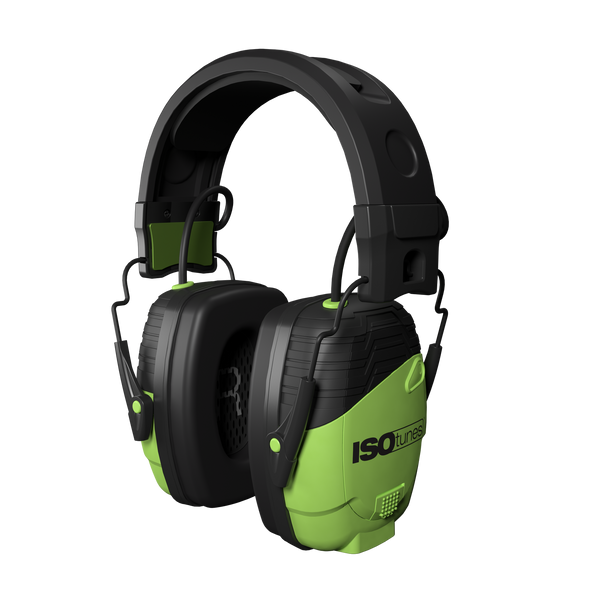

Link Aware Bluetooth Earmuff Ambient Listening Technology | 25 DB | ISOtunes
ISOtunes
$229.99Hearing Meets protection Featuring level-dependent Aware Technology™, ISOtunes LINK Aware is an over-ear hearing protector built to be worn all day long. Communicate with colleagues and listen for warning signals all while enjoying nonstop...$229.99 -


Pro Aware 2.0 Bluetooth Earbuds | 26 DB | ISOtunes
ISOtunes
$229.99PRO Aware 2.0 combines Aware Technology with our most durable design yet, so you stay aware and protected in the toughest conditions. Stay Aware: Aware Technology™ protects you from dangerous noises while allowing you to communicate with...$229.99 -

Global Bluetooth Headband
Hellberg
$238.95European style, limited stock Classic Electronic Hearing Protection with wireless connection to Bluetooth devices.$238.95 -

Peltor CH-3 Listen Only Earmuffs, Cap Mount Style, 25 DB | 3M
3M Safety
$247.79Hearing protection solution with clear audio reception in noisy environments FLX2 connection jack for easy and reliable connection to a wide assortment of handheld devices Lasting comfort for long duration wear times Designed to withstand harsh...$247.79 -

Relax AM/FM Radio Cap-mounted
Hellberg
$257.40Hearing protection with AM/FM radio RELAX protects your hearing while you enjoy listening to your favourite radio station or connect to a communication radio, mobile phones etc. Easy to reach controls let you manually tune the AM/FM radio accurately...$257.40 -

Relax (Head Band)
Hellberg
$257.40RELAX protects your hearing while you enjoy listening to your favourite radio station or connect to a communication radio, mobile phones etc. Easy to reach controls let you manually tune the AM/FM radio accurately. Combined with the automatic frequency...$257.40 -


Sport Caliber True Wireless Tactical Earbuds With Bluetooth 25 DB | ISOtunes
ISOtunes
$259.99The Freedom You Want. The Protection You Need. A Bluetooth shooting earbud that packs a big punch in a little package. The completely cordless design allows you to move freely while Tactical Sound Control™ delivers amplified natural sound and...$259.99 -


Free Aware True Wireless Bluetooth Earbuds Ambient Listening Technology | 25 DB | ISOtunes
ISOtunes
$269.99Communicate Clearly. Work Freely. Completely waterproof and cord-free, these Bluetooth earplugs are our most versatile and innovative to date. With level-dependent Aware Technology™, you can communicate with colleagues and listen for warning...$269.99 -

Active - Cap mounted
Hellberg
$318.92Hearing protection with advanced Level Dependent system ACTIVE allows you to communicate with your collegues, hear warning signals and other important information while protected from hazardous noise. The Level Dependent microphones provides perfect...$318.92 -


Ultracomm Aware True Wireless Bluetooth Earbuds Ambient Listening Technology Detachable Boom Mic | 24 DB | ISOtunes
ISOtunes
$349.99Hearing Meets protection The world's first Bluetooth-enabled in-ear hearing protector with a detachable boom microphone for clear calls in loud environments. With level-dependent Aware Technology™, workers can communicate face-to-face and hear...$349.99 -

React (Cap Mount)
Hellberg
$353.93Hearing protection with AM/FM radio & Level Dependent system Level Dependent microphones in each earcup ensure excellent directional hearing, offers natural sounds and enable you to hear conversations, warning signals and other important...$353.93 -

React (Head Band)
Hellberg
$353.93Hearing protection with AM/FM radio & Level Dependent system Level Dependent microphones in each earcup ensure excellent directional hearing, offers natural sounds and enable you to hear conversations, warning signals and other important...$353.93 -
 $363.76
 -

Xstream LD Headband
Hellberg
$424.64Electronic Hearing protection with Bluetooth and Level Dependent system$424.64