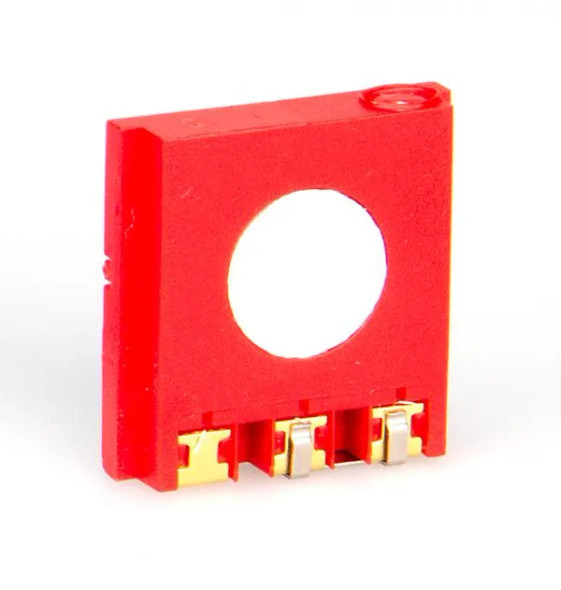
Description
The SR?H?MC is a replacement electrochemical sensor produced by BW Technologies / Honeywell for detecting hydrogen sulfide (H?S) gas. It is part of the MICROceL® sensor family, which is designed for use in portable, life?safety gas detectors.
Key Characteristics & Features
- Gas Detection: Specifically sensitive to hydrogen sulfide (H?S) gas.
- Measurement Range: 0 to ~200 ppm H?S.
- Resolution: 1 ppm (able to detect changes in H?S concentration at 1 ppm granularity).
- Operating Temperature: –20 °C to +50 °C (–4 °F to 122 °F).
- Sensor Technology: Uses a three?electrode electrochemical cell, which ensures reliable and stable current-based output proportional to gas concentration.
- Life / Longevity: Rated for around 2 years in typical air conditions.
- Drift: Long-term output drift is low (in the MICROceL HS family, drift is typically <?5% signal loss/year under correct usage).
- Physical Size: The datasheet for MICROceL?HS sensors (same family) lists a very compact physical form — small diameter, lightweight.
- Baseline Offset: In clean air (at 20–40?°C) the baseline shift is small (–2 to +1 ppm equivalent), which helps maintain accuracy.
Response Time:
- T50 (time to 50% of final reading): <?10 seconds (at ~20?°C)
- T90 (time to 90% of final reading): ~25–40 seconds (depending on conditions)
Overload Capability: According to the MICROceL?HS spec sheet, it can handle up to 1000 ppm H?S (i.e., the sensor is linear well beyond its normal measurement range).
Electrical Characteristics:
- Recommended load resistor: ~10 Ω
- No bias voltage required.
Environmental / Humidity:
- Operating humidity: up to ~90% RH (non-condensing), per sensor spec sheet.
- Operating pressure: around atmospheric ± ~10%.
Storage Conditions: Recommended storage temperature is between 0?°C and 20?°C to preserve sensor life.
Expected Operating Life: Around 2 years in normal air; stored in proper conditions, drift remains manageable.
Physical Material: The sensor housing material is ABS plastic.
Compatibility / Mounting:
- The SR?H?MC is designed as a drop-in replacement in compatible BW / Honeywell portable gas detectors.
- Compatible detectors include: GasAlert MicroClip XT, GasAlert Max XT II, MicroClip XL, etc.
Performance & Benefits
- Reliable Detection: With its electrochemical design, the SR?H?MC provides precise and repeatable measurements of H?S, making it very suitable for safety?critical applications.
- Low Power & Compact Size: Its small form factor and low?power consumption make it well-suited for portable, battery?powered gas detectors.
- Long Service Life: About two years of usable life in air reduces the frequency of sensor replacements in the field.
- Fast Response: Good response times (T50, T90) ensure that dangerous gas concentrations are detected quickly, allowing alarms / safety measures to trigger quickly.
- Stability: Low baseline drift and minimal long-term signal loss help maintain calibration stability over time.
- Robustness: Works in a wide temperature range; designed for typical industrial environments.
Limitations / Considerations
- Because it is optimized for H?S, it cannot detect other gases — you need the correct sensor type for other gases.
- The sensor’s lower limit is 0 ppm and upper reliable measuring limit is ~200 ppm; if you have extremely high H?S concentrations (much more than 200 ppm), you might need a different sensor / detector.
- Over very long-term use, electrochemical sensors will drift, so regular calibration (or bump testing) is required to maintain accuracy.
- Storage conditions are important: incorrect storage (too warm / too cold) can degrade performance or reduce life.
- While the sensor handles humidity, condensing moisture could be problematic; make sure the host device / design avoids water ingress.
Applications / Use Cases
- Industrial Safety Monitoring: In environments such as oil & gas plants, wastewater treatment, sewer systems — where H?S is a hazard.
- Portable Gas Detection: Used in handheld multi-gas detectors carried by workers in confined spaces, production facilities, or during maintenance.
- Maintenance / Calibration: As a replacement sensor, it's used in gas monitors that undergo periodic sensor replacement to ensure reliable detection.
- Life?Safety Instruments: Because it’s approved for use in life-safety portable monitors, it's suitable for use in devices that alert workers when H?S levels exceed safe thresholds.