

Strike First
- Product
- Qty in Cart
- Quantity
- Price
- Subtotal
-

Steel Dry Chemical ABC Fire Extinguisher | 10 lb | StrikeFirst
Strike First
$109.99Steel cylinder Durable polyester powder paint finish Fully rechargeable Waterproof stainless steel gauge Bar coded label Metal valve & handles Complete with wall hook *Optional vehicle / marine...$109.99 -
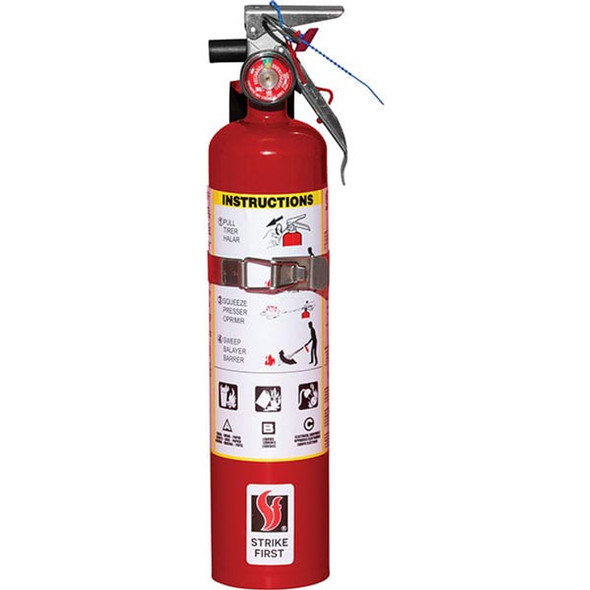
Steel Dry Chemical ABC Fire Extinguisher | 2.5 lb | StrikeFirst
Strike First
$57.49Steel cylinder Durable polyester powder paint finish Fully rechargeable Waterproof stainless steel gauge Bar coded label Metal valve & handles Complete with wall hook$57.49 -

Steel Dry Chemical ABC Fire Extinguisher | 20 lb | StrikeFirst
Strike First
$169.99Steel cylinder Durable polyester powder paint finish Fully rechargeable Waterproof stainless steel gauge Bar coded label Metal valve & handles Complete with wall hook *Optional vehicle / marine...$169.99 -
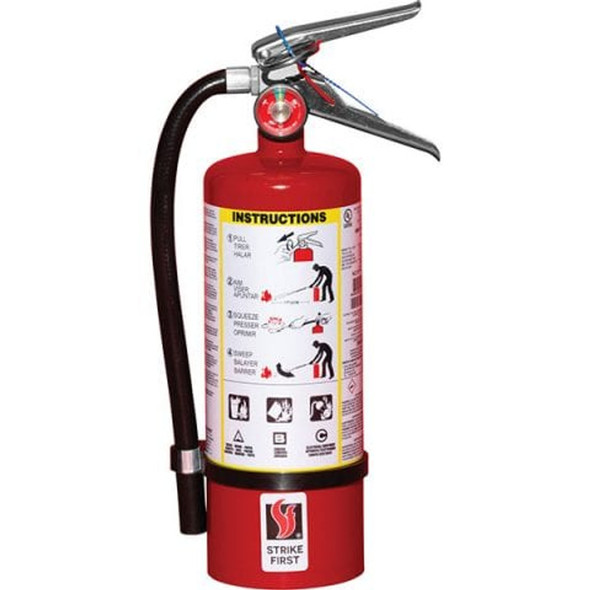
Steel Dry Chemical ABC Fire Extinguisher | 5 lb | StrikeFirst
Strike First
$73.79Steel cylinder Durable polyester powder paint finish Fully rechargeable Waterproof stainless steel gauge Bar coded label Metal valve & handles$73.79
Strike First Fire Extinguishers: Complete Shopping Guide for All Types and Price Points
Strike First fire extinguishers cost $57-$170 and protect commercial facilities, construction sites, industrial plants, and vehicle fleets from Class A, B, and C fires. Entry-level 2.5 lb units start at $57, professional-grade 10 lb models cost $110, 20 lb units reach $170, meeting NFPA 10 standards with 6-12 year typical lifespan.
Here's what matters most about Strike First's lineup: you'll typically find ABC dry chemical formulations across all sizes, making them versatile for most workplace fire scenarios. The reality is these extinguishers handle ordinary combustibles (paper, wood), flammable liquids (gasoline, oil), and electrical equipment fires effectively.
| Type | Price | Protection Level | Coverage Area | Lifespan |
|---|---|---|---|---|
| 2.5 lb ABC | $57.49 | 1-A:10-B:C | Up to 1,000 sq ft | 6 years |
| 5 lb ABC | $73.79 | 3-A:40-B:C | Up to 2,500 sq ft | 8 years |
| 10 lb ABC | $109.99 | 4-A:80-B:C | Up to 5,000 sq ft | 10 years |
| 20 lb ABC | $169.99 | 10-A:120-B:C | Up to 10,000 sq ft | 12 years |
The limitation here's clear: Strike First extinguishers won't protect against Class D (combustible metals) or Class K (cooking oils) fires. You'll need specialized commercial kitchen fire suppression systems for restaurant applications.
Key Takeaways About Strike First Fire Extinguishers
- Strike First fire extinguishers cost $57-$170 and typically last 6-12 years with proper maintenance
- Strike First ABC models protect against three fire types but require replacement when pressure gauge shows red
- 2.5 lb units suit vehicle mounting while 20 lb models handle large commercial spaces effectively
- Steel construction provides durability in harsh environments but adds weight compared to aluminum alternatives
- Rechargeable design allows refills after discharge rather than complete replacement
- Monthly pressure checks and annual professional inspections maintain effectiveness and compliance
- Dry chemical residue requires complete cleanup to prevent equipment damage after use
How to Choose Strike First Fire Extinguishers for Your Specific Work Environment
Select Strike First extinguishers based on: coverage area (1,000-10,000 sq ft per unit), fire class requirements (ABC rating mandatory for most commercial spaces), and mounting accessibility (30-second reach from any work station). Here's the thing about commercial fire protection: undersized units cost $50 less upfront but fail inspection requirements.
Construction Sites and Outdoor Work Areas
Construction environments need 10 lb or 20 lb Strike First units positioned every 75 feet maximum travel distance. You'll typically find welding operations, fuel storage, and electrical equipment creating multiple fire hazards simultaneously. The reality is smaller 2.5 lb units won't provide adequate discharge time for large outdoor fires.
Vehicle and Equipment Fleet Protection
Fleet managers install 2.5 lb Strike First extinguishers in trucks, heavy equipment, and service vehicles due to compact mounting requirements. That's because larger units become projectiles during accidents while smaller ones secure easily in cab brackets. Won't protect against tire fires effectively - those require specialized foam systems.
Warehouse and Manufacturing Facility Requirements
Industrial facilities require 10-20 lb Strike First units spaced according to NFPA 10 guidelines: Class A fires need 75-foot travel distance, Class B fires require 50-foot maximum spacing. Here's what matters most: higher-capacity units handle sustained fires longer but cost more to maintain annually.
Office Buildings and Administrative Areas
Office environments typically use 5 lb Strike First extinguishers near electrical panels, copy centers, and break rooms. The limitation here's clear: won't handle large paper storage fires effectively - those need sprinkler system backup. Purchase-to-replacement cycle averages 8 years with monthly pressure checks.
Small Business and Retail Space Applications
Retail locations install 2.5-5 lb Strike First units near checkout areas, storage rooms, and electrical equipment. You'll find these sizes meet most local fire codes while staying within small business budgets. Basic protection isn't enough for businesses storing flammable merchandise - those need specialized suppression systems.
Strike First Fire Extinguisher Lifespan: When to Replace Your Safety Equipment
Replace Strike First extinguishers every 6 years for 2.5 lb models, 8 years for 5 lb units, 10 years for 10 lb models, and 12 years for 20 lb versions under normal commercial use. Heavy industrial environments reduce lifespan by 20-30% due to vibration, temperature extremes, and contamination exposure.
Visual Inspection Indicators That Signal Immediate Replacement
Check pressure gauge monthly - green zone indicates proper charge, yellow shows marginal pressure, red means immediate replacement needed. Here's the thing about pressure loss: it's typically caused by valve seal deterioration or microscopic pin holes in the cylinder wall that develop over time.
Inspect cylinder body for dents deeper than 1/4 inch, rust spots larger than quarter-size, or any visible corrosion around the valve area. The reality is cosmetic damage often indicates internal deterioration that compromises structural integrity during discharge pressure.
Maintenance Tasks and Required Frequencies
Perform monthly visual inspections checking pressure, mounting bracket security, and access clearance. Annual professional inspections cost $15-25 per unit and include internal pressure testing, valve operation checks, and documentation updates for insurance compliance.
Six-year internal examination requires complete disassembly, cylinder hydrostatic testing, and component replacement. This maintenance costs $40-60 per unit but extends usable life by 6-12 years. Won't be cost-effective for units under $75 - replacement makes more financial sense.
Annual Cost Calculations for Different Use Levels
Light commercial use (offices, retail): $8-12 annual cost including inspections and eventual replacement. Moderate industrial use: $12-18 yearly due to accelerated wear and more frequent inspections. Heavy industrial environments: $18-25 annually with potential early replacement needs.
Here's what matters most about budgeting: factor in $25 annual inspection fees, $50 recharge costs after any discharge, and complete replacement every 6-12 years. You'll typically find total ownership costs reach 150-200% of initial purchase price over equipment lifetime.
Strike First Protection Levels: Understanding Ratings and Standards
Strike First ABC ratings indicate actual fire suppression capacity: 1-A extinguishes fires in 1.25 gallons of water equivalent, 10-B covers 10 square feet of flammable liquid, C means safe for electrical equipment. Higher numbers provide proportionally greater suppression power but increase unit weight and cost significantly.
Decoding Class A Fire Protection Ratings
Class A ratings (1-A through 10-A) indicate ordinary combustible fire suppression capacity measured against standardized wood fires. You'll typically find 2.5 lb units rated 1-A, 5 lb models at 3-A, 10 lb units achieve 4-A, while 20 lb extinguishers reach 10-A performance levels.
The reality is higher A-ratings mean longer discharge time and greater coverage area for paper, wood, and fabric fires. That's because dry chemical quantity directly correlates with suppression duration - more powder equals more firefighting time before exhaustion.
Understanding Class B Flammable Liquid Ratings
Class B ratings (10-B through 120-B) represent square footage of flammable liquid fire coverage using standardized gasoline pan tests. Strike First 2.5 lb units achieve 10-B rating, 5 lb models reach 40-B, 10 lb units provide 80-B protection, 20 lb extinguishers deliver 120-B coverage.
Here's the thing about B-ratings: they assume optimal discharge technique and favorable wind conditions. Real-world effectiveness drops 30-50% in outdoor environments with wind or when operators lack proper training. Won't effectively suppress flowing liquid fires - those require foam systems.
Class C Electrical Safety Considerations
Class C rating means dry chemical won't conduct electricity, allowing safe use on energized electrical equipment up to 1,000 volts. The limitation here's clear: doesn't indicate superior electrical fire suppression - just confirms non-conductive agent won't electrocute users during application.
| Rating | Protection Level | Cost Impact | Weight | Discharge Time |
|---|---|---|---|---|
| 1-A:10-B:C | Small fires only | Base price | 4 lbs | 8-10 seconds |
| 3-A:40-B:C | Moderate coverage | +30% cost | 8 lbs | 12-15 seconds |
| 4-A:80-B:C | Commercial standard | +90% cost | 15 lbs | 18-20 seconds |
| 10-A:120-B:C | Heavy industrial | +195% cost | 30 lbs | 25-30 seconds |
When Higher Ratings Become Mandatory Requirements
Building codes mandate minimum ratings based on square footage and occupancy type. Light hazard occupancies (offices) require 2-A rating minimum, ordinary hazard (retail, light manufacturing) needs 2-A:10-B, extra hazard (heavy manufacturing) demands 4-A:40-B minimum protection levels.
You'll find comprehensive fire protection equipment selection becomes critical when local authorities having jurisdiction specify ratings above Strike First's maximum capacity. That's where specialized suppression systems supplement portable extinguisher protection.
Common Strike First Fire Extinguisher Mistakes That Reduce Protection
#1 mistake: mounting extinguishers above 5 feet reduces accessibility by 40% during emergency situations when adrenaline affects motor skills and height perception. Proper mounting height stays between 3.5-5 feet with top of extinguisher not exceeding maximum reach requirements.
Improper Storage and Environmental Exposure
Storing Strike First units in vehicle compartments without climate control causes pressure fluctuations that damage internal seals within 2-3 years. Temperature extremes between -40°F and 120°F+ compromise valve springs and gauge accuracy significantly.
Here's the thing about outdoor mounting: direct sunlight degrades cylinder coating and accelerates internal corrosion. You'll typically find UV exposure reduces extinguisher lifespan by 25-30% compared to indoor storage. Won't maintain pressure effectively when exposed to freeze-thaw cycles repeatedly.
Inadequate Inspection and Maintenance Schedules
Skipping monthly visual inspections allows pressure loss and physical damage to go undetected until emergency use fails. The reality is 15% of uninspected extinguishers show low pressure or physical damage that prevents proper operation during actual fires.
Annual professional inspections cost $15-25 but catch 80% of developing problems before they cause complete failure. That's because trained technicians identify valve wear, gauge drift, and mounting bracket deterioration that visual checks miss.
Incorrect Extinguisher Selection for Fire Types
Using ABC dry chemical on sensitive electronic equipment causes more damage than many small electrical fires. Here's what matters most: dry chemical residue requires complete disassembly and cleaning of computers, control panels, and precision instruments after any discharge.
The limitation here's clear: Strike First ABC units aren't suitable for commercial kitchens with deep fryers or cooking equipment. Class K wet chemical systems handle cooking oil fires safely while ABC extinguishers can spread burning oil and escalate fire severity.
Poor Operator Training and Emergency Response
Untrained operators waste 50-70% of extinguisher capacity through improper technique, reducing effective firefighting time from 20 seconds to 6-8 seconds. PASS method training (Pull, Aim, Squeeze, Sweep) takes 15 minutes but doubles suppression effectiveness.
You'll find panic responses include aiming at flame tops instead of fire base, standing too close (under 6 feet), and failing to maintain steady discharge pressure. Won't achieve rated performance without proper stance, aim point, and sweep technique during actual emergency situations.
Cost Impact of Common Mistakes
Equipment damage from improper storage adds $200-500 annual replacement costs for premature failures. Inadequate maintenance voids manufacturer warranties worth $50-150 per unit. Poor fire response training increases property damage by average $10,000-25,000 when extinguishers fail to control initial fires effectively.
Final Strike First Fire Extinguisher Buying Checklist
- Calculate required coverage area and select appropriate capacity rating
- Verify ABC rating meets local fire code minimum requirements
- Confirm mounting locations provide 75-foot maximum travel distance
- Budget annual inspection costs and 6-12 year replacement schedule
- Plan operator training for PASS discharge technique
- Consider environmental protection for outdoor or vehicle mounting
- Evaluate backup suppression needs for specialized fire hazards
- Document maintenance schedule for insurance and compliance requirements