

Harnesses
Understanding Safety Harnesses: Your Essential Guide to Fall Protection Equipment
A safety harness is personal protective equipment that prevents workplace falls by distributing impact forces across your shoulders, thighs, and pelvis through webbing straps and D-ring attachment points. It works by connecting you to an anchor point via a lanyard or lifeline, arresting your fall within a safe distance. Professional safety suppliers like All Safety provide comprehensive harness solutions for industries requiring reliable fall protection systems. Construction workers, industrial maintenance teams, and utility workers rely on safety harnesses as their primary defense against falls from heights, with costs typically ranging from $150-500 for standard models.
Key Takeaways About Safety Harnesses and Fall Protection
- Safety harnesses distribute fall arrest forces across multiple body points to prevent serious injuries during falls.
- Harnesses should be replaced every 3-5 years with normal use, or immediately after any fall arrest event.
- Different work environments demand specific harness types with appropriate attachment points and features.
- Common mistakes include wearing harnesses too loosely, using damaged equipment, and improper anchor point selection.
- Safety standards like ANSI Z359.11 and CSA Z259.10 establish essential requirements for harness performance.
- Proper inspection takes 2-3 minutes and must check webbing, stitching, hardware, and labels before each use.
- Workers need 4-8 hours of initial training plus annual refreshers to use safety harnesses effectively.
How Safety Harnesses Work: Protection Mechanisms and Core Features
Safety harnesses work by creating multiple connection points that distribute fall forces throughout your body's strongest areas. The process involves webbing straps wrapping around your torso and legs, connected by load-bearing stitching to metal D-rings. When a fall occurs, the harness engages within 2 feet, limiting free-fall distance and reducing impact forces on your body.
The chest D-ring handles positioning work, while the dorsal D-ring manages fall arrest forces up to 1,800 pounds. Different harness types serve specific applications - standard full-body harnesses work for general construction, positioning harnesses with side D-rings suit tower work, and suspension harnesses enable confined space entry. Scaffolding systems typically require standard harnesses with single dorsal attachment points for optimal safety.
When to Replace Safety Harnesses: Critical Timeline and Warning Signs
You should replace safety harnesses immediately after any fall arrest event, regardless of visible damage. The typical replacement timeline ranges from 3-5 years for daily use to 5-7 years for occasional use, depending on environmental exposure and usage frequency. Warning signs that indicate immediate replacement include frayed or cut webbing, deformed hardware, missing labels, chemical contamination, or heat damage from welding operations.
Impact indicators show red stitching when forces exceed safe limits, signaling compromised integrity. The risks of using expired harnesses include webbing degradation that reduces strength by up to half, hardware corrosion that causes unexpected failures, and UV damage that weakens synthetic materials over time. All Safety recommends dating harnesses upon first use and maintaining detailed inspection logs for liability protection.
Common Safety Harness Mistakes and How to Avoid Them
The most dangerous mistakes include wearing harnesses too loosely, which allows excessive movement during falls and increases injury risk. Workers often connect to improper anchor points rated below 5,000 pounds or position lanyards incorrectly, creating swing fall hazards that can cause impact injuries.
Another critical error involves using damaged equipment because "it looks okay" without proper inspection procedures. Additional mistakes include mixing incompatible components from different manufacturers, exceeding weight capacity limits with tools and equipment, and failing to adjust harnesses when wearing different seasonal clothing. Workers sometimes remove harnesses "just for a minute" during breaks, creating unprotected exposure periods that account for many workplace fall incidents.
Complete Safety Harness Inspection Process
How to properly inspect a safety harness begins with examining all webbing systematically from shoulder straps to leg loops. Start by running your hands along each strap, feeling for cuts, burns, fraying, or chemical damage. Check stitching patterns for broken or pulled threads, especially at high-stress connection points where webbing meets hardware.
Next, inspect all metal hardware including D-rings, buckles, and adjusters for cracks, deformation, corrosion, or excessive wear patterns. Test each buckle's operation to ensure proper engagement and verify spring-loaded components snap closed completely. Verify labels remain legible with manufacture dates and capacity ratings clearly visible. Professional fall protection inspection services provide detailed annual assessments that complement daily user inspections.
Safety Harness Training Requirements and Best Practices
Training requirements typically involve 4-8 hours of initial instruction covering equipment selection, proper donning procedures, hazard recognition, and emergency response protocols. The curriculum includes classroom instruction on regulations and standards, followed by hands-on practice with actual equipment under qualified supervision.
Workers must demonstrate competency in harness inspection, proper adjustment techniques, and connection to appropriate anchor points before independent use. Annual refresher training takes 2-4 hours and reviews regulation changes, accident case studies, and equipment updates. Specialized environments like confined spaces or electrical work require additional modules covering unique hazards and specialized equipment features.
Industry-Specific Safety Harness Applications
Construction Industry Requirements
Construction companies face daily height hazards requiring full-body harnesses with dorsal D-rings positioned between shoulder blades for optimal load distribution. These teams benefit from high-visibility harnesses in orange or yellow colors for crane operator visibility during lifting operations. Quick-connect chest buckles save valuable time during multiple daily connections and disconnections.
Telecommunications and Tower Work
Telecommunications workers climb towers exceeding 500 feet, requiring specialized positioning harnesses with side D-rings for work positioning and extended task performance. These harnesses include padded waist belts that support body weight during prolonged tasks and suspension trauma straps that deploy after falls, allowing workers to stand and maintain circulation while awaiting rescue operations.
Industrial Maintenance Applications
Industrial maintenance teams need versatile harnesses suitable for various tasks from ladder work to confined space entry and equipment repair. These workers benefit from harnesses with multiple attachment configurations and adjustable leg straps that accommodate different work positions and body orientations. Cross-chest straps prevent harness roll-out during inverted positions, while spark-resistant hardware protects workers in welding environments.
Selecting the Right Safety Harness for Your Workplace Needs
Choose harnesses based on specific work tasks, accurate body measurements, and environmental conditions that affect equipment performance. Measure chest circumference at armpit level and thigh circumference at the largest point, then add 2-3 inches for clothing variations throughout seasons. Weight capacity must exceed user weight plus tools and equipment by at least 50 pounds for adequate safety margin.
Consider environmental factors like temperature extremes, chemical exposure, electrical hazards, and UV radiation when selecting appropriate materials. Polyester webbing resists UV degradation better than nylon for outdoor applications, while Kevlar webbing provides superior cut resistance in sharp-edge environments. All Safety offers specialized coatings that protect against chemical degradation in industrial settings where harsh substances are present.
Safety Harness Maintenance and Storage Best Practices
Maintain harnesses through proper cleaning using mild soap and warm water, avoiding harsh chemicals or solvents that degrade webbing fibers and compromise strength. Air dry equipment completely before storage to prevent mold and mildew growth that can weaken materials over time. Store harnesses hanging freely or laid flat, never wadded or compressed in tight spaces.
Temperature-controlled storage areas maintained between 50-80°F extend equipment service life significantly. The limitations of maintenance include inability to repair damaged webbing or hardware components - these require complete replacement for safety assurance. Chemical contamination often penetrates deeply into fibers, making effective cleaning impossible and necessitating equipment replacement.
Understanding Safety Standards and Regulatory Compliance
Why safety standards matter becomes evident when examining injury statistics from non-compliant equipment failures in workplace incidents. ANSI Z359.11 establishes minimum breaking strengths of 3,600 pounds for harness components, while CSA Z259.10 adds specific requirements for Canadian workplaces including bilingual labeling requirements.
Additional certifications include arc ratings for electrical work (ASTM F887) and flame resistance for oil and gas applications (NFPA 2112). European CE marking indicates compliance with EU standards for imported equipment, while third-party testing laboratories like UL and CSA verify manufacturer claims through rigorous destructive testing protocols. All Safety ensures all supplied harnesses meet current certification requirements and maintains documentation for regulatory compliance.
Complete Safety Harness Selection Checklist
- Verify compliance with ANSI Z359.11, CSA Z259.10, and applicable industry-specific standards
- Confirm weight capacity exceeds user weight plus tools by minimum 50 pounds safety margin
- Measure chest and thigh dimensions accurately, adding 2-3 inches for seasonal clothing variations
- Check compatibility with existing lanyards, lifelines, and designated anchor points
- Calculate total investment including harness cost ($150-500), required training ($500-1000), and annual inspection services
- Evaluate specialized features needed for specific work environments and hazard exposures
- Inspect manufacturing date to ensure equipment is less than one year old when purchased
- Review storage requirements and confirm adequate facilities are available at your workplace
- Product
- Qty in Cart
- Quantity
- Price
- Subtotal
-


B7-Comfort Harness - TB Leg - Waist Pad | Guardian Fall Protection
Guardian Fall Protection
$786.13 - $792.73Description The Guardian B7-Comfort Harness offers precision adjustment and premium comfort. Years of end user insight and feedback gave us great understanding that comfort could be quantified by two...$786.13 - $792.73 -


B7-Comfort Harness - QC Leg - Waist Pad | Guardian Fall Protection
Guardian Fall Protection
$817.32 - $822.70Description The Guardian B7-Comfort Harness offers precision adjustment and premium comfort. Years of end user insight and feedback gave us great understanding that comfort could be quantified by two...$817.32 - $822.70 -


B7-Comfort Harness - TB Leg - Hip D | Guardian Fall Protection
Guardian Fall Protection
$736.17 - $739.68Description The Guardian B7-Comfort Harness offers precision adjustment and premium comfort. Years of end user insight and feedback gave us great understanding that comfort could be quantified by two...$736.17 - $739.68 -


B7-Comfort Harness - QC Leg - Hip D | Guardian Fall Protection
Guardian Fall Protection
$767.37 - $769.61Description The Guardian B7-Comfort Harness offers precision adjustment and premium comfort. Years of end user insight and feedback gave us great understanding that comfort could be quantified by two...$767.37 - $769.61 -


B7-Comfort Harness - TB Leg - Sternal D - Hip D | Guardian Fall Protection
Guardian Fall Protection
$754.20 - $757.71Description The Guardian B7-Comfort Harness offers precision adjustment and premium comfort. Years of end user insight and feedback gave us great understanding that comfort could be quantified by two...$754.20 - $757.71 -


B7-Comfort Harness - QC Leg - Sternal D - Hip D | Guardian Fall Protection
Guardian Fall Protection
$785.40 - $787.64Description The Guardian B7-Comfort Harness offers precision adjustment and premium comfort. Years of end user insight and feedback gave us great understanding that comfort could be quantified by two...$785.40 - $787.64 -


B7-Comfort Harness - TB Leg - Sternal D | Guardian Fall Protection
Guardian Fall Protection
$671.74 - $675.25Description The Guardian B7-Comfort Harness offers precision adjustment and premium comfort. Years of end user insight and feedback gave us great understanding that comfort could be quantified by two...$671.74 - $675.25 -


B7-Comfort Harness - QC Leg - Sternal D | Guardian Fall Protection
Guardian Fall Protection
$702.93 - $705.17Description The Guardian B7-Comfort Harness offers precision adjustment and premium comfort. Years of end user insight and feedback gave us great understanding that comfort could be quantified by two...$702.93 - $705.17 -


B7-Comfort Harness - TB Leg | Guardian Fall Protection
Guardian Fall Protection
$653.71 - $657.22Description The Guardian B7-Comfort Harness offers precision adjustment and premium comfort. Years of end user insight and feedback gave us great understanding that comfort could be quantified by two...$653.71 - $657.22 -

Seraph Construction Full Body Harnesses - PT Chest/TB Waist/TB Legs | Guardian Fall Protection
Guardian Fall Protection
$193.55 - $233.54Seraph Construction Full Body Harnesses - PT Chest/TB Waist/TB Legs | Guardian Fall Protection Six points of adjustment Integrated lanyard keepers Multiple buckle configurations Optional side...$193.55 - $233.54 -


Seraph HUV Harness With Side D-Rings| Adjustable Dorsal D-Ring | Guardian Fall Protection
Guardian Fall Protection
$195.89Seraph HUV Harness with Side D-Rings| Adjustable Dorsal D-Ring | Guardian Fall ProtectionThe Seraph HUV Harness is designed with five points of adjustment, as well as improved flexibility in the...$195.89 -


3/4" (19 Mm) Concrete Hole Anchor
Peakworks
$322.34Description OSHA compliant - meets ANSI Z359.7 standard. Temporary Concrete Anchor - Hole Size Opening / Install Thru / In: 3/4" (19 mm). Ease of Use - simply drill the proper size hole into the...$322.34 -

Black Kevlar Cross Over Harness with Back D-Ring | Guardian Fall Protection
Guardian Fall Protection
$450.13Black Kevlar Cross Over Harness with Back D-Ring | Guardian Fall Protection S - L Features$450.13 -


PeakPRO Plus Class AP Harness | PeakWorks
Peakworks
$605.47Description The Peakworks® PeakPro Plus Series Harness – Class AP (fall protection and positioning) is a sure-fit full body harness with increased durability and comfort. All hardware components are...$605.47 -
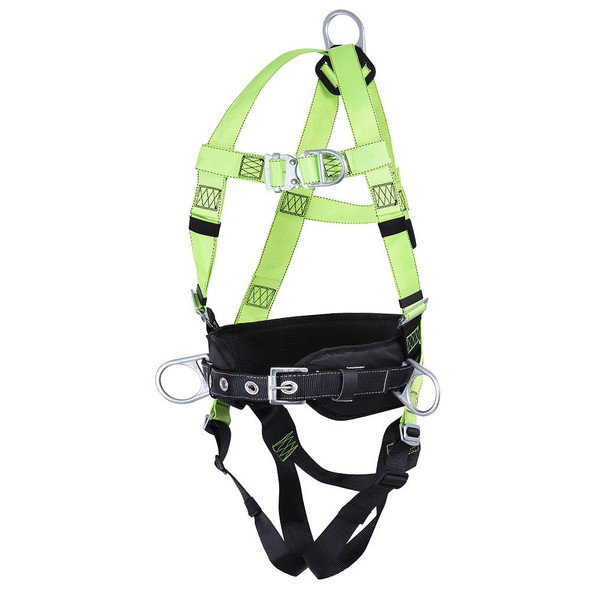
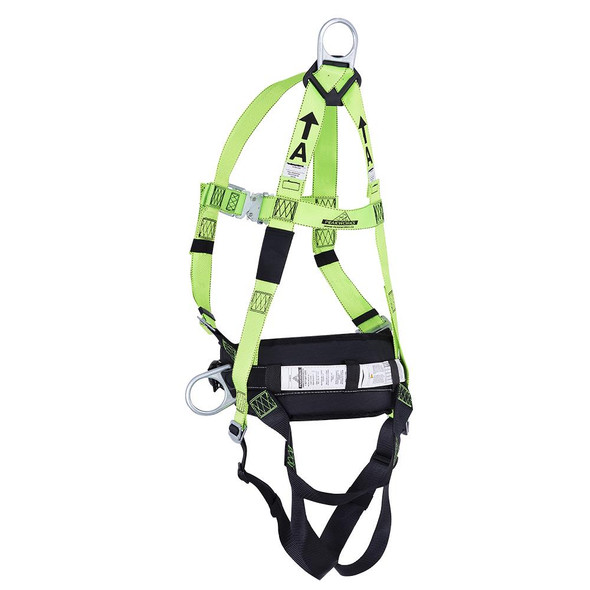
Contractor Harness with Positioning Belt - 4D - Class APL, FBH10000L1020 | Peakworks
Peakworks
$255.15Description Lightweight for all-day comfort Offered with the Contractor series or PeakPro series harnesses Padded lumbar support designed to eliminate any discomfort from the weight of tool...$255.15 -
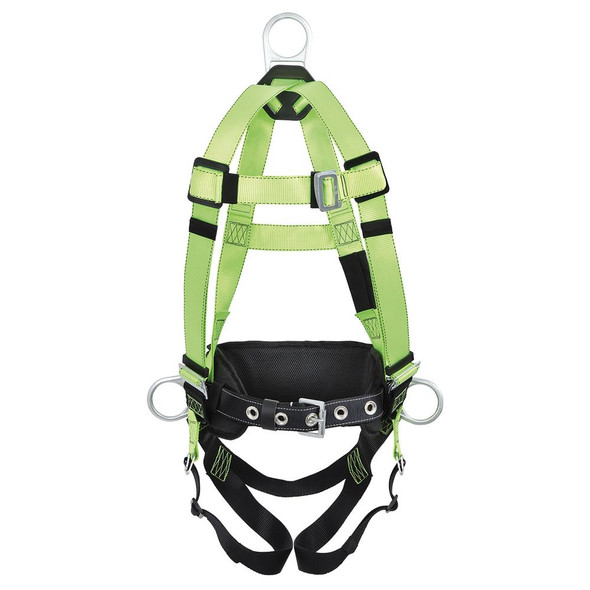
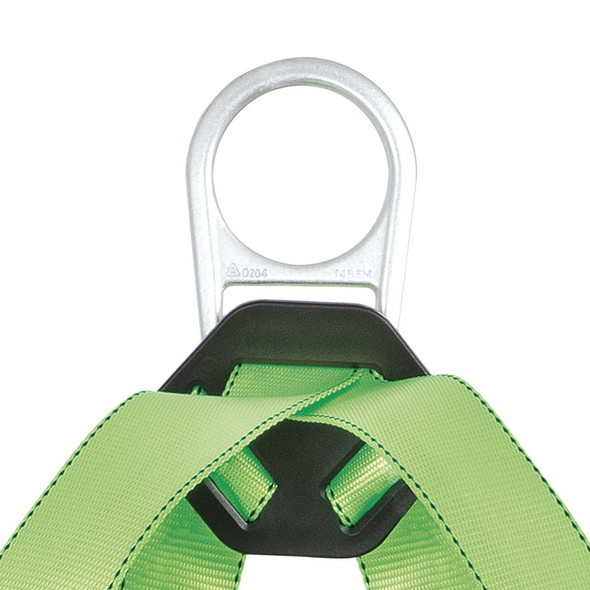
Contractor Harness with Positioning Belt - 3D - Class AP | Peakworks
Peakworks
$214.90Description The Peakworks® Contractor Series Harness – Class AP (fall arrest and positioning) provides an economical option for construction workers carpenters roofers window cleaners etc. with a...$214.90