

Scaffolding Systems
What Are Scaffolding Systems?
Scaffolding systems are modular, temporary elevated work platforms used to provide safe worker access during construction, maintenance, and repair tasks at height. Also called scaffold systems, these structures consist of interconnected steel or aluminum components that builders assemble at variable heights to support workers, tools, and materials simultaneously. Construction crews, industrial maintenance teams, and renovation contractors across Canada rely on scaffolding systems for stable, multi-worker access on projects where ladders are insufficient.
All Safety supplies scaffolding systems and fall protection equipment to construction and industrial buyers across Canada.
Key Takeaways: Scaffolding Systems for Construction and Industrial Work
- Select scaffold system type based on working height, load requirements, and whether the configuration needs frequent repositioning or reconfiguration.
- Frame scaffolds suit straightforward vertical applications; system scaffolding handles complex shapes and long-duration projects requiring frequent changes to layout.
- Pump jack scaffolds use vertical poles and adjustable jacks to provide continuous height adjustment along wall faces, making them practical for siding and exterior finishing work.
- Steel scaffold components offer higher load capacity than aluminum; aluminum frames weigh less and suit projects where crews frequently transport and reassemble the structure.
- Guardrails, toe boards, and CSA Z259-compliant fall protection equipment are required for workers on elevated scaffold platforms above regulated height thresholds.
- Inspect all scaffold components for bent frames, cracked welds, and damaged connection points before each assembly to prevent platform instability during use.
- Rental scaffold systems reduce capital cost for short-duration projects; purchase makes economic sense for contractors who deploy scaffolding continuously across multiple sites.
Frame Scaffolding vs System Scaffolding: Key Differences
Frame scaffolding uses welded H-frames connected by cross braces to form a fixed-bay modular structure suited to straightforward wall access and exterior finishing work. System scaffolding uses ledgers, standards, and rosette or wedge connections to build three-dimensional configurations that accommodate corners, sloped surfaces, and complex building geometries. Construction scaffolding buyers choose between the two primarily based on configuration complexity and how frequently the layout must change during a project.
Scaffold System Type Comparison
| Feature | Frame Scaffold | System Scaffolding | Pump Jack Scaffold |
|---|---|---|---|
| Configuration | Fixed H-frame bays, limited geometry | Modular rosette/wedge, complex shapes | Vertical pole + adjustable jack, wall-mounted |
| Typical use | Exterior walls, painting, general maintenance | Commercial construction, industrial maintenance | Siding, exterior finishing, roofline access |
| Material options | Steel or aluminum | Steel (most common) or aluminum | Aluminum poles (common for residential) |
| Reconfiguration ease | Moderate — bay-based layout limits flexibility | High — connections allow three-dimensional changes | Low — designed for fixed-wall vertical travel |
Frame scaffolds are the lower-cost entry point for simple projects; system scaffolding costs more upfront but reduces labour time when a project requires frequent layout changes or non-rectangular configurations.
Workers on elevated scaffold platforms require guardrail systems along open edges. Review guardrail systems for elevated work platforms for compatible edge-protection options.
How to Select the Right Scaffold System for Your Project
Selecting a scaffold system starts with three fixed constraints: maximum working height, platform load requirement (workers plus materials), and site geometry. A system that cannot reach the required height or support the actual load on the platform creates an immediate hazard regardless of other features. Identify those three values before evaluating any specific product.
Scaffold Selection Checklist: Step-by-Step Buying Process
- Determine maximum working height and confirm the system's rated reach meets it.
- Calculate platform load: number of workers plus tools and materials, in kilograms.
- Assess site geometry — flat rectangular walls suit frame scaffolds; complex shapes require system scaffolding.
- Decide on steel vs aluminum based on load requirements and how frequently the crew repositions the structure.
- Confirm guardrail, toe board, and access ladder components are available for the chosen system.
- Evaluate rental vs purchase based on project duration and frequency of future use.
- Verify replacement parts and qualified service are available locally before committing to a manufacturer.
For projects where scaffolding is needed for a short duration, fall protection and scaffold rental options reduce capital outlay without compromising platform capability.
Scaffold Component Terminology
- Standards
- Vertical tubes that form the primary uprights of a scaffold structure and carry the platform load down to the base.
- Ledgers
- Horizontal members that connect standards along the length of the scaffold, providing lateral stability and supporting transoms.
- Transoms
- Short horizontal members placed at right angles to ledgers to support the working platform boards or decking.
- Base plates
- Steel plates placed under each standard to distribute vertical load across the ground surface and prevent point loading.
- Adjustable base jacks
- Threaded screw jacks inserted into base plates that allow height adjustment to level the scaffold on uneven ground.
- Cross braces
- Diagonal members that connect adjacent frames or standards to prevent racking and maintain structural rigidity.
- Toe boards
- Low boards fixed along the open edges of a platform to prevent tools and materials from rolling off the edge.
- Pump jack
- A clamping mechanism that grips a vertical pole and advances up or down the pole when pumped, adjusting platform height continuously.
Industries That Use Scaffolding Systems and Why
Construction scaffolding appears across every sector that requires temporary elevated access, but the specific configuration, load requirement, and duration differ significantly by industry. The product listing above includes Werner pump jack components, which are common in residential and light commercial exterior work. System scaffolding is the dominant format in heavy industrial and commercial construction applications.
Industry Applications for Scaffold Systems
- Commercial Construction: Multi-storey building projects require system scaffolding with high load capacity to support simultaneous crews and materials on multiple platform levels.
- Industrial Maintenance: Refineries, power plants, and process facilities use system scaffolding for shutdown maintenance where access points change frequently and platforms must wrap around vessels and piping.
- Residential Exterior Work: Painting, siding, and roofline projects rely on pump jack scaffolds and frame scaffolds for cost-effective access along flat wall surfaces.
- Bridge and Infrastructure: Inspection and repair of bridges and overpasses requires suspended or specialized system scaffolding that accommodates unusual geometry and outdoor exposure.
- Oil and Gas: Upstream and midstream facilities use intrinsically safe scaffold components where required and combine scaffold platforms with full-body harness and self-retracting lifeline systems for work at height.
- Institutional Renovation: Schools, hospitals, and public buildings undergoing interior renovation use frame scaffolds for ceiling and wall work in occupied facilities where repeated repositioning is necessary.
- Telecommunications and Utilities: Tower and mast maintenance requires compact system scaffolding or specialized access solutions capable of reaching heights beyond standard frame scaffold systems.
Workers on construction scaffolding above regulated heights need full fall protection. Fall protection kits for construction sites bundle the harness, lanyard, and anchor hardware needed to meet CSA Z259 requirements on scaffold platforms.
Fall Protection Requirements for Workers on Scaffolding
Scaffolding systems provide the platform, but they do not eliminate fall hazard for workers near open edges or working above guardrail height. Provincial occupational health and safety regulations require workers to use fall protection equipment on scaffold platforms above specified heights, regardless of whether guardrails are installed. CSA Z259.10-certified full-body harnesses are the standard for personal fall arrest on elevated scaffolding.
Self-Retracting Lifelines and Anchor Points on Scaffold Platforms
Self-retracting lifelines (SRLs) connect a worker's harness to an overhead anchor point and arrest a fall within a short distance, limiting fall forces on the body. Scaffold platforms require anchor points that meet the CSA Z259 series minimum anchor strength — verified before any worker clips in. Combine self-retracting lifelines for scaffold fall arrest with certified scaffold anchor points to complete a compliant fall protection system above the platform.
Frequently Asked Questions About Scaffolding Systems
What is the difference between frame scaffolding and system scaffolding?
Frame scaffolding uses pre-welded H-frames and cross braces to build fixed rectangular bays. System scaffolding uses individual standards, ledgers, and rosette or wedge connections to create three-dimensional configurations that accommodate irregular geometry. System scaffolding costs more per component but handles complex building shapes and frequent reconfiguration more efficiently than frame scaffolding.
How much weight can a scaffold system hold?
Scaffold load capacity varies by manufacturer, component material, and system design. Rated working load is marked on the scaffold components or manufacturer documentation — never interpolate between rated values. Buyers must calculate actual platform load (workers plus tools plus materials) and confirm it stays below the rated capacity, with no improvised modifications that alter the load path.
Is it better to rent or buy scaffolding equipment?
Rental is the cost-effective choice for projects under roughly four to six weeks or for contractors who rarely need scaffolding. Purchase makes sense for contractors who deploy scaffolding continuously, since the break-even point typically falls within several rental cycles. Factor in transportation, storage, and inspection costs when comparing total cost of ownership against rental rates.
How often should scaffold components be inspected?
Scaffold components require inspection before each assembly, after any incident that may have loaded or damaged the structure, and at regular intervals during long-term deployment. Fall protection recertification and scaffold inspection services provide documented inspections by qualified personnel, which is required on many commercial construction sites for compliance verification.
Quick Selection Checklist for Scaffolding Systems
- Verify the system's rated working load exceeds your calculated platform load including workers and materials.
- Confirm guardrails, toe boards, and access ladders are included or available for the selected system.
- Check that site geometry matches the scaffold type — complex shapes require system scaffolding, not frame.
- Assess ground conditions and confirm adjustable base jacks or mud sills will level the structure on site.
- Review total project duration against rental rates to determine whether purchase is more economical.
- Confirm compatible fall protection components are available for the chosen platform height and anchor configuration.
- Check that replacement parts and local service support are available for the selected manufacturer's system.
- Review manufacturer inspection intervals and assign a qualified person to document scaffold condition throughout use.
Scaffolding systems give construction and maintenance crews stable, multi-worker access at height across a wide range of project types. Selecting the right system requires matching scaffold type to site geometry, confirming rated load capacity against actual platform loads, and pairing the platform with CSA Z259-compliant fall protection equipment for workers near open edges. Frame scaffolds suit simple rectangular projects; system scaffolding handles complex configurations and long-term industrial applications; pump jack scaffolds serve exterior wall finishing work. Inspect all components before assembly, establish a documented inspection schedule for extended deployments, and factor in storage, transport, and service availability when comparing purchase against rental.
- Product
- Qty in Cart
- Quantity
- Price
- Subtotal
-

Wall Jack | Guardian Fall Protection
Guardian Fall Protection
$256.53The Wall Jack is used to raise walls and beams and tighten flooring and decking. Made of heavy duty, malleable cast iron, the wall jack rides up and down on a 2-by-4-foot pole, working like a car...$256.53 -

Side Wall Staging Bracket | Guardian Fall Protection
Guardian Fall Protection
$132.50The folding Side Wall Staging Bracket provides platform safety and convenience. This staging bracket is rated for two workers and additional 75 pounds of weight per 8' section. The bracket folds for...$132.50 -

Side Wall Staging Bracket Guardrail | Steel Construction | Guardian Fall Protection
Guardian Fall Protection
$132.50The Side Wall Staging Bracket Guardrail is required when a side wall staging bracket is installed higher than six feet off the ground. With its all steel construction, this product provides...$132.50 -

Wall Brace | Guardian Fall Protection
Guardian Fall Protection
$389.24Wall Brace | Guardian Fall Protection Compliance: OSHA 1910, OSHA 1926 Subpart M Compliance: This product meets the following regional compliance standards OSHA 1910.140 OSHA 1926.502$389.24 -


Nestable 2-Man Stage
Werner
$846.81 - $2,044.04Nestable 2-Man Stage | WernerThe aluminum Nestable Stage. The handles nest inside of each other to minimize gaps between walkways providing a consistent rail depth regardless of stage length,...$846.81 - $2,044.04 -


2-Man Stage
Werner
$564.54 - $2,530.712-Man Stage | Werner The Scaffold Stage with a 500lb duty rating that allows for 2 people on one plank. The Twist-Proof® stage design is ideal for ladder jack applications, swing stages or catwalks. ...$564.54 - $2,530.71 -

Aluminum Pump Jack Pole
Werner
$272.54 - $1,022.02Aluminum Pump Jack Pole | Werner The Aluminum Pump Jack Pole is a field-replaceable component for nestable stages. Versatile, dependable, and easy to operate. Durable design for all types of...$272.54 - $1,022.02 -

Aluminum Pump Jack
Werner
$438.01Aluminum Pump Jack | Werner The PJ-100 Aluminum Pump Jack is a field-replaceable component for nestable stages. Versatile, dependable, and easy to operate. Aluminum frame Z channel is 20% stronger...$438.01 -
Safety Net Aluminum Pump Jack
Werner
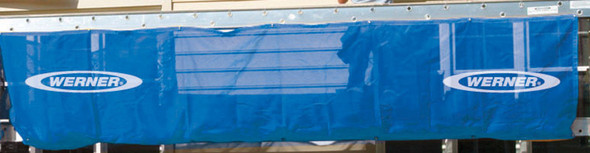
$730.01Safety Net Aluminum Pump Jack | Werner The PJ-SN Aluminum Pump Jack Safety Net easily attaches to your stage to prevent debris and tools from falling to the ground. Durable nylon material meets OSHA...$730.01 -

Pole Anchor Steel Pump Jack
Werner
$48.39The Pump Jack is designed for use with fabricated wood poles constructed of spliced 2x4's (up to 30' high) and accommodates two 2" x 10" wood planks with toe boards attached. Foot action does all the...$48.39 -

Wide End Rail Kit Aluminum Pump Jack
Werner
$387.20Wide End Rail Kit Aluminum Pump Jack | Werner The Aluminum Pump Jack Narrow End Rail Kit is a field-replaceable component for nestable stages. Versatile, dependable, and easy to operate. Easy to...$387.20 -
Narrow End Rail Kit Aluminum Pump Jack
Werner
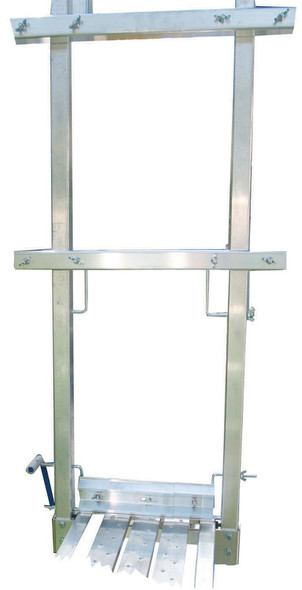
$350.41Narrow End Rail Kit Aluminum Pump Jack | WernerThe Aluminum Pump Jack Narrow End Rail Kit is a field-replaceable component for nestable stages. Versatile, dependable, and easy to operate. Easy to...$350.41 -
Foldable Support Brace Aluminum Pump Jack
Werner
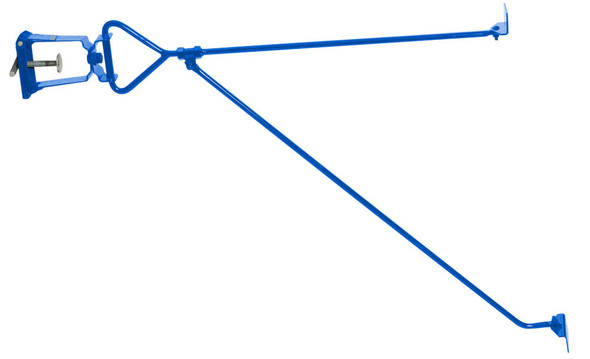
$146.00Foldable Support Brace Aluminum Pump Jack | Werner The PJ-SBF Aluminum Pump Jack Foldable Support Brace is a field-replaceable component for nestable stages. Versatile, dependable, and easy to...$146.00 -

Rigid Support Brace Aluminum Pump Jack
Werner
$146.00Rigid Support Brace Aluminum Pump Jack | Werner The PJ-SBR Aluminum Pump Jack Rigid Support Brace is a field-replaceable component for nestable stages. Versatile, dependable, and easy to operate. ...$146.00 -

Pole Foot Aluminum Pump Jack
Werner
$19.45 - $68.13Pole Foot Aluminum Pump Jack | WernerThe PJ-PF-4 Aluminum Pump Jack Pole Foot is a field-replaceable component for nestable stages. Versatile, dependable, and easy to operate. Pole foot for aluminum...$19.45 - $68.13 -
Pole Connector Aluminum Pump Jack
Werner
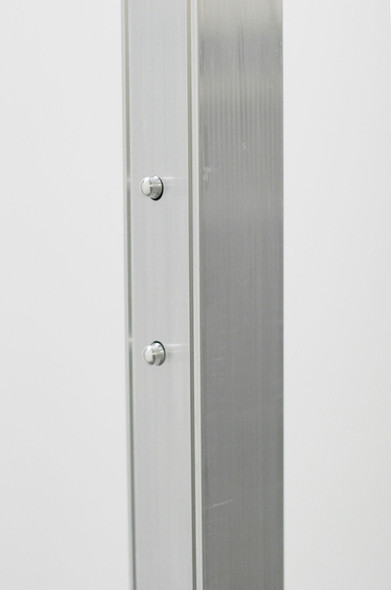
$223.87Pole Connector Aluminum Pump Jack | Werner The PJ-PC Aluminum Pump Jack Pole Connector is a field-replaceable component for nestable stages. Versatile, dependable, and easy to operate. Easy to...$223.87