
SCBA's
What Is an SCBA (Self-Contained Breathing Apparatus)?
An SCBA, also called a breathing apparatus, is a portable air supply system that delivers breathable air from a compressed cylinder directly to a sealed face mask. It protects the wearer from toxic gas, smoke, and oxygen-deficient atmospheres without relying on filtering ambient air.
All Safety supplies SCBA equipment to industrial and commercial buyers across Canada.
Key Takeaways
- Supplies independent breathable air from a cylinder, unaffected by surrounding atmosphere quality
- Maintains positive pressure inside the mask so leaks push air out rather than drawing contaminants in
- Pairs a first-stage regulator at the cylinder with a second-stage regulator at the mask
- Includes a PASS alarm that signals when the wearer stops moving for an extended period
- Suits entry into immediately dangerous to life and health (IDLH) atmospheres
- Requires NIOSH approval under 42 CFR Part 84 for use in Canada and the US
- Differs from PAPR systems, which filter air rather than supply it independently
How SCBA Equipment Delivers Breathable Air
An air cylinder stores compressed air at high pressure. A first-stage regulator reduces that pressure to an intermediate level, then a second-stage regulator at the face mask releases air on demand as the wearer inhales.
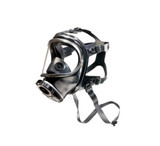
The mask maintains positive internal pressure relative to the surrounding atmosphere. A small leak in the seal pushes clean air outward instead of letting contaminated air in, which is why SCBA mask fit matters as much as the regulator itself.
A pressure gauge tracks remaining air supply. The PASS alarm activates after the wearer remains motionless, alerting nearby responders to possible distress.
SCBA Components and Closed Circuit Variants
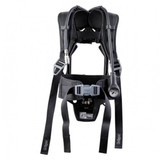
The standard SCBA respirator combines a cylinder, harness, dual-stage regulator, and face mask into one self-contained unit. Most equipment used in industrial and fire service settings is open-circuit, meaning exhaled air vents to the atmosphere rather than being recycled.
SCBA Terminology
- Open-circuit SCBA
- An SCBA that vents exhaled air to the atmosphere instead of recycling it; the standard configuration for most fire and industrial applications.
- Closed circuit breathing apparatus
- A closed circuit SCBA recirculates and scrubs exhaled air to extend operating duration, commonly used for extended self-rescue applications.
- PASS alarm
- Personal Alert Safety System; an audible alarm built into the SCBA that triggers after a period of no wearer motion.
- Positive pressure mask
- A face mask design where internal air pressure stays above ambient pressure, preventing inward leakage of contaminated air.
When Is SCBA Equipment Required?
Workers need a self contained breathing apparatus when entering atmospheres immediately dangerous to life and health, including structural fires, chemical spills, and confined spaces with unknown air quality. Oxygen-deficient environments and toxic gas concentrations above safe exposure limits also call for SCBA rather than filtering respirators.
Gas detection monitors help determine whether an atmosphere requires SCBA before entry. Tank entries, gas pipeline emergencies, and chemical storage leaks are common scenarios where atmosphere testing precedes SCBA deployment.
Industry Applications for SCBA Equipment
- Fire Services: Structural firefighting exposes crews to smoke and heat, so departments rely on firefighter breathing apparatus rated for high-temperature exposure.
- Chemical Industry: Vapor releases threaten plant workers, so facilities stock SCBA with chemical-resistant components for emergency evacuation.
- Mining Operations: Underground emergencies cut off normal air supply, so mines equip crews with longer-duration units for self-rescue.
- Maritime Industry: Engine room fires and enclosed-space entries demand compact, corrosion-resistant SCBA for salt air conditions.
- Nuclear Facilities: Reactor maintenance areas require units built to withstand radiation exposure during extended servicing.
- Confined Space Entry: Unknown atmospheres in tanks and vessels require independent air supply rather than filtering respirators.
SCBA vs PAPR: Choosing the Right Respiratory Protection
Comparison of SCBA and PAPR Systems
| Attribute | SCBA | PAPR |
|---|---|---|
| Air source | Self-contained compressed cylinder | Filtered ambient air, battery-powered fan |
| IDLH suitability | Approved for IDLH atmospheres | Not approved for IDLH use |
| Duration model | Fixed by cylinder capacity | Limited by battery and filter life |
| Typical use | Fire, confined space, unknown atmospheres | Known contaminant types at safe oxygen levels |
SCBA respirators suit unknown or oxygen-deficient atmospheres where independent air supply is essential, while PAPR systems fit known-contaminant environments with adequate ambient oxygen. The choice comes down to whether the atmosphere is IDLH.
SCBA Purchasing and Rental Process
Buying Process
- Identify the atmosphere type and required air duration for the application
- Confirm NIOSH approval and NFPA 1981 compliance for the intended use
- Select cylinder size and mask configuration for your team
- Arrange fit testing for all intended users
- Compare SCBA rental options against purchase for short-term or backup needs
- Schedule training before equipment is deployed on site
Quick Selection Checklist
- Verify NIOSH 42 CFR Part 84 approval for the intended application
- Confirm positive-pressure operation and PASS alarm function
- Check mask sizes are available for all potential users
- Assess respiratory accessory compatibility with existing gear
- Compare purchase cost against rental for infrequent use cases
- Review vendor support for repairs and replacement parts
- Confirm cascade system access for cylinder refills on site
- Schedule hydrostatic testing intervals for cylinders in service
Common Questions About SCBA Equipment
How long does an SCBA cylinder last?
Cylinder duration depends on the rated capacity, the wearer's exertion level, and breathing rate under load. Manufacturers rate cylinders by nominal duration, but actual working time during heavy exertion runs shorter than the rated figure.
What is the difference between SCBA respirators and PAPR systems?
SCBA respirators supply independent air and work in IDLH and oxygen-deficient atmospheres. PAPR systems filter ambient air and require adequate oxygen levels, making them unsuitable for unknown or IDLH environments.
Can SCBA equipment be rented instead of purchased?
Yes. Rental suits short-term projects or backup capacity without the ongoing cost of ownership, maintenance, and testing that ownership requires.
How often does SCBA equipment need inspection?
SCBA units need routine visual inspection before each use plus periodic functional testing of regulators and alarms. Cylinders also require hydrostatic testing on a recurring schedule to confirm they hold rated pressure.
Who needs SCBA respirator training?
Anyone who wears SCBA equipment needs training on donning procedures, air management, and emergency response before using it in a hazardous atmosphere. Fit testing and periodic refresher training maintain that competency over time.
Selecting the right self-contained breathing apparatus comes down to matching cylinder duration and mask configuration to the atmosphere a worker will face. CSA and NIOSH approval confirm the unit meets recognized performance requirements before it reaches a hazardous environment. Pairing SCBA with proper fit testing, routine inspection, and a clear understanding of when PAPR is the better fit keeps respiratory protection programs both compliant and practical for the work at hand.
- Product
- Qty in Cart
- Quantity
- Price
- Subtotal
-

 $761.98
 -


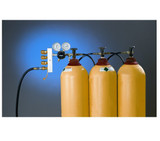
K-Kart II W/ 150' Hose Reel | Draeger
Draeger
$19,834.18K-Kart II is a mobile breathing air supply cart equipped with a 150-foot hose reel. Enables flexible deployment of breathing air in confined space and maintenance operations. The K-Kart II with 150'...$19,834.18 -


Air Hose Lightweight No QDS | Draeger
Draeger
$196.99 - $570.465 ft lightweight breathing air hose without quick disconnects. Designed for short-distance connection of airline-supplied respirators in safe environments. 25 ft lightweight breathing air hose...$196.99 - $570.46 -

Air Hose 75 FT Heavy Duty No QDS | Draeger
Draeger
$1,072.5175-foot heavy-duty breathing air hose for airline respirators and breathing systems. Durable, chemical-resistant; supplied without quick disconnects for custom setup. The AIR HOSE 75 FT HEAVY DUTY NO...$1,072.51 -

Rescue Pak W/O Cylinders | Draeger
Draeger
$14,851.01The Rescue Pak is a breathing air system designed for rapid deployment in emergency rescue operations. Provides regulated air flow for up to two users; compatible with standard SCBA cylinders (not...$14,851.01 -

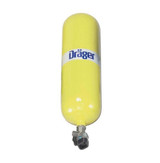
Air Cyl. 2216psi CFK (30 min.) | Draeger
Draeger
$1,976.002216 psi carbon fiber air cylinder for 30-minute SCBA operation. Combines reduced weight with robust construction for responder safety.$1,976.00 -


Weld Shield P-NOVA | Draeger
Draeger
$455.54Dräger Weld Shield P-NOVA provides advanced eye and face protection for welding operations, integrating seamlessly with Dräger respiratory and head protection systems. Its rugged design ensures...$455.54 -


PSS 3000 Airline 4500 | Draeger
Draeger
$3,800.00The Dräger PSS 3000 Airline 4500 integrates airline supplied breathing with SCBA capability, allowing for flexible and continuous respiratory protection during maintenance, rescue, or hazardous...$3,800.00 -


PSS 3000 NIOSH LP BCKPLT W/O CYL/MASK | Draeger
Draeger
$2,495.23The PSS 3000 NIOSH LP Backplate is a lightweight, low-pressure self-contained breathing apparatus component, designed for comfort and durability in emergency response situations. For use with...$2,495.23 -


Air Cyl. 4500psi CFK | Draeger
Draeger
$2,113.41 - $2,422.27High-capacity carbon fiber air cylinder (4500 psi) with 60-minute rating. Designed for use with professional SCBA systems for firefighting and rescue. 30-minute carbon fiber air cylinder rated at...$2,113.41 - $2,422.27 -


PAS LITE NIOSH LP BCKPLT,W/CYL/MASK/CASE | Draeger
Draeger
$3,745.28Dräger PAS Lite NIOSH LP SCBA set includes backplate, cylinder, mask, and case for low-pressure self-contained breathing apparatus applications. Built for reliability and comfort in firefighting,...$3,745.28 -

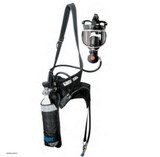
Draeger Complete SCBA PAS Colt 13F Male 10-Minute Aluminum Cylinder, Includes Panorama Mask
Draeger
$2,430.69 - $2,630.69Complete SCBA Kit – Kit Includes: Pas Colt- 13F Airline Escape 10 min ANPT AL, Standard LDV Hansen Brass Male - R62985 10 Min 3000 AL Cyl W/ Standard Ale Valve – 4055061 Panorama Nova Face Masks...$2,430.69 - $2,630.69 -

Draeger Complete SCBA PAS Colt 13F 5-Minute Aluminum Cylinder, Includes Panorama Mask
Draeger
$3,233.34 - $3,496.00Complete SCBA Kit – Kit Includes: Pas Colt 13F Airline Escape, 5 Min Airline ANPT, Standard LDV, w/o Hansen Brass - 3359841 5 Min 2216 AL Cyl W/Standard ALE Valve – 4054744 Panorama Nova Face...$3,233.34 - $3,496.00 -

Draeger Complete SCBA PSS 3000 HP 60 Minute Carbon Fibre Cylinder Includes Panorama Mask | Dreager
Draeger
$5,497.54 - $5,760.19Description The Dräger PSS® 3000 is a new generation of high performing breathing apparatus for industrial applications. Combining comfort with exceptional performance, it is designed for...$5,497.54 - $5,760.19 -

Draeger Complete SCBA PSS3000 30 Minute Carbon Fibre Cylinder, Includes Panorama Mask
Draeger
$5,051.26 - $5,313.92“Complete SCBA Kit – Kit Includes: 2216 PSI/30 min clear coated cylinder - 4058990 PSS 3000 LP Backplate w/ Harness & LDV – 4046195 Panorama Nova Face Masks - R52972 Air cylinder 2216 PSI/30 min...$5,051.26 - $5,313.92 -

Draeger Complete SCBA PAS Lite 30 Minute Carbon Fibre Cylinder, Includes Panorama Mask
Draeger
$4,474.88 - $4,737.54“Complete SCBA Kit – Kit Includes: 2216 PSI/30 min clear coated cylinder - 4058990 PAS Lite LP Backplate w/ Harness & LDV – 4046190 Panorama Nova Face Masks - R52972 Air cylinder 2216 PSI/30 min...$4,474.88 - $4,737.54