
Guardian Fall Protection
3-Way Rescue & Retrieval SRL (50-Foot) | Guardian Fall Protection
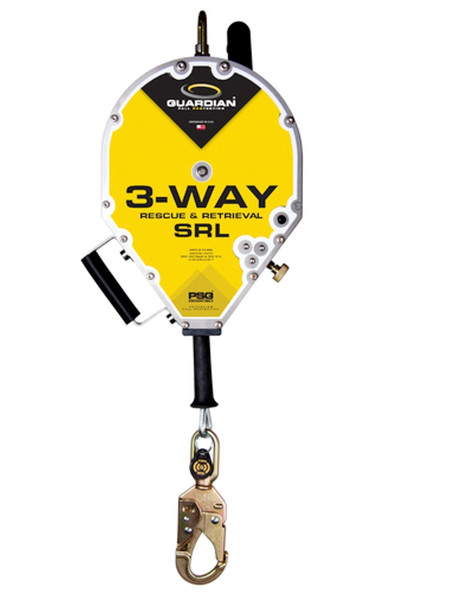
- SKU:
- 10974CSA

Description
Description
An SRL designed both for standard use and for post-fall worker recovery
A reality of the world of fall protection is that, no matter how much effort is put towards preventing them, falls still sometimes happen. This is why it is mandatory to have an extensive rescue plan at every jobsite. The 3-Way Rescue and Retrieval SRL can plan a central role in such plans. In the event of a fall, it can be used to raise or lower the user to the next closest safe working platform.
Features
- Carabiner included
- Swivel top connection point helps reduce lifeline snagging or tangling
- Rubber boot protects housing and labels from damage from impacts or scraping
- Integral rubber lifeline stopper doubles as a convenient hand grip
- Multiple hook options available
- Stainless steel lifeline available
- Lifeline Length: 50'
Specifications
-
Product weight: 27LB/12.25KG
-
Product length: 5.5''/13.97CM
-
Product height: 29.5''/74.93CM
Downloads
Compliance
This product meets the following regional compliance standards
- OSHA 1910.140
- OSHA 1926.502
- ANSI Z359.14
- CSA Z259.2.2
More Info
3-Way Rescue & Retrieval SRL for Confined Space and Work-at-Height Rescue
The 3-Way Rescue & Retrieval SRL is a self retracting lifeline designed for fall protection and post-fall recovery in rescue-ready work scenarios. Rescue technicians, confined space entrants, and site supervisors typically use this equipment to raise or lower a worker to a safer platform after an incident. This Guardian Fall Protection unit is certified to ANSI Z359.14 and CSA Z259.2.2, and it features a 50-foot lifeline.
Industry Applications and Professional Use
Construction Work Environments
Site supervisors and equipment operators typically use this rescue and retrieval device on construction projects where workers need fall arrest and recovery capability. Crews often deploy it with approved anchorage and a compatible rescue plan for roof access, elevated access, and rescue-ready jobsite safety. Its swivel top connection point can help reduce lifeline snagging during movement across active work areas.
Emergency Services Work Environments
Rescue technicians commonly rely on this retrieval device when response plans call for controlled lowering or raising after a fall event. Emergency teams often use it in fast-moving environments where post-fall recovery matters as much as routine fall protection. The included carabiner supports quicker system setup when crews work under established rescue procedures.
Utilities Work Environments
Maintenance technicians in utility environments often use this 3-Way Rescue & Retrieval SRL during access work that combines height exposure and retrieval needs. Teams commonly work around structures, equipment platforms, and access points where lifeline management matters. The integral rubber lifeline stopper and swivel top connection point help support smoother handling in active service conditions.
Mining Work Environments
Mining crews typically use fall protection equipment like this in controlled access areas where a rescue plan and retrieval capability are part of the task. Supervisors often choose systems that support post-fall recovery and work-at-height safety in demanding site conditions. The robust design supports rescue planning in environments that require careful coordination.
Transportation Work Environments
Transportation maintenance teams commonly use rescue and retrieval systems when servicing elevated assets, platforms, and access structures. Workers often need a retrieval device that fits into a broader rescue system and supports controlled movement to a safe location. This model’s 50-foot lifeline helps teams plan for varied access distances.
Manufacturing Work Environments
Manufacturing sites often use this self retracting lifeline for maintenance, inspection, and elevated access tasks where fall arrest device performance and rescue readiness matter. Safety coordinators usually pair it with other confined space equipment when procedures require a recovery-capable setup. The housing protection and label protection from the rubber boot support routine plant use.
Technical Specifications and Product Features
Understanding Product Standards
Specifications matter because rescue equipment must match the task, the anchorage, and the site plan. ANSI Z359.14 and CSA Z259.2.2 help define performance expectations for fall protection equipment used in rescue and retrieval applications. A 50-foot lifeline gives crews more flexibility when they plan controlled lowering or raising operations.
| Specification | What It Means | Practical Benefit |
|---|---|---|
| ANSI Z359.14 | Fall protection standard for self retracting lifelines | Supports selection for work-at-height safety and rescue planning |
| CSA Z259.2.2 | Canadian standard for retractable fall arrest and rescue equipment | Helps Canadian buyers match compliant rescue system requirements |
| 50-foot lifeline | Extended line length for retrieval and access tasks | Provides added reach for confined space rescue and controlled recovery |
| Swivel top connection point | Top connector that rotates during use | Helps reduce snagging and tangling during movement |
Use Case Scenarios and Applications
Confined Space Rescue
Confined space teams commonly use this retrieval device when a worker needs to be raised or lowered to the next safe platform. The rescue and retrieval function supports planned recovery steps in tight access areas. Crews usually pair it with a tripod and winch system for a complete rescue plan.
Construction Fall Protection
Construction crews often use this SRL for standard fall protection during elevated tasks and for post-fall worker recovery when a rescue response becomes necessary. The lifeline stopper works as a convenient hand grip during handling and setup. Supervisors value the rescue-ready design when work conditions change quickly.
Utility and Maintenance Access
Utility personnel commonly deploy this device during access work that requires controlled line management and a reliable rescue system. The swivel top connection point helps limit line twisting around fixed structures and equipment. This supports smoother use in areas with changing access paths.
Emergency Response Operations
Emergency response teams often select a 3-way retrieval solution when a rescue plan calls for controlled lowering to a safe working platform. The included carabiner supports practical system assembly in time-sensitive operations. Crews can integrate this equipment into broader confined space equipment packages.
Ideal Applications and Work Environments
Where This 3-Way Rescue & Retrieval SRL Excels
- Confined space rescue operations: The 50-foot lifeline and recovery function support raising or lowering a worker after an incident.
- Construction sites with fall hazards: Workers gain a rescue-ready setup for elevated tasks and post-fall recovery planning.
- Utility and maintenance access work: The swivel top connection point helps reduce snagging during line movement around structures.
- Emergency response scenarios: The included carabiner and retrieval device format support controlled lowering to a safe platform.
Not Recommended For
- Non-rescue applications without anchorage or a rescue plan: Use a simpler fall arrest device or site-specific system when retrieval is not part of the task.
- Jobs requiring equipment outside manufacturer instructions: Choose another rescue system if the work setup does not match approved use, connectors, or anchorage requirements.
Professional Applications
Workers Who Rely on This Equipment
- Rescue technicians: Use the rescue and retrieval function for controlled recovery and emergency response.
- Safety coordinators: Add this fall protection solution to rescue plans and jobsite safety procedures.
- Maintenance technicians: Use it during access work that needs a retrieval device and line control.
- Site supervisors: Oversee deployment when work-at-height safety and recovery planning matter.
- Confined space entrants: Rely on the lifeline as part of a rescue-ready access setup.
- Equipment operators: Use it when elevated work requires a 3-Way Rescue & Retrieval SRL and compatible anchorage.
Complete Safety Equipment Solutions
Complementary Safety Gear
This rescue and retrieval device works alongside other fall protection equipment for a more complete rescue setup. Teams commonly layer gear because no single component covers every site condition or response need. All Safety often supports these systems with compatible equipment that fits the task and the rescue plan.
Recommended Equipment Combinations
- Confined space rescue setup: 3-Way Rescue & Retrieval SRL + full body harness + tripod and winch + anchor points
- Work-at-height access: 3-Way Rescue & Retrieval SRL + full body harness + anchor points
- Jobsite rescue planning: 3-Way Rescue & Retrieval SRL + confined space kits + full body harness
Selection Guide and Product Suitability
When to Choose This Product
Choose this unit when workers need both standard fall protection and post-fall retrieval capability. It performs well in confined spaces, elevated access work, and rescue-ready operations. It also suits teams that need a 50-foot lifeline and a swivel top connection point for better line management.
Key Evaluation Factors
- Check that the rescue plan matches the jobsite layout.
- Confirm compatibility with anchorage and connected gear.
- Review the lifeline length needed for the access point.
- Evaluate the recovery method for the specific work environment.
Limitations and Alternative Considerations
This product is not suitable for tasks that do not require rescue and retrieval capability. Consider a standard self retracting lifeline or another fall arrest device when post-fall recovery is not part of the procedure. Available from All Safety with standard, expedited, or overnight shipping to suit project timelines.
Daily Use and Maintenance
Workplace Integration
Workers typically use this SRL when a job calls for fall arrest and retrieval capability in the same system. They generally deploy it with approved anchorage and compatible rescue gear per manufacturer instructions. Teams commonly use it in confined spaces, on construction sites, and during maintenance access work.
Care and Replacement Guidelines
Follow manufacturer guidelines for pre-use inspection of the lifeline, connectors, and housing damage. Manufacturers typically recommend cleaning according to manufacturer specifications and storing the unit in a dry, clean area away from contamination and physical damage. Replace the device per manufacturer specifications after a fall event, wear, or damage.
Related Products
Related Products

65' 3-Way Rescue & Retrieval SRL | Guardian Fall Protection
Guardian Fall Protection

Premium Tripod Kit With 50 Ft 3-Way Retrieval SRL | Guardian Fall Protection
Guardian Fall Protection

3-Way SRL Bracket | PSG | Guardian Fall Protection
Guardian Fall Protection

Tripod Kit With 65 Ft 3-Way Retrieval SRL | Rubber Sole Feet That Pivot | Guardian Fall Protection
Guardian Fall Protection

Halo Big Block 50' Cable SRL | Guardian Fall Protection
Guardian Fall Protection