
INCOM Signs
Warning - Do Not Turn Off Power Supply Tag | Pack of 25 | Incom Signs
- SKU:
- TG4030


Description
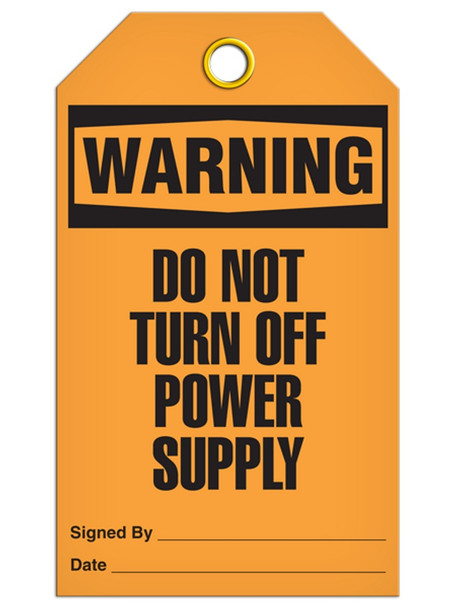
Warning Tag “WARNING – DO NOT TURN OFF POWER SUPPLY TAG”. Available in in 10-mil Poly Tag, 15-mil Rigid DuraPly, and 20-mil Rigid Laminated DuraPly.
WARNING – DO NOT TURN OFF POWER SUPPLY TAG clearly communicates important information in the workplace quickly and easily with brightly colored stock tags. Tags are printed on both sides with state of the art digital printing and come with a 3/8″ drilled hole or 3/8″ metal grommets.
Dimensions: 3.375" X 5.75"
PKG/25
More Info
Warning Lockout Tags for Power Supply Control
The Warning - Do Not Turn Off Power Supply Tag is a warning tag designed for clear workplace communication during lockout tagout and equipment isolation activities. Electricians, maintenance technicians, and utility workers typically use this safety tag to mark power supplies that should remain energized during servicing or controlled shutdowns. It features brightly colored stock, printed both sides, and a 3/8" drilled hole or 3/8" metal grommets for attachment.
Industry Applications and Professional Use
Utilities Work Environments
Utility workers and electrical crews typically use warning tags when they need to identify power supplies during maintenance or switching activities. These tags support workplace communication in substations, service rooms, and field repair locations. Clear warning message placement helps teams coordinate equipment isolation and reduce confusion during active work.
Manufacturing Facilities
Maintenance technicians and safety coordinators commonly rely on safety tags in plant areas where circuits, panels, and machines need temporary status control. Bright industrial labeling helps crews keep equipment marked during shutdown procedures. This supports consistent lockout tagout practices across production lines and support areas.
Construction Sites
Site supervisors and electricians often use stock tags when temporary power distribution or energized systems require clear identification. Construction environments change quickly, so workers benefit from durable workplace communication that stays visible through daily activity. These tags help crews mark equipment while work progresses around active power sources.
Warehousing Operations
Equipment operators and maintenance staff use warning lockout tags in warehouses when chargers, conveyors, or powered systems need service. Tags help workers identify equipment isolation points and communicate status at a glance. This improves coordination around busy material-handling zones.
Transportation and Municipal Services
Transportation crews and municipal workers commonly use warning tags during repairs on electrical systems, service vehicles, and public infrastructure. The tag format supports clear asset marking in outdoor and indoor environments. Teams use it to reinforce safe work practices when equipment stays out of service.
Technical Specifications and Product Features
Understanding Product Standards
These safety tags support fast identification because teams need simple, visible industrial labeling during routine servicing. The size, material choice, and attachment style all affect how well a tag performs in the field. INCOM offers options that suit different work conditions and attachment preferences.
| Specification | What It Means | Practical Benefit |
|---|---|---|
| Pack of 25 | Provides multiple warning tags for ongoing use | Supports repeat maintenance and stock planning |
| 3.375" x 5.75" | Compact tag size for equipment attachment | Keeps the warning message visible without crowding the work area |
| 10-mil Poly Tag / 15-mil Rigid DuraPly / 20-mil Rigid Laminated DuraPly | Material options for different durability needs | Lets teams choose a poly tag or rigid tag that fits the job |
| 3/8" drilled hole or 3/8" metal grommets | Attachment options for tie-off or fastening | Helps workers secure the tag to equipment or power sources |
Use Case Scenarios and Applications
Electrical Maintenance Shutdowns
Electricians commonly attach this warning tag during shutdown work when a power supply should stay on or remain clearly identified. The printed both sides format improves visibility from different approaches. Workers can place it quickly on panels, cords, or control points per manufacturer instructions.
Industrial Equipment Servicing
Maintenance teams often use the tag during machine servicing to communicate equipment status across the work cell. Brightly colored stock and clear hazard notice language help keep messages readable during active work. This supports orderly lockout tagout coordination.
Utility Repair and Isolation
Utility workers use these tags when they need to mark circuits or power sources during field repairs. The rigid tag options suit harder-wearing environments, while the poly tag supports lighter applications. Teams can select the format that fits the duration of servicing.
Plant Operations and Circuit Marking
Plant crews commonly use warning tags for temporary asset marking on electrical rooms, cabinets, and power points. The drilled hole or metal grommet helps crews attach the tag securely. This keeps communication direct during daily-use or occasional-use tasks.
Ideal Applications and Work Environments
Where This Safety Tag Excels
- Electrical maintenance work: Designed for clear lockout labeling on power supplies during servicing.
- Industrial shutdown procedures: Helps teams identify equipment status with visible warning message placement.
- Utility repair environments: Supports equipment isolation communication in field and plant settings.
- Plant operations: Works well for marking circuits, panels, and other energized assets.
Professional Applications
Workers Who Rely on This Equipment
- Electricians: Use the tag to identify power supplies during electrical service and lockout tagout tasks.
- Maintenance technicians: Attach it during inspections, repairs, and shutdowns to support equipment safety communication.
- Safety coordinators: Use it to reinforce workplace labeling practices and improve tag consistency.
- Site supervisors: Rely on it to keep crews informed about equipment status in active work zones.
- Equipment operators: Use it to mark machinery or powered systems that need controlled access.
- Utility workers: Apply it during service work on electrical infrastructure and related systems.
Complete Safety Equipment Solutions
Complementary Safety Gear
This warning tag works alongside other safety tags and lockout tagout devices to support clear communication around energized equipment. Many teams combine labels, signs, and stations to build a more complete equipment isolation process. All Safety offers these products to help crews keep messages consistent across the workplace.
Recommended Equipment Combinations
- Electrical maintenance: Warning tag + lockout tagout devices + safety signs + lockout stations
- Plant shutdowns: Warning tag + warning labels + lockout tagout devices
- Field repair work: Warning tag + safety signs + lockout stations
Selection Guide and Product Suitability
When to Choose This Product
Choose this warning tag when you need a visible message for power supplies during maintenance or shutdown work. It also fits electrical rooms, plants, and utility tasks where clear workplace communication matters. The different material options give teams flexibility for indoor and outdoor use.
Key Evaluation Factors
- Material thickness and rigidity for the work environment
- Attachment method, including drilled hole or metal grommet
- Visibility needs for printed both sides labeling
- Quantity required for ongoing lockout tagout programs
Limitations and Alternative Considerations
This tag is not suitable for applications that require a different hazard message or a specialized control device. Teams that need full isolation hardware should consider lockout tagout devices or lockout stations. It also may not fit tasks that need a larger sign format. Available from All Safety with standard, expedited, or overnight shipping to suit project timelines.
Daily Use and Maintenance
Workplace Integration
Workers typically attach the tag when equipment enters shutdown, lockout, or maintenance status, then remove it when the equipment returns to service. Use it on power sources or machinery per manufacturer instructions. In busy plants and electrical rooms, teams often keep tags ready near service points for faster deployment.
Care and Replacement Guidelines
Inspect tags for legibility, attachment points, and overall condition before each use. Clean them with dry wiping or gentle cleaning per manufacturer instructions, and replace them if the text becomes faded, damaged, or unreadable. Store unused stock tags in a dry area away from excessive heat or moisture.
Related Products
Related Products


Warning - Do Not Turn On Power Supply Tag | Pack of 25 | Incom Signs
INCOM Signs

Warning - Do Not Open Tag | Pack of 25 | Incom Signs
INCOM Signs