
Guardian Fall Protection
Cb-12 Anchor Post | Guardian Fall Protection
- SKU:
- 00645/00648



Description
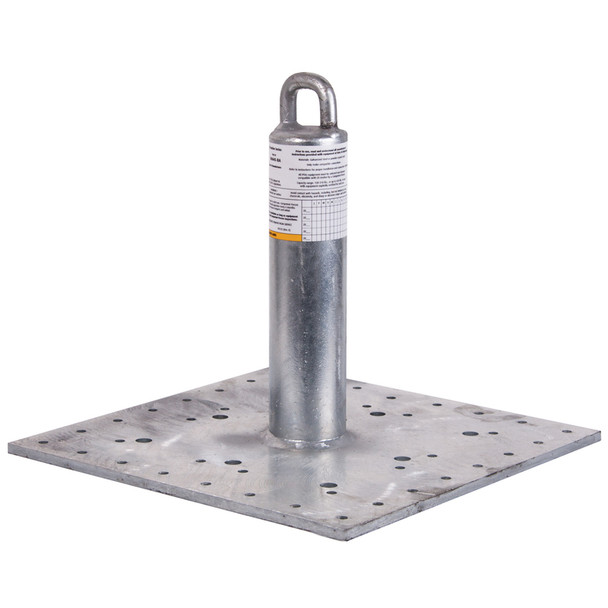
Versatile post-style anchor fits a variety of applications
A robust anchor point suitable for installation on concrete, wood, I-beams, or steel decking. Its durable galvanized steel construction supports permanent applications such as penetrating roofs. It also works well in temporary applications that need to move as work progresses. CB-12 anchor points can be used as single point tie-offs or as part of a horizontal lifeline system to cover a greater work area.
Features
- 12” post extends through finished roof
- Backer plate also available for beam or inverted installations
- Single baseplate accommodates multiple substrates
- Other models with taller posts available
- Available: CB-12 Anchor(00645), CB-12 Anchor w/Pass-Through Top(00648)
- Standard Loop(00645), Pass-Through(00648)
Compliance
- OSHA 1910.140
- OSHA 1926.502
- ANSI Z359.18
Downloads
More Info
Anchor Post for Roof Work and Fall Protection
The Cb-12 Anchor Post is a fall protection anchor post designed for roof work and other work at height tasks. Roofing crews, site supervisors, and maintenance technicians typically use this anchor point to create a tie-off point or support a horizontal lifeline system. This is ANSI Z359.18 certified equipment, and its galvanized steel construction supports permanent applications and temporary applications that move with the job.
Industry Applications and Professional Use
Construction Work Environments
Construction workers and site supervisors commonly rely on this anchor post during roof work, structural work, and other height-related tasks. The single baseplate accommodates multiple substrates, which helps teams adapt to concrete mounting, wood, I-beams, and steel decking. That flexibility supports fall protection planning on active job sites where work zones change often.
Utilities and Field Service
Utility crews typically use anchor points when they need a stable tie-off point during access, inspection, or repair work. This post-style anchor works well in outdoor conditions and can support temporary applications as work progresses. Teams often value equipment that fits changing structures without slowing down the work sequence.
Manufacturing Facilities
Maintenance staff in manufacturing settings commonly use roof anchors and anchor posts for elevated service tasks and access projects. The galvanized steel finish suits busy industrial environments where equipment may see repeated use. Workers can integrate the anchor into fall arrest planning or a horizontal lifeline system when the task covers a wider area.
Transportation and Fleet Operations
Transportation facilities often need fall protection for roof access, dock structures, and overhead maintenance areas. This anchor post supports work at height on finished roofs and structural supports where teams need dependable attachment options. All Safety often recommends systems that align the anchor point with the specific access pattern of the site.
Warehousing and Distribution
Warehouse crews and maintenance technicians usually work around roof penetrations, service paths, and elevated access points. The 12-inch post extends through a finished roof, which makes it useful for permanent applications on active facilities. That design helps crews maintain a consistent tie-off point while managing routine maintenance.
Technical Specifications and Product Features
Understanding Product Standards
Anchor post specifications matter because teams need a fit for the structure, the access method, and the intended fall protection setup. This model is certified to OSHA 1910.140, OSHA 1926.502, and ANSI Z359.18, which helps buyers align the product with common compliance requirements. The galvanized steel post, backer plate option, and single baseplate design support practical installation choices.
| Specification | What It Means | Practical Benefit |
|---|---|---|
| OSHA 1910.140 | Occupational fall protection standard for workplace use | Helps teams choose equipment for regulated work environments |
| ANSI Z359.18 | Anchor device standard for fall arrest applications | Supports selection of an anchor point for height-related tasks |
| 12-inch post | Post extends through a finished roof | Works well for roof anchor installations on completed surfaces |
| Galvanized steel construction | Durable steel with corrosion-resistant finish | Fits permanent applications and repeated outdoor use |
Use Case Scenarios and Applications
Roofing and Reroofing Projects
Roofing crews typically use this roof anchor when they need a post-style anchor that extends through a finished roof. The design supports tie-off work during installation, replacement, and repair tasks. Crews can also use it as part of broader fall protection planning on active roof systems.
Structural Steel and Concrete Work
Teams working on concrete or steel decking often need a single baseplate that adapts to the structure in front of them. This anchor post fits that workflow by supporting multiple substrates. It also suits concrete mounting where a stable anchor point matters during elevated tasks.
Beam and Inverted Installations
The available backer plate helps with beam installation or inverted anchor setups. That option gives crews more flexibility when standard roof mounting does not match the work area. Workers can place the anchor point where the task requires it, then connect it to a compatible system per manufacturer instructions.
Temporary Work Zones and Moving Tasks
When work progresses across a site, crews often need temporary applications that move with the project. This anchor post supports that approach by giving teams a movable fall arrest attachment point. It can also connect into a horizontal lifeline system when the work area expands.
Ideal Applications and Work Environments
Where This Anchor Post Excels
- Roofing and reroofing: The 12-inch post extends through a finished roof and supports roof work.
- Concrete mounting: The single baseplate accommodates concrete mounting and other common substrates.
- Steel decking: The design works with steel decking for elevated access projects.
- Beam installation: The available backer plate supports beam installation and inverted installations.
- Horizontal lifeline system use: The anchor point can serve as part of a greater work area setup.
Professional Applications
Workers Who Rely on This Equipment
- Site supervisors: They choose the anchor post to coordinate fall protection setups on changing job sites.
- Safety coordinators: They use it to support compliant anchor point planning.
- Roofing crews: They rely on it for roof work and tie-off tasks.
- Maintenance technicians: They use it during inspections, repairs, and access work at height.
- Construction workers: They depend on it for structural tasks and temporary applications.
Complete Safety Equipment Solutions
Complementary Safety Gear
This anchor post works alongside other fall protection equipment for a more complete system. Workers often combine anchor points with the right connection equipment, because layered setups help teams match the task, the structure, and the access method. A complete system usually starts with the anchor post and extends through compatible hardware chosen for the job.
Recommended Equipment Combinations
- Roof access and tie-off: Anchor post + harnesses + lanyards + roof anchors
- Greater coverage across a work area: Anchor post + horizontal lifeline systems + harnesses
- Routine maintenance at height: Anchor post + lanyards + harnesses
Selection Guide and Product Suitability
When to Choose This Product
Choose this anchor post when you need a post-style anchor for roof work on finished surfaces. It also performs well when crews need a single baseplate for multiple substrates such as concrete, wood, I-beams, or steel decking. The design works well when your team needs a permanent application or a temporary application that shifts as work progresses.
Key Evaluation Factors
- Match the mounting surface to the baseplate and backer plate options.
- Confirm the work plan needs a tie-off point or a horizontal lifeline system.
- Review compliance needs against OSHA 1910.140, OSHA 1926.502, and ANSI Z359.18.
- Consider whether the project needs temporary applications or permanent applications.
Limitations and Alternative Considerations
This product is not suitable for jobs that need a complete fall protection system without additional compatible components. In those cases, a different anchor solution or a more specialized horizontal lifeline package may fit better. Available from All Safety with standard, expedited, or overnight shipping to suit project timelines.
Daily Use and Maintenance
Workplace Integration
Workers typically use this anchor post when they access roofs, structural steel, or other height-related work areas. Install and connect the system per manufacturer instructions, and check that the tie-off point matches the task before use. On sites where work shifts often, crews commonly move the setup as the job progresses.
Care and Replacement Guidelines
Follow manufacturer guidelines for inspection before each use and during periodic checks. Clean dirt and debris with methods approved for the galvanized finish, and store the product in a dry, organized area per manufacturer instructions. Replace the anchor post if you find wear, deformation, corrosion, damage, or if it has experienced a fall event.
Related Products
Related Products


CB-18 Anchor Post | Guardian Fall Protection
Guardian Fall Protection


CB Anchor Backer Plate | Guardian Fall Protection
Guardian Fall Protection

Hydrajaws Adapter For CB Anchors | Guardian Fall Protection
Guardian Fall Protection

Install Screws For CB Anchor Point | Guardian Fall Protection
Guardian Fall Protection

CB-1-W - Weld-on Anchor | Guardian Fall Protection
Guardian Fall Protection